
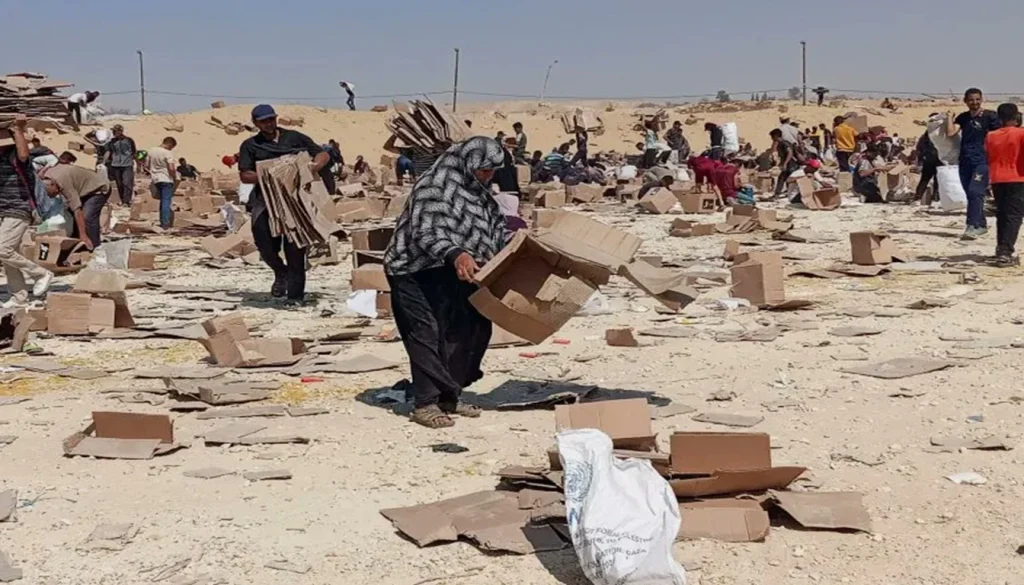
A record number of humanitarian workers have been killed, injured or kidnapped in 2025, with the UN sounding alarm bells over increasingly difficult conditions faced by aid workers, as conflicts escalate and the use of armed drones increases.
The latest report shows that a record 907 humanitarian workers were either killed, injured or kidnapped in 2025, compared to 833 last year. Although the number of incidents reached its highest level, the number of aid workers killed was actually reduced marginally to 350, from 387 in 2024.
Secretary-General of the United Nations, Antonio Guterres, called the situation “appalling” and urged governments to respect international humanitarian laws.
907 Aid Workers Killed, Injured Or Kidnapped in 2025
The latest figures paint an increasingly risky picture for humanitarian personnel operating in conflict zones.
The Aid Worker Security Database reported 907 serious security events targeting aid workers in 2025. The database is financed by the governments of Canada and Australia and captures serious attacks and security events on humanitarian workers worldwide.
Among the affected, 350 aid workers were killed, which, although a drop from the previous year, brought the total number of humanitarian workers affected by violence to an all-time high.
These figures came in advance of World Humanitarian Day, which commemorates humanitarian workers who die serving others affected by conflicts and disasters.
UN Warns of Rising Risks in Helping Others
Antonio Guterres, UN Secretary-General, has said that humanitarian workers are working in more dangerous conditions than before.
“Helping others has never been more dangerous,” Guterres said, calling on countries to abide by the laws of war and hold accountable the guilty parties.
World Humanitarian Day will be marked this year by ceremonies taking place in New York and Geneva, with flags flying at half-staff in honour of humanitarian workers who have died serving their duties.
This comes against the backdrop of increasing challenges that aid agencies are encountering when trying to reach civilians amid some of the world’s worst humanitarian disasters.
Armed Drones Making Aid Work More Dangerous
According to UN aid chief Tom Fletcher, one of the reasons making the situation more dangerous is the increased availability of cheap and flexible armed drones.
This has been happening due to their widespread deployment in modern warfare, which is relatively cheap and flexible in terms of surveillance, targeting and attacks.
Humanitarian personnel and aid trucks may be at risk during their mission, as in places where there is drone usage by armed or military units to target roads, structures and convoys.
Aid Personnel Slaughtered in DR Congo, Sudan and Ukraine
As many as three people died, including a French humanitarian, in March following drone strikes in Goma, eastern Democratic Republic of Congo.
Aid missions in Sudan and Ukraine have also been targeted on multiple occasions, as the humanitarian convoys were risking their lives while providing aid such as food, medicines and other necessities.
The increased deployment of drones is one more source of danger in areas where the lives of aid workers are already endangered by artillery, air strikes, armed forces and ground combat.
Gaza Remained Deadliest Area for Aid Workers
According to the Aid Worker Security Database, Gaza was by far the most dangerous area for humanitarian workers in 2025.
The Aid Worker Security Database counted 186 humanitarian workers killed in Gaza in 2025, emphasizing the high level of danger posed to the work of humanitarian organizations in the region.
Furthermore, the Gaza conflict has caused several casualties among employees of the United Nations Relief and Works Agency for Palestine Refugees, UNRWA.
At least 393 UNRWA staff were killed since the beginning of the Israeli-Gaza War on October 7, 2023.
Sudan Remained a Dangerous Area for Humanitarian Workers as Well
Sudan was another hotspot of attacks on humanitarian workers.
Owing to ongoing hostilities in the country, there is a huge humanitarian catastrophe taking place in Sudan, which has resulted in the displacement of millions of citizens who need humanitarian assistance.
Repeated attacks on aid convoys could also hamper the provision of critical assistance and deprive vulnerable people of any dependable access to humanitarian assistance.
Voices Are Raising for Increased Security of Humanitarian Aid Workers
Humanitarian agencies have been advocating for increased international efforts aimed at securing humanitarian aid workers.
Bushra Khalidi, global humanitarian policy lead at Oxfam, commented that the escalation in the attacks on humanitarians was a direct attack on humanitarian action.
The problem goes beyond the security of individuals. When humanitarian workers are attacked, humanitarian agencies may need to halt their operations or leave the dangerous areas, which would result in millions of civilians being deprived of any assistance.
UN is therefore insisting on states guaranteeing respect for international humanitarian law and investigating all attacks on humanitarian aid workers.
Africa in Focus: Five Stories to Explore
What Happened in Plateau Community?
Check out the latest details on the deadly gunmen raid in Nigeria.
Why Were Zambian Opponents Arrested?
Find out what sparked the arrests of opposition individuals following Hichilema’s election.
How Severe Is Cameroon’s Cholera Outbreak?
Uncover the latest figures and concerns surrounding the cholera outbreak in Northern Cameroon.
What’s Driving Mozambique’s LNG Revival?
Dive into ExxonMobil’s $1.1 billion contracts and their impact on Mozambique’s LNG sector.
How Is Kinshasa’s Sape Culture Shining?
Experience how DR Congo Fashion Week is bringing Kinshasa’s iconic Sape culture to the world.
