
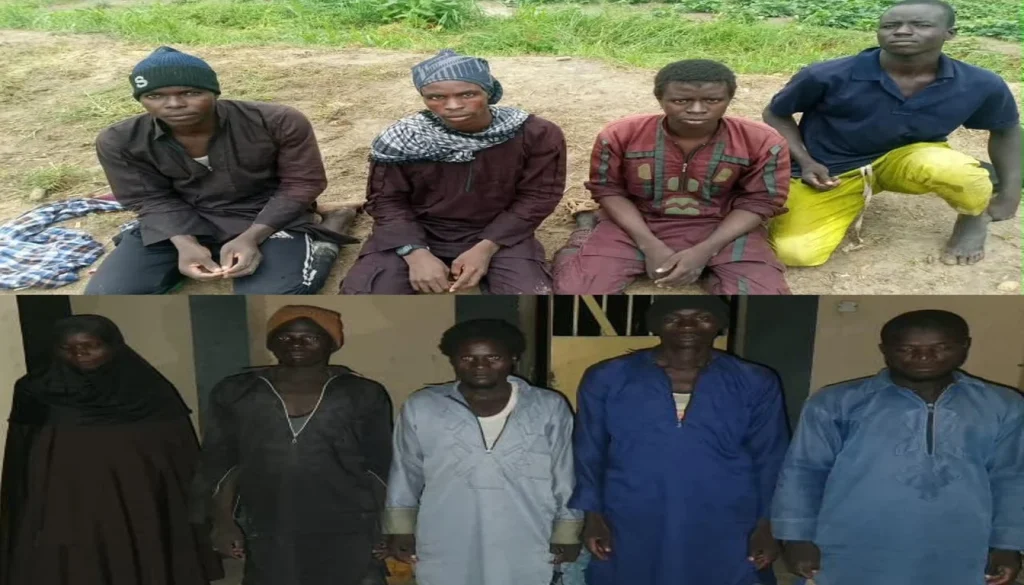
More than 150 suspected terrorists, including commanders, combatants, and associates, have given themselves up to the military in the north-eastern part of Nigeria.
This is because of the ongoing pressure exerted on the terrorist groups in the region through operations conducted by the Joint Task Force North-East Operation Hadin Kai.
These operations involve intelligence-driven campaigns aimed at eliminating the insurgencies in the region.
Who Are These More than 150 Terrorists That Gave Up?
The suspects who gave themselves up are said to be associated primarily with Boko Haram and other insurgent groups in the region.
It is not just ordinary combatants that have surrendered. This surrender includes commanders, combatants, and associates of the insurgent groups.
In addition, some fighters have surrendered along with their families, thus posing even more challenges for the officials dealing with the screening and processing of those who have left the extremist organization.
Why Do the Boko Haram Fighters Surrender?
According to the Nigerian military, one of the factors that contributed to the recent surrenders is constant pressure exerted by the security forces.
Operation Hadin Kai has been using intelligence-based operations, weapon seizures, and kinetic and non-kinetic activities to disrupt the network of the insurgents.
The pressure by the military makes it harder for the insurgents to gain access to the weapons, food, territory and communication networks.
For some of them, surrender becomes the only way out of the situation in case their capacity to operate is restricted by military operations.
What Happens after the Insurgents Surrender?
Surrender does not imply immediate release of the fighters.
Authorities need to learn who the people are and what they did before.
Thus, it usually includes security profiling and screening of the surrendered fighters and those who accompanied them.
These activities will allow distinguishing combatants from those who helped them and were forced to join the insurgent group.
Where Are the Surrendered Fighters Sent?
Following the initial military vetting and registration, surrendered fighters may be passed on to appropriate civilian authorities.
In Borno State, which has borne the brunt of the insurgency, the state government may get involved in the administration of people who have been cleared by the security vetting process.
It is necessary because the Nigerian government is faced with two challenges of how to keep former fighters away from criminal activity as well as provide a way for defectors to redeem themselves.
Can Former Boko Haram Fighters Be Reintegrated?
There exist efforts on the part of Nigeria to encourage the insurgents to desert armed groups and join civilian life.
Repentant or low-risk former fighters might qualify for deradicalisation, rehabilitation, and vocational training programs.
The main goal is to minimize the risk of former fighters being recruited again into terrorist organizations as well as equip them with skills to help them earn an income out of the insurgency.
But there are complications with reintegration. The communities ravaged by years of insurgency might find it hard to reintegrate them into civilian society.
How Are High-Risk Individuals Dealt With?
Not all surrendering persons may qualify for reintegration processes.
They need to be assessed to determine whether they are suspected of committing grave crimes or belong to existing extremist groups.
Such an assessment is especially crucial if surrendering individuals profess to have left terrorism while still carrying with themselves information or associations posing a potential threat to security.
Thus, the process of surrendering not only includes security assessment procedures but also requires consideration in terms of reintegration as well.
Can the Surrenders Impact Boko Haram?
Mass surrender has a weakening effect on an insurgency organization because of lowering its manpower and even exposes its logistical and command structure.
Surrendering members can provide intelligence on hideouts, logistics, commanders, and weapon supply.
But the success of the effort largely depends on whether the military is capable of preventing recruitment into insurgent ranks among the remaining fighters and whether surrendering fighters are truly cut off from extremist organizations.
This development thus becomes quite a significant one for the Nigerian security services, but not the end of the insurgency.
Stay Updated on Nigeria’s Biggest Headlines
Why Did Air Strike Turn Deadly?
Uncover the latest details behind the Nigerian Air Force’s urgent response.
Can Nigeria Stop Rising Abductions?
Check out how authorities are tackling the growing kidnapping crisis.
What Happened During Mosque Attack?
Dive into the shocking incident raising fresh security concerns nationwide.
Why Is The Naira Holding Steady?
Find the factors keeping Nigeria’s currency stable against the dollar.
What Caused Nigeria’s Deadly Boat Disaster?
Look into the tragedy that claimed dozens of lives, including children.
