
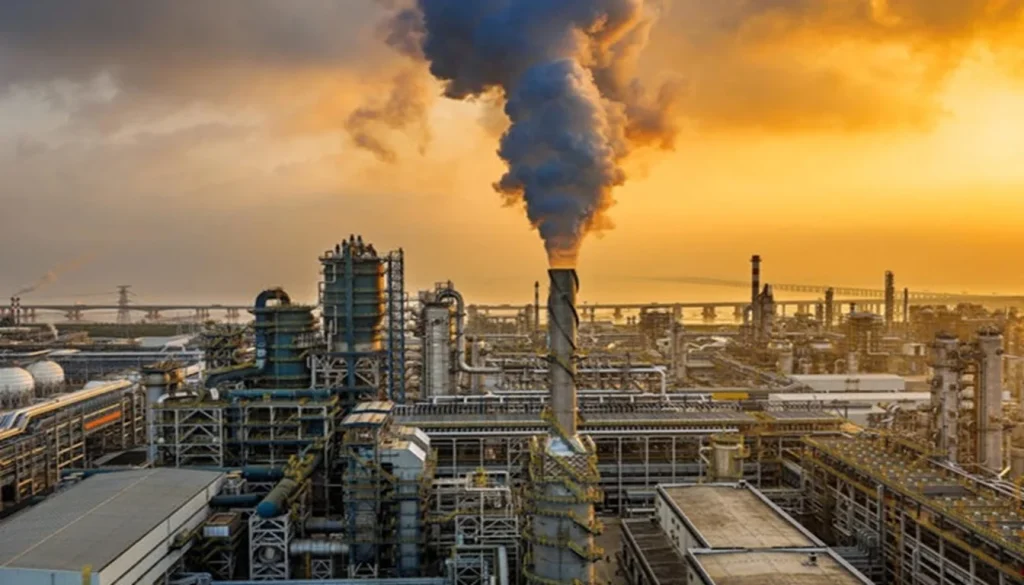
The crisis at the Strait of Hormuz is costing an additional $21.9 billion in fossil fuel imports for 32 African nations, with Egypt, South Africa, Morocco, and Tanzania being the most heavily affected nations.
In a new study conducted by the Centre for Research on Energy and Clean Air (CREA), 32 of the 41 African nations in its dataset have incurred increased fossil fuel import expenses from March through August 2026 due to the conflict involving Iran, causing higher oil, gas, and refined fuel prices globally.
For the additional cost, Egypt is the highest at $5.2 billion, South Africa second at $3.5 billion, Morocco third at $2.2 billion, and Tanzania fourth at $2.1 billion. The other African countries affected include Kenya, Mozambique, and Djibouti.
Egypt Suffered the Most from Africa’s Biggest Energy Shock
Egypt accounted for the biggest African bill in terms of the additional cost of imported fossil fuels, amounting to $5.2 billion in the six months.
It accounts for about 1.33% of the country’s GDP, which makes it all the more shocking in relation to the size of the country’s economy. CREA has estimated that the additional energy cost equates to about five days of Egypt’s national income.
The position of Egypt in the context of the energy shock is particularly important insofar as Egypt is one of the countries with high demand for energy and also suffers due to price shocks in LNG and refined fuel markets.
Additional Cost of South Africa’s Fuel Imports Amounted to $3.5 billion
South Africa accounted for the second-highest additional cost of fossil fuel imports in Africa, at $3.5 billion.
South Africa is also one of the economies that have a relatively high energy burden in relation to their economy. CREA has estimated that the additional energy cost amounted to about 0.88% of the GDP of South Africa.
Morocco and Tanzania Have Paid Big Bills Too
The extra import bills that Morocco has paid for its fossil-fuel imports have gone up by an estimated $2.2 billion, becoming Africa’s third-biggest importer. Most of this extra cost has been accounted for in diesel.
This has been followed by an extra bill of $2.1 billion for Tanzania, while Kenya has paid $1.7 billion extra for its fossil fuels. The increase has been about $1.2 billion and $1 billion for Mozambique and Djibouti.
These figures show that the effect is not only on those countries that are using the Strait of Hormuz as a transit route.
Why the Hormuz Crisis Has Hurt the African Importers so Much?
Their primary weakness is their dependence on fossil-fuel imports.
According to the findings of the CREA study, real costs of fossil-fuel imports were compared to the prices expected for those commodities in the futures market before the war started.
In the six months since the start of the war, fossil-fuel importing nations paid an extra $330 billion.
By far, the biggest gain was recorded by crude oil at $164.1 billion. Others were diesel/gasoil at $73.8 billion, gasoline at $35.7 billion, and liquefied natural gas (LNG) at $38 billion.
African countries that are importers of fuels face even more pressure due to international prices, as this will be reflected in foreign exchange, transportation costs, businesses, and consumers’ bills.
Fuel Importers Lost While African Oil Exporters Gained
The energy crisis did not impact all African countries in the same way.
As per CREA, nine African fossil fuel exporting countries gained an additional $21.6 billion from their exports due to higher prices within the same six-month period. Nigerian gains stood at $7.5 billion while Angola made $4.5 billion and Libya $3.3 billion.
This means that the balance of Africa’s net effect could be almost neutral, as the additional cost from importing fuel stands at $21.9 billion against additional revenue of $21.6 billion.
However, the figures give only a general picture, while the reality is different and much more serious in terms of imbalance between countries.
Egypt, South Africa, and Morocco lost billions of dollars in additional expenses, while oil-producing countries enjoyed the same price rise.
Reasons for a Spillover Effect in Areas Other Than Fuel
The effect of a protracted period of energy shock is likely to have implications that go beyond the cost of fuel.
High fuel prices increase the cost of transporting commodities, running machinery, and manufacturing goods that use energy. In cases where countries rely on fuel-based means of transport and machinery in agriculture, high fuel prices may result in higher costs of bringing in agricultural inputs and delivering food to the market.
Nevertheless, the analysis done by CREA does not look at food prices or agricultural costs.
What Else Is Shaping Africa Today?
Which African Grids Face Heat Stress?
Check out the African nations facing the greatest power-grid risks from extreme heat.
Which Destinations Are Attracting More Tourists?
Explore the fastest-growing African tourism hotspots seeing a major visitor boom in 2026.
How Are Southern Africa Floods Changing?
Uncover how climate change is linked to the region’s devastating 2026 floods.
How Is Africa’s Space Sector Growing?
Dive into Africa’s rising space industry and the expanding market for space-based solutions.
What’s Driving South Africa’s Fuel Prices?
Track down the latest fuel price changes and key factors affecting South African motorists.
