
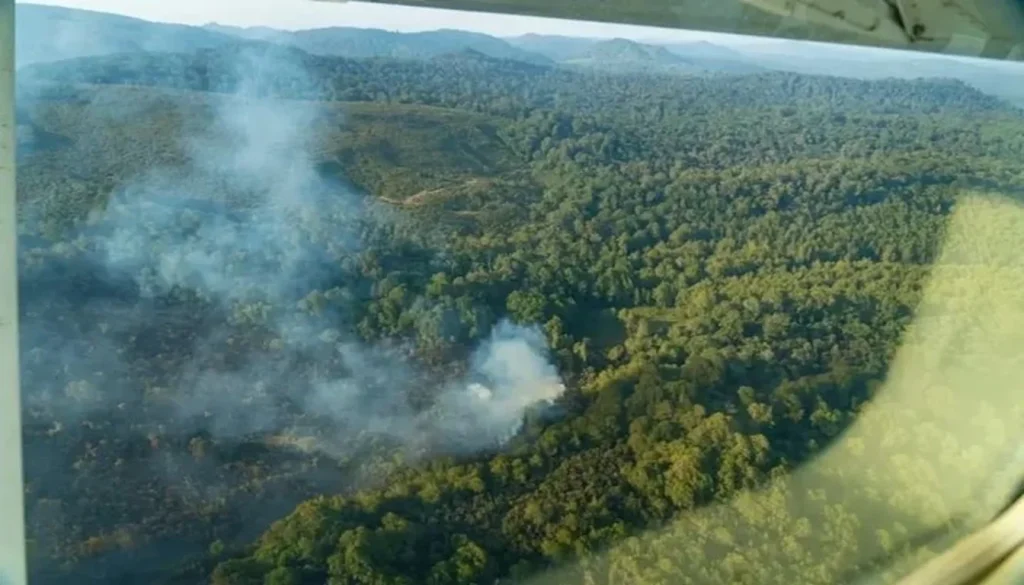
A major fire breakout in Mount Kenya has scorched an estimated 8,700 hectares of high-altitude moorlands after the fire started at Rutundu Lodge on September 1. This incident has raised alarm over the dangers of the fire to the wildlife, ecosystems in the area, and water catchments in the mountain. Firefighters were continuing to control the fire in parts of the region due to the difficulty caused by winds and dry vegetation.
Fire spread has been in all directions, including Marania forest and Chogoria. An estimated number of 400 people have been engaged in putting out the fire, led by the Kenyan Government and the Environment Ministry.
Why the Mount Kenya Fire Is So Dangerous
Mount Kenya is more than just a popular tourist and climbing attraction. The mountain’s national park and forest are part of a UNESCO World Heritage site that includes the forests, wetlands, alpine ecosystems and remarkable biodiversity of the mountain.
The current fire has mostly targeted the moorlands, but conservationists are worried about what might happen if the flames reach forest areas. Wind has proven difficult to combat as fires continue to emerge from various places despite suppression efforts in other parts of the mountain.
Wildlife Endangered by Loss of Another Habitat
A variety of animals live in Mount Kenya, including those suited to the forest and alpine ecosystems. One of the animals most at risk during this time is the mountain bongo, a critically endangered antelope that survives only in fragmented mountain-forest habitats.
According to conservationists, the Mount Kenya ecosystem is crucial habitat for the mountain bongo, as habitat destruction has been cited as one of the main threats to the species. Additionally, the mountain bongo is an indicator of the health of an ecosystem, as the forest serves as a source of water.
No wildlife deaths have been reported due to the ongoing fires as of yet. As per the statements by Kenya’s Environment Ministry, the animals have migrated out of the region that has been affected by the fires. However, the continuation of such fires may still cause damage to the areas which will serve as feeding grounds and habitat for the animals once the fire hazard is over.
Why the Water Supply Can Also Be Affected
Mount Kenya is considered to be one of the important water towers in Kenya. The forests and the ecosystem of the mountain absorb and store rainfall, helping in the maintenance of rivers and water systems which help humans and wildlife as well.
According to UNESCO, the protection of the area has been done to preserve the watershed of the mountain. The conservation organizations have also stated that the surrounding Afromontane forests play an important role in maintaining the water catchment areas of Mount Kenya.
Firefighters Carry On the Fight
The Kenya Forest Service teams have been at the forefront of the incident response efforts, backed by the Kenya Defence Forces, Kenya Wildlife Service, environmental protection agencies, and community groups. Even aerial surveillance has been used to identify fire hotspots and determine areas that require more resources.
It has been reported that 85% of the fire was contained by September 8th, but it was pointed out that this operation was still ongoing. The investigation into the causes of the fires is currently being carried out.
Conclusion
The Mount Kenya wildfire can be considered an environmental emergency since its consequences may go beyond the already destroyed 8,700 hectares. Firstly, the urgent task is the containment of the fire. However, the further steps will include restoration of the natural habitats, as well as preservation of the mountain from devastating fires.
The health of the mountain is extremely important for wildlife like the mountain bongo and the communities who rely on water from the mountain.
Kenya in Focus: Health, Business, Trade & Football
- How Severe Is Kenya’s Mpox Outbreak?
Check out the latest case numbers, deaths, and high-risk counties affected by mpox. - Why Is Kenya’s Refinery Facing Trouble?
Find out why Dangote’s $16 billion Lamu refinery project faces major hurdles. - Why Is Kenya Targeting Foreign Traders?
Uncover the reasons behind Kenya’s crackdown on undocumented East African businesses. - Who Benefits From Kenya’s Amnesty?
Browse the temporary amnesty details and who can remain and work legally in Kenya. - Why Is Kenya’s League Season Delayed?
Reveal the legal battle behind the delayed FKF Premier League 2026/27 kickoff.
