
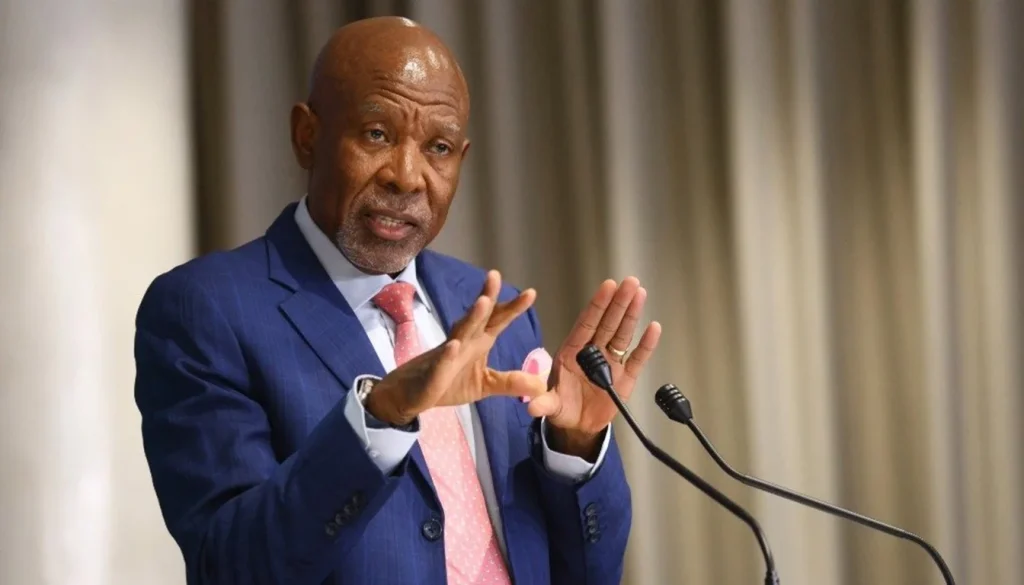
Reserve Bank governor Lesetja Kganyago used a keynote in Sandton on 28 September to set out South Africa economy challenges and opportunities against a shaky global backdrop. He spoke at the third Forum on Africa & Geopolitics, hosted by the Mapungubwe Institute for Strategic Reflection (Mistra), whose theme was “Imagining the World in 2040”.
A fragile world
Kganyago said the global economy and trade are still growing, but high debt and geopolitical stress are raising the risk of a crisis. He argued South Africa needs a clear view of these conditions and a practical push to find growth where it can. A young population and plentiful natural resources, he said, give the country a decent starting point.
Better macro numbers
The governor said South Africa’s prospects look healthier than they have for years, particularly next to other economies. He said confidence is building that government debt has peaked and that the debt-to-GDP ratio will improve over the next few years. That has helped shield the country from this year’s global bond repricing, with longer-term yields sitting around 9%, roughly where they ended 2025.
On inflation, he acknowledged the country has been off target for about six months, pushed there by an energy shock linked to the war involving Iran. The Reserve Bank raised the repo rate by 25 basis points to 7.25% in September. It expects headline inflation to return to the 3% target towards the end of 2027.
The growth problem
Kganyago was blunt about growth. The economy has averaged about 0.6% a year over the past decade, and potential growth is now put at roughly double that, which he still called low. Because the trend is so weak, he said, it takes little to push the economy into contraction.
He said the reform agenda has good priorities but is moving slowly against strong headwinds. Loadshedding has ended, he noted, but electricity now costs double its 2020 price, and other bad news has cancelled out part of the gain. Getting back to growth, he said, needs more good news than bad.
Other speakers at the forum pointed to global financial reform, stronger African agency, better infrastructure and skills, and locally relevant technology as priorities.
South Africa’s Economy: What’s Driving Change?
What’s Behind South Africa’s Economic Slowdown?
Check out the latest warning signs affecting growth and jobs.
Why Did South Africa’s GDP Slow?
Find out what the 0.5% Q3 growth means for the economy.
Can Nissan Boost South Africa’s Economy?
Uncover how Nissan and AfCFTA aim to support economic growth.
Why Are Unions Demanding More Jobs?
Browse calls from unions for jobs and better economic conditions.
How Severe Was The Economic Decline?
See what the reported second-quarter economic drop means for South Africa.
