
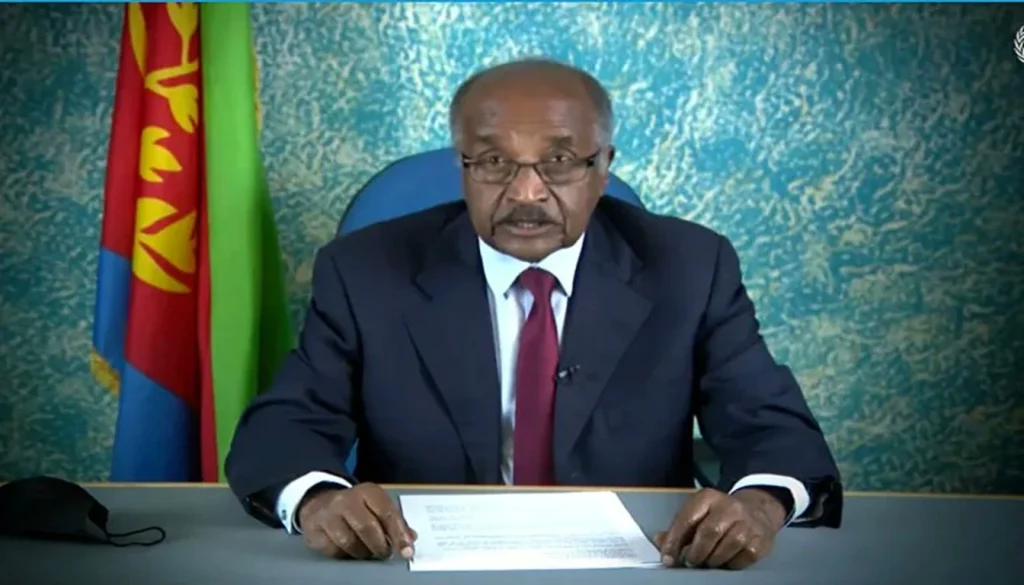
Eritrea has asked the world’s top diplomatic body to step in as tensions with Ethiopia edge toward open war. The call for Eritrea UN intervention in Ethiopia standoff came on Saturday, when Foreign Minister Osman Saleh wrote to the Security Council and urged it to take measures to deter Addis Ababa after what he called a declaration of war. He invoked Chapter VII of the UN Charter, the section that allows anything from sanctions to military action.
Two letters, two versions of the same war
Asmara’s letter followed one from Addis Ababa a day earlier. Ethiopia told the council that Eritrean troops had pushed as far as 60 kilometres into Tigray in an all-out invasion, and it cited its right to self-defence under Article 51. Eritrea says those claims are a pretext for a war Ethiopia has already chosen to fight. Saleh warned that the fighting would devastate both peoples and unsettle the whole region. Eritrea’s information minister, Yemane Gebremeskel, accused Ethiopia of aggression but stopped short of confirming or denying that Eritrean soldiers had crossed the border.
The Red Sea question that won’t go away
Beneath the diplomatic language sits an old grievance. Landlocked Ethiopia insists on direct access to the sea, and Prime Minister Abiy Ahmed repeated that demand on Monday. Eritrea reads it as a plan to seize its port of Assab. On the ground, the crisis deepened last month when an alliance of seven armed groups attacked federal forces in Tigray. Ethiopia says its army has since pushed back TPLF rebels, taken the regional capital Mekelle and struck Eritrean troops with drones.
A region that has seen this before
For many families across the Horn, this feels like a film they have already watched. Eritrea gained independence from Ethiopia in 1993, and the two fought a deadly border war from 1998 to 2000. The peace that followed Abiy’s rise in 2018 won him a Nobel Peace Prize, yet relations have soured again, and the wounds of the 2020 to 2022 Tigray war are still raw.
Horn of Africa analyst Faisal Roble told Al Jazeera that both capitals appear to be heading for the final stage of open conflict, and that the letters are mostly about winning international sympathy. Whether the Security Council acts remains to be seen. What is certain is that civilians on both sides of the border have the most to lose.
Read More
South Africa After the June 30 Protests: Which Cities Were Most Affected and What’s Next?
Kenya asks AU to intervene in Djibouti’s UNSC seat bid
US Withholds Al-Burhan’s UN Visa as 90-Day Ceasefire Dispute Puts Sudan Diplomacy Under Pressure
Zambia Election Tensions Rise as Opposition Claims Victory Amid Vote Counting Dispute
