
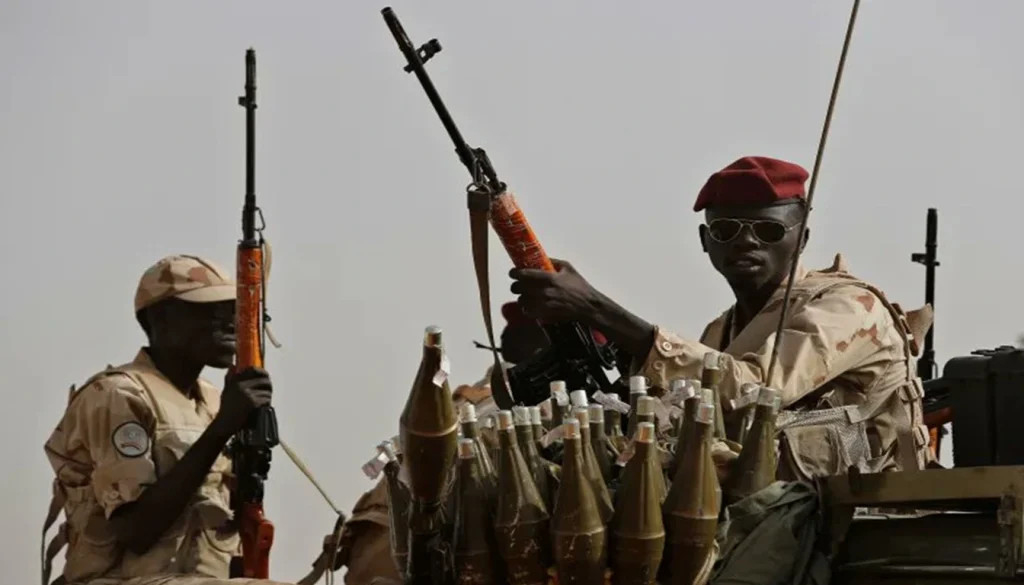
People who had already run from one war found no safety in the next place they stopped. The headline is stark: Sudan paramilitary drone strike kills 41 displaced people in Blue Nile province, close to the Ethiopian border. The rights group Emergency Lawyers, which tracks the war, blamed the Rapid Support Forces (RSF) for Friday’s attack in the Abu Shandi area.
Who was hit
According to AP, the dead included eight children and many women, and dozens more were wounded. Local reports describe the target as a shelter for displaced civilians in the Wad Al-Mahi locality. The UN humanitarian office said it was appalled. The RSF has not publicly responded to the accusation, according to reports.
A war that keeps widening
Sudan’s war began in April 2023, when the RSF launched an insurgency against the government and fighting spread across the country. The monitor ACLED counts at least 150,000 deaths, though aid groups believe the real figure is higher. Drones have become a defining weapon, and the BBC notes that both the army and the RSF have been accused of using them, so civilians face danger from more than one direction.
Blue Nile is not a quiet corner. Earlier this year, drone attacks hit a WFP-linked facility in Yabus in the same state, and strikes elsewhere hit vehicles carrying displaced families and UN aid trucks. Ahram Online also reports that the army recently repelled an attack by the RSF and an allied rebel group near the Ethiopian border. The border region is now exposed to Sudan’s war on one side and rising tensions between Ethiopia and Eritrea on the other.
Aid agencies are running out of room
Tens of millions of Sudanese need help, and hundreds of thousands of children face severe acute malnutrition, according to the BBC. A shelter is supposed to be the one place where families can count on a few days of calm. When those places are hit, aid workers lose their ability to reach people, and more families set out on dangerous roads toward Ethiopia and beyond.
For readers across Africa, the question is no longer only who is winning. It is how long the continent can watch civilians pay the price while accountability stays out of reach.
Read More
South Sudan Elections: Ramaphosa and Kiir Push for a Vote Africa Can Trust
Empty Pumps, Rising Prices: Sudan’s Fuel Crisis Hits Kitchen Tables
South Sudan Transitional Government Dissolved: What Happens Next Before Elections
More Than 55,000 Sudanese Flee to Chad in 2026: Why Refugee Arrivals Have Suddenly Surged 20-Fold
Sudan’s Islamist Networks and SAF: What Do We Know about the Muslim Brotherhood in the War?
