
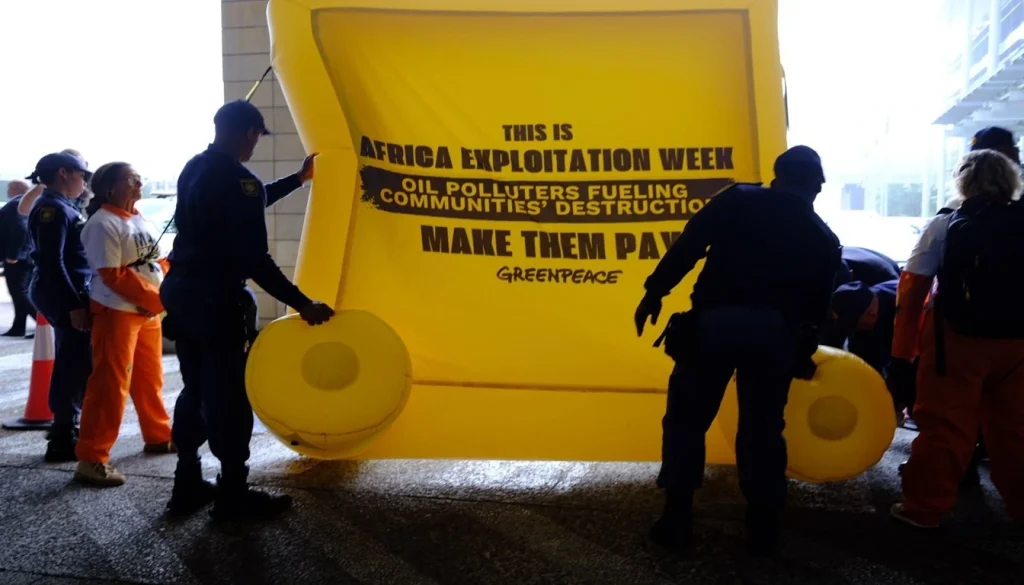
Inside the Cape Town conference halls, deals were on the agenda. Outside, a very different message rang out. The African Energy Week protests on Tuesday brought climate campaigners onto the pavement, demanding an end to new oil and gas exploration across the continent.
“Africa Exploitation Week”
Activists from Greenpeace Africa and Extinction Rebellion picketed the gathering in Cape Town. Siya Myeza of Greenpeace Africa told the Associated Press that overseas oil companies made billions in profit this year at the expense of African lives and ecosystems. He renamed the event “Africa Exploitation Week.” Police removed the protesters, who wore shirts reading “Make polluters pay.”
Gas on one side, the Paris pledge on the other
The tension is real. South Africa wants to grow its oil and gas sector to attract investment and strengthen energy security. The government sees gas-fired plants as a partner to wind and solar, filling the gap when the sun sets or the wind drops. Shell plans to drill up to five deepwater wells in the Northern Cape Ultra Deep block off the west coast, despite legal setbacks, and appeals over its environmental approval continue.
Judy Scott-Goldman of Extinction Rebellion in Cape Town said renewables would feature at the conference, but her group still opposes promoting new exploration. She argued that more fossil fuel development runs against commitments under the Paris climate agreement. She also pointed to fires, floods and rising food prices as signs of what climate change already costs.
A continent torn between two needs
This debate lands close to home for many Africans. Millions still lack reliable electricity, and governments see oil and gas as a route to jobs and revenue. Yet the same people often live where droughts, floods and heat hit hardest. Calls for an energy transition in Africa are about whether the continent’s resources will build local prosperity or mostly enrich foreign companies.
Environmental protests in Africa are growing louder, and climate activism is no longer a fringe voice at industry meetings. Whether fossil fuels in Africa remain a pillar of growth or a stranded bet may be decided in rooms like this one, and on the pavement outside them.
Read More
Renewable energy: African Development Fund approves $35m to Liberian Govt
From Power Shortages to Solar Surplus: African Energy Story in 2026
South Africa’s CEF joins African Energy Week 2022 as Host NOCs
