
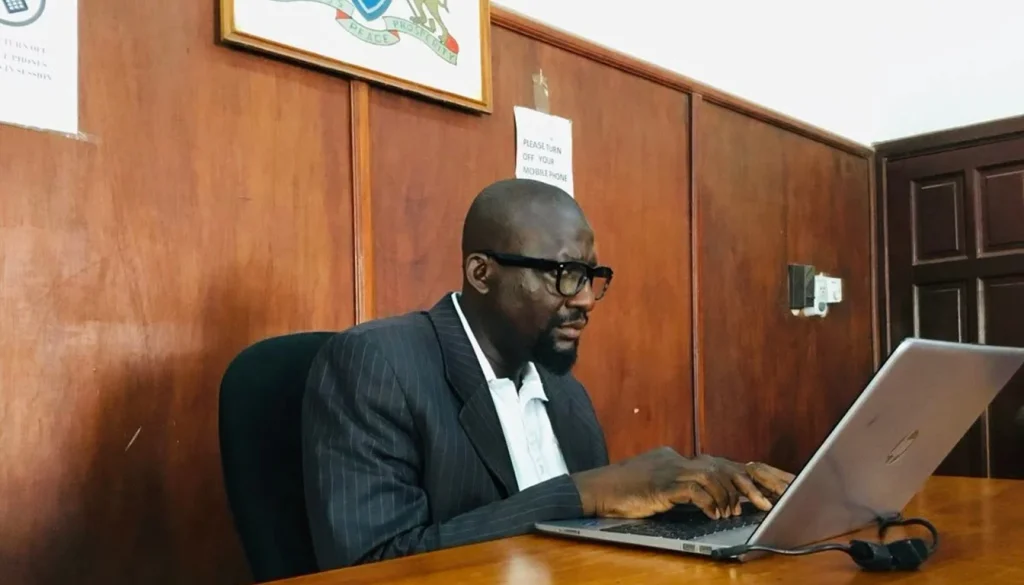
Every morning at the Banjul Magistrates’ Court, a quiet routine plays out before the first case is called. Gambia’s first blind magistrate, Muhammed Krubally, listens as his clerk runs through the day’s files, then walks into a packed courtroom to preside.
He cannot see the lawyers, witnesses or relatives in front of him. He hears them, and for him that is enough to read a room.
A Decade on the Bench
Krubally, now 41, became the country’s first visually impaired magistrate in 2016. He says he has handled more than 1,000 civil and criminal cases since. A screen reader called JAWS lets him read documents and judgements, and AI-enabled smart glasses help him get tasks done on his own. The rest comes from memory, from the rhythm of voices in court, and from his clerk when needed.
The road here was not smooth. Growing up in a village in the Central River Region, the second of nine children, he met teachers and classmates who doubted him. “Their discouragement kept me going,” he says. He became a magistrate, he adds, “to change the system, to make it inclusive.”
Rights on Paper, Barriers in Practice
The Gambia passed its Persons with Disabilities Act in 2021, promising non-discrimination, accessibility and access to justice. Putting those promises into practice is another matter.
Lamin Colley, head of the Resource Centre for the Blind, says little has changed on the ground since the law passed. He blames thin funding and stretched special-needs teachers. Ndey Yassin Secka-Sallah, a visually impaired nominated member of the National Assembly, says she often relied on colleagues to follow what was being discussed. What she wanted, she says, was independence, not special treatment.
Al Jazeera asked the judiciary what accommodations exist for Krubally and for court users with disabilities. It had not replied by the time of publication.
More Than One Man’s Story
Krubally now mentors young visually impaired people, including Modou Lamin Dampha, who says he encourages him to keep going. For them, the magistrate proves that disability does not end ambition.
Still, one success does not make a fair system. Getting through the door is not the same as being equipped to take part once inside, and the courts, schools and parliament all face that test.
Asked about the future, Krubally keeps it simple: “All I see is possibility.”
Read More
Gambia Power Crisis Causes Protests; Reasons for Citizens Asking President Barrow to Step Down
After the deaths in Gambia, India halted manufacturing cough syrup at factory
Syrups linked to 66 child deaths in The Gambia are being promptly recalled
