
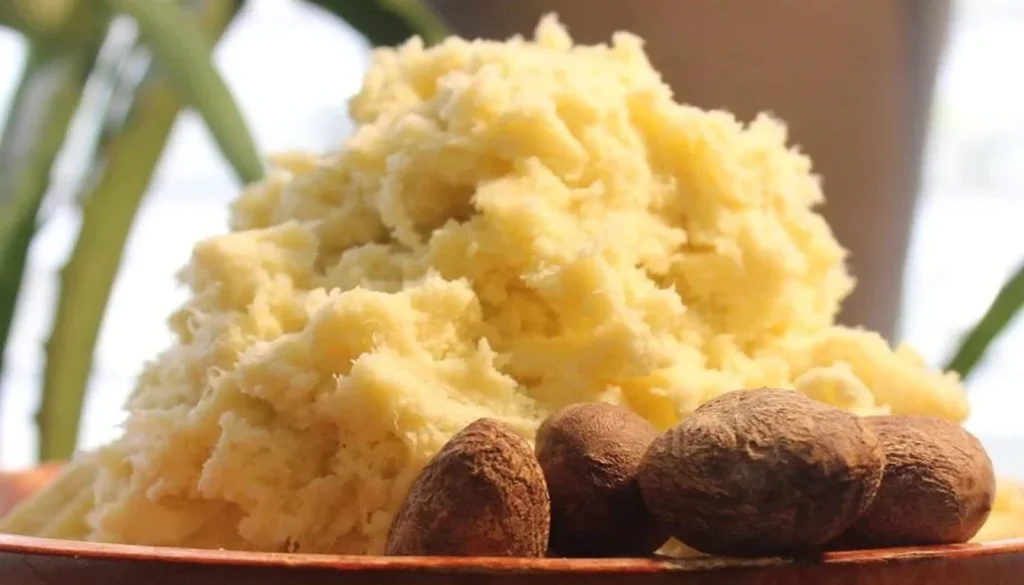
Walk into any market from Tamale to Bamako and you will smell it before you see it: warm, nutty, a little smoky. Shea butter for skincare has gone from a village staple to a global commodity, and the people who started it are still fighting for their fair share. It is one of the few African ingredients that sits in a grandmother’s cooking pot, a salon in Lagos and a luxury shelf in Paris all at once.
What Makes Shea Butter So Special?
Shea butter comes from the nuts of the shea tree, which grows wild across a belt of savannah stretching from Senegal in the west to Uganda in the east. The tree is stubborn. It can take close to two decades before it bears fruit, and it is rarely planted on farms. Communities protect the trees that already stand in their fields.
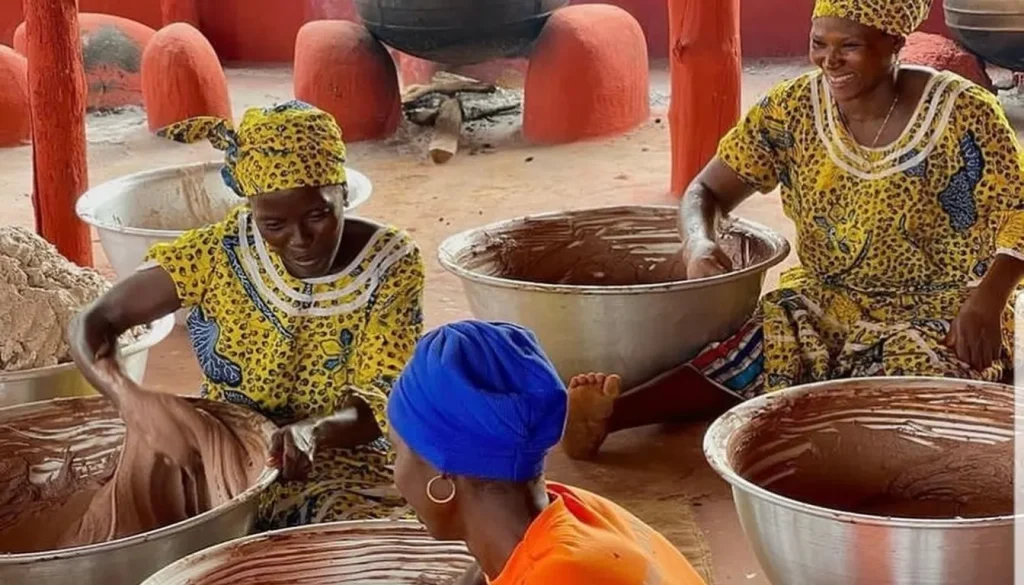
The nuts are boiled, dried, cracked, roasted and crushed, then kneaded by hand with water until the fat rises to the surface. What is left is a creamy butter that has been used for centuries on skin, hair and babies, and also in cooking.
Shea Butter Benefits: Why Dermatologists and Grandmothers Agree
The popularity is not just marketing. The main shea butter benefits come down to its makeup. It is rich in fatty acids such as oleic and stearic acid, which help skin hold on to moisture, and it carries vitamins A and E. It also has a notable unsaponifiable fraction, the part that does not turn into soap, which is where many of its soothing properties are thought to sit.
In practice, people use it for dry skin, rough heels, stretch marks, scalp care and chapped lips. It melts at body temperature, so it spreads easily and sinks in without a heavy film if you use a small amount. Many people with sensitive skin like that it has a short ingredient list when sold raw.
A fair note: research on shea is promising but not unlimited. Most of what we know about its soothing effects comes from small studies and long traditional use, so it is best seen as a reliable moisturiser, not a miracle cure.

Natural Skincare Ingredients Are Having a Moment
Shoppers around the world are reading labels more closely. They want fewer synthetic additives and more recognisable names, and that shift has pushed natural skincare ingredients from the margins to the centre of the market. Shea sits comfortably in that trend. It is plant-based, easy to explain and comes with a story that brands love to tell.
That story has real commercial weight. Global cosmetics giants use shea in lotions, lip balms, hair masks and soaps, and the food industry uses a refined version in chocolate and baked goods. Few raw materials have that many doors open to them.
The Women Behind the Butter
Any honest account of this trade starts with women shea butter producers. Across the shea belt, women do most of the gathering and processing. They collect fallen fruit at dawn, often walking long distances, and process the nuts through the hot, tiring work described above. Estimates commonly put the number of women involved at well over ten million across West Africa, though exact figures are hard to pin down because so much of the work is informal.
For many households, shea income pays school fees, medical bills and farm inputs. In northern Ghana, Burkina Faso and Mali, it is often called “women’s gold,” a name that captures both its value and who earns it.
Cooperatives have helped. When women pool their nuts, they can bargain for better prices, share equipment and meet the quality standards that international buyers demand. Groups that get fair-trade or organic certification often earn more, though certification costs and paperwork can be a real barrier for small producers.
Shea Butter Exports: Where the Money Really Goes
Here is the uncomfortable part. A large share of shea shipped out of Africa leaves as raw kernels, not finished products. Processing, branding and packaging happen elsewhere, and so does most of the profit. Countries like Nigeria, Ghana, Burkina Faso, Mali and Côte d’Ivoire are among the biggest producers, yet the highest-value steps of the chain often sit in Europe, Asia and North America.
Shea butter exports have grown over the years, but the gap between what a village collector earns per kilogram of nuts and what a consumer pays for a small jar of face cream is enormous. That gap is the heart of the argument for local value addition.
Some governments have responded with policies to restrict raw kernel exports and encourage domestic processing. The goal is simple: keep more of the value on the continent, create factory jobs, and give African brands room to grow. Whether those policies work depends on power supply, finance and market access, which remain patchy in many shea-producing regions.
The Shea Butter Business: From Roadside Stall to Global Brand
Starting a shea butter business is not as simple as it looks. Sourcing consistent quality is the first challenge, since nuts vary by region, season and how they were dried. Storage is another; poorly handled kernels can spoil or develop mould. Then comes the question of whether to sell raw butter in bulk, or build a branded product line with packaging, testing and regulatory approval.
Those who get it right can do very well. Small and medium enterprises across Ghana, Nigeria and Kenya now sell body butters, soaps, hair pomades and balms to customers at home and in the diaspora. Online platforms have made it easier to reach buyers directly, which cuts out some middlemen.
The tough parts are real, though. Export paperwork, safety testing and the cost of marketing can swallow a young brand. Many founders say the smartest early move is to partner with a cooperative, so the women supplying the butter share in the upside.
African Skincare Products Take the Spotlight
The wider African beauty industry is growing fast, driven by a young population, rising incomes and pride in local ingredients. A new generation of founders is building African skincare products that use shea alongside baobab oil, marula oil, black soap and moringa. These brands often speak directly to skin tones and hair textures that global companies ignored for decades.
This is more than a trade story. It is a shift in who gets to define beauty. When a Nigerian or Ghanaian brand sells shea-based products with its own name on the label, the profit and the narrative both stay closer to home.
What Needs to Change
If shea is to deliver on its promise, a few things matter. Producers need fairer prices and clearer information about what buyers pay. Investment in small-scale processing machinery can cut the physical burden on women while raising quality. Climate pressure on the savannah, along with tree loss from charcoal making, threatens the very trees this industry depends on, so protection and replanting deserve funding.
Consumers have a part to play too. Choosing brands that are open about sourcing, and that name the cooperatives they work with, nudges the whole trade in a better direction.
Final Thoughts
Shea butter is a reminder that Africa’s most valuable resources are not always buried underground. Some grow on trees in a farmer’s field, gathered by hand and turned into something people the world over rub into their skin every morning. The ingredient is already famous. The real question is who gets paid when it is sold, and the answer will shape the African beauty industry for years to come.
Read More
Natural Kenyan Skincare Ingredients That Are Trending Globally
Skincare Routines That Adapt to South Africa’s Diverse Climates
Kenya’s Uncover Skincare raises $1M to expand enterprise
5 African Celebrities Who Went Viral for Unexpected Reasons This Year
Top 20 Essential Skin Care Tips Before Eid for a Natural Glow
