
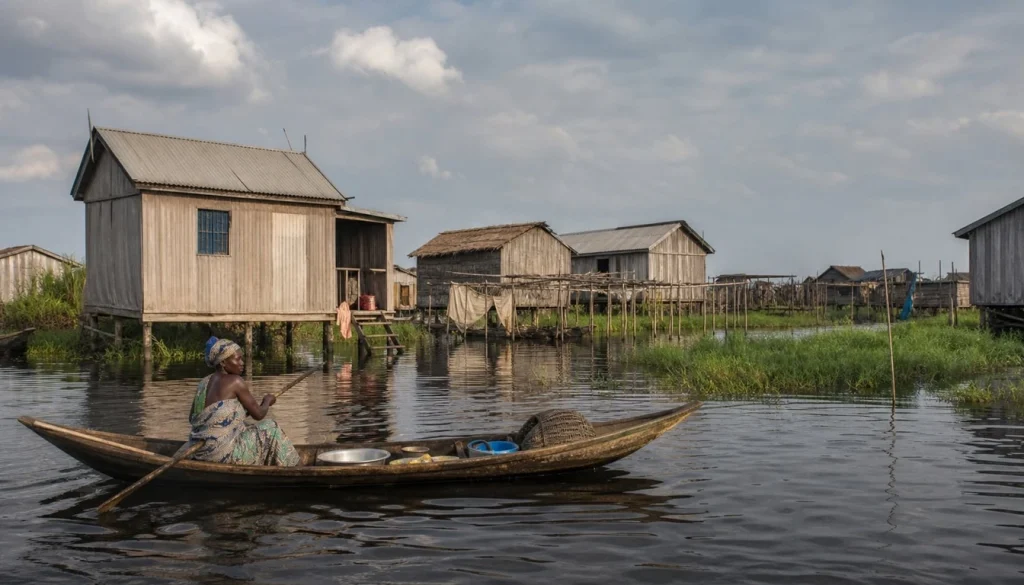
Picture a school bus that is actually a canoe, a market that opens at dawn on the surface of a lake, and a front door that faces open water. Africa’s Floating Villages are not a postcard fantasy. They are real towns where tens of thousands of people wake up above the water every day, and they have done so for centuries.
A quick note on terms: most of these places stand on stilts rather than drifting freely. Locals and visitors still call them floating, because from a canoe, that is exactly how they look.
Ganvié, Benin: The Town Built as a Shield
Ask anyone in West Africa about African floating villages and Ganvié usually comes first. It sits on Lake Nokoué, a short boat ride from Cotonou, and holds somewhere around 20,000 to 30,000 people, depending on who is counting.
The story goes back to the 1600s. The Tofinu people were being hunted by slave raiders working for neighbouring kingdoms. Their pursuers held a religious taboo against fighting on water, so the Tofinu drove wooden poles into the lakebed and built their homes where no warrior would follow. The name Ganvié is often translated as “the community of those who found refuge.”
Today the village runs on the same logic. Houses stand on teak stilts, children paddle to class, and women trade fish, vegetables and household goods from small boats. Fishermen also keep acadja, brushwood enclosures in the shallows where fish breed and grow before harvest. It is a farming system built entirely on water.
Makoko, Lagos: A Neighbourhood the City Keeps Trying to Erase
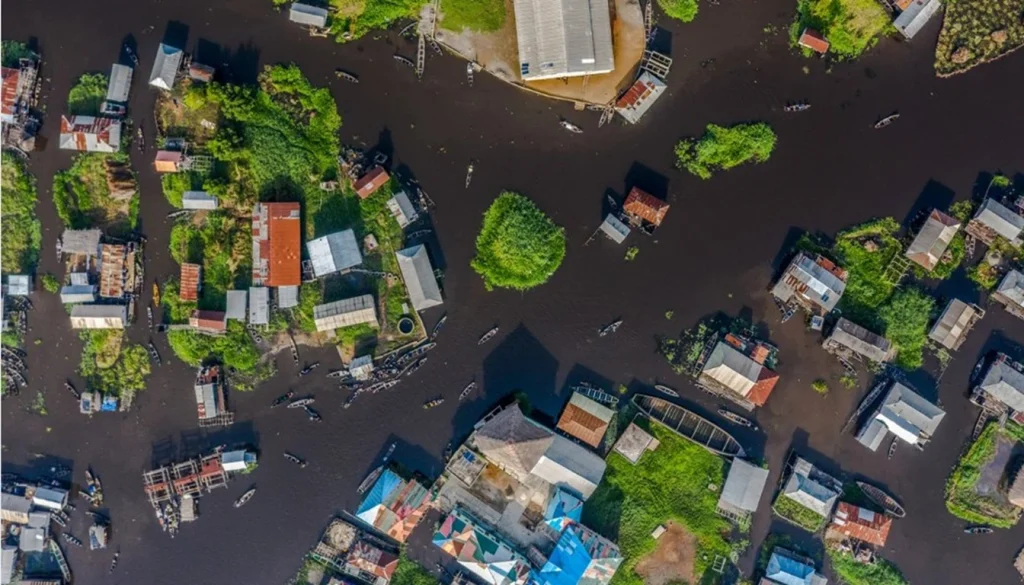
Some of the world’s most talked-about communities living on water sit in the shadow of a megacity. Makoko, on the edge of the Lagos Lagoon, was settled by the Egun people, who moved from the Badagry area and the Benin border region in the nineteenth century. Fishing and smoking fish have always been the backbone of life here.
Makoko has also been one of the most contested neighbourhoods in Nigeria. Demolitions and evictions in 2012 and 2017 left thousands of residents without homes, and the community has fought for recognition ever since. The district even drew international attention through the Makoko Floating School, designed by Nigerian architect Kunlé Adeyemi. The building collapsed in 2016, but it showed how seriously architects now take the idea of building for water.
For many Lagosians, Makoko is a reminder that these settlements are not relics. They are modern neighbourhoods with modern problems, from land rights to sanitation.
Nzulezo, Ghana: A Village Above Lake Tadane
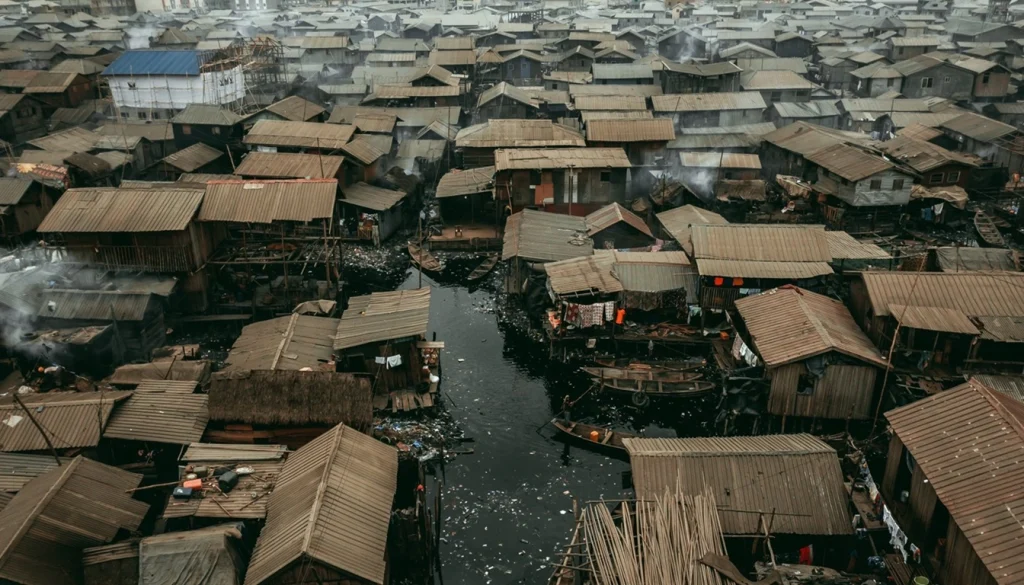
Deep in Ghana’s Western Region, the village of Nzulezo rests on Lake Tadane, roughly five kilometres from the shore. Around 500 people live in a cluster of wooden houses linked by narrow plank walkways. The community says its ancestors, the Nzema, arrived long ago after a migration guided, according to local tradition, by a snail and a sacred turtle.
Visitors reach Nzulezo by canoe through a quiet channel. Once there, they find a church, a school and a football field built of wood, all above the water. Ghana has placed the village on its tentative list for UNESCO World Heritage status. It stands as one of the clearest examples of floating settlements in Africa that have kept their traditions alive.
The Bozo of Mali and Other River People
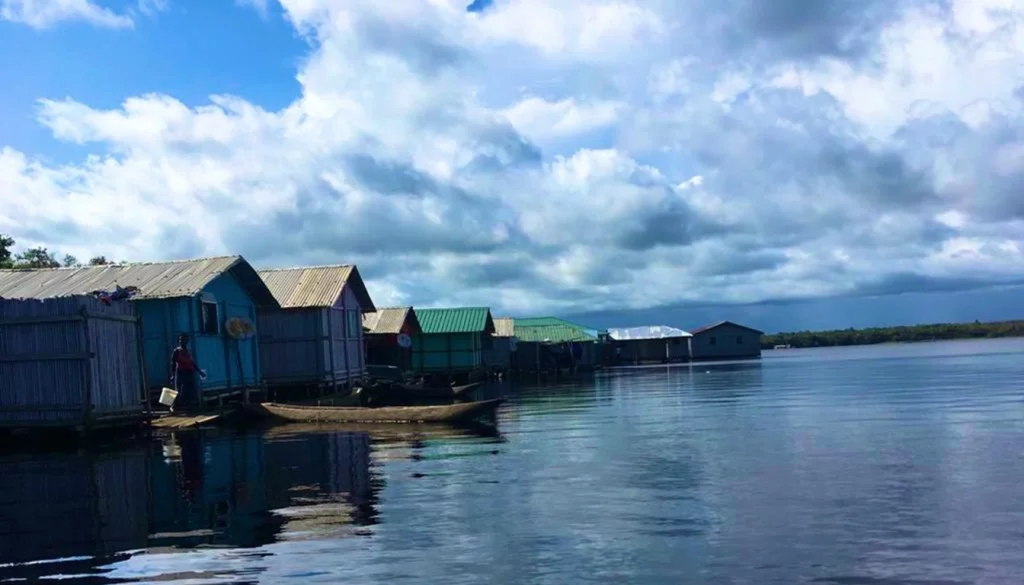
Not every water community lives on stilts. In Mali, the Bozo people have lived along the Niger River and the Inner Niger Delta for generations, and they are often described as the river’s masters. They fish from long wooden pirogues, dry their catch on riverbanks and travel with the seasons as the floodwater rises and falls.
You find similar lifestyles across the continent. Fishing families around Lake Victoria in Uganda and Kenya, island communities on Lake Chad, and villages along Lake Malawi all show how African lake communities organise daily life around the shoreline. Boats are their buses, and the lake is their pantry.
The Culture That Grows Out of Water
Living this way shapes more than housing. African water culture is visible in the songs fishermen sing while they haul nets, in the rituals that honour lake and river spirits, and in the strict etiquette around who may fish where and when.
Many traditional African fishing villages also share a quiet kind of knowledge. Elders can read the colour of the water, the direction of the wind and the behaviour of birds to predict storms or a good catch. Children learn to swim and paddle almost before they walk. Women often control the trade side of the business, buying from the boats, smoking or salting the fish, and carrying it to inland markets.
Crafts follow the same rhythm. Canoes are carved from local timber, nets are mended by hand each evening, and stilts are replaced every few years as the wood weakens. Nothing here is built to be left alone.
The Pressures Closing In
Life on the water is beautiful, but it is far from easy. Climate change in Africa is already changing the rules these communities have followed for centuries. Rainfall is less predictable, and some lakes are shrinking while others flood far beyond their usual limits. Lake Chad, once one of the largest lakes on the continent, has lost a huge share of its surface area since the 1960s, and the families who depended on it have had to adapt or leave.
Other problems are closer to home. Pollution and overfishing reduce the catch. Poor sanitation raises the risk of cholera and other waterborne illnesses. Governments sometimes view stilt villages as informal or illegal, which leaves residents without secure ownership or access to basic services. Young people leave for cities in search of steady income, and elders worry about who will inherit the boats and the knowledge.
Why These Villages Matter
It is tempting to treat these places as curiosities for tourists. That misses the point. They are working economies that feed cities, house families and hold some of the most practical lessons in adapting to a changing environment.
Architects and planners are paying attention. As coastal cities across Africa grapple with flooding and rising seas, the idea of building with water instead of against it is gaining ground. People in Ganvié, Makoko and Nzulezo have been doing that for generations.
The better question may be what governments, researchers and visitors can do to support them. That means recognising land and water rights, investing in clean water and safe sanitation, and backing community-led tourism that keeps income inside the village rather than outside it. It also means listening to residents, who understand their lakes better than anyone.
A Way of Life Worth Protecting
Africa’s Floating Villages remind us that home does not have to mean solid ground. Their people have turned fear, scarcity and shifting shorelines into culture, trade and belonging. If the continent is serious about resilience in a warming world, these communities deserve a seat at the table, not just a place in the travel brochures.
Read More
Benin Africa Tourism Awards: Four Nominations Put West Africa’s Cultural Gem in the Spotlight
New Uganda Tourism Branding Campaign: Is It Going to Bring More Tourists to the Country?
Eco-Tourism Funding Supports Conservation at Masoala National Park in Madagascar
