
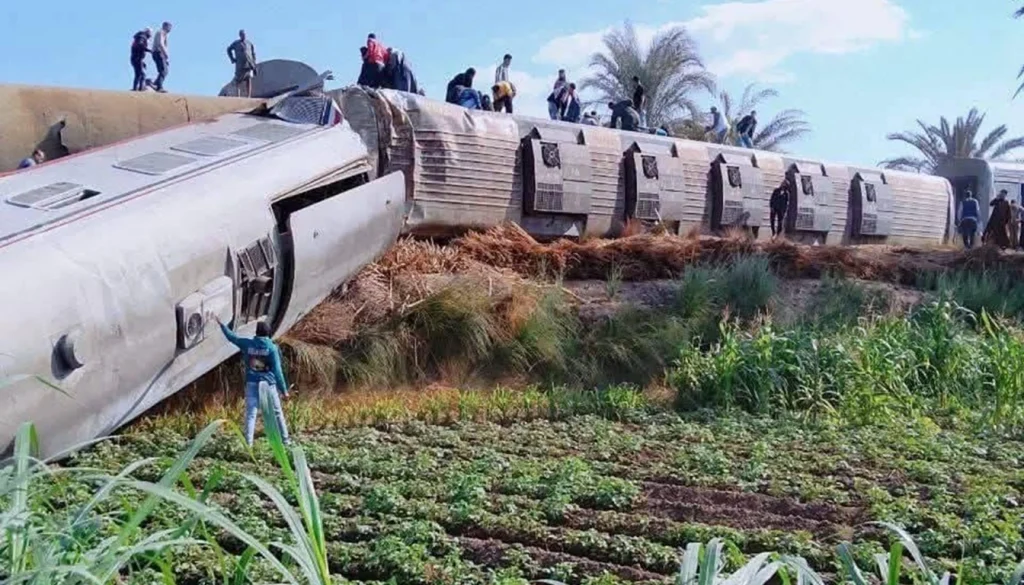
Dust, screaming and twisted metal turned an ordinary Sunday journey into a nightmare for hundreds of passengers in northern Egypt. The Egypt train crash left seven people dead and at least 125 injured when two trains collided south of Cairo, the Chief Prosecutor’s office confirmed. For many Egyptians who rely on the railways every day, the news hit close to home.
What Happened in Al-Ayyat
The collision took place in the Al-Ayyat district of Giza province, about 52 kilometres south of the capital. According to the Transportation Ministry, a train travelling to Fayoum slammed into the rear of another train heading to Aswan. The conductor was among those who lost their lives.
The route is no small matter. Trains linking Cairo with Fayoum and the Upper Egypt cities of Beni Suef, Minya and Aswan carry students, traders, farmers and families who cannot easily afford other transport. When something goes wrong on these lines, the pain spreads across entire communities.
Survivors Speak of Chaos and Choking Dust
Outside al-Wasta Central Hospital in Beni Suef province, where some of the wounded were taken, survivors described a scene of panic. Passengers struggled to breathe because of the dust thrown up by the impact, they said.
Farha Gamal, who was on the Fayoum train, told reporters she saw people who appeared lifeless and others desperately searching for a way out. Some carriages, she said, were completely mangled.
Help came first from ordinary people. Villagers living near the tracks rushed in and pulled passengers from the wreckage before official rescuers took over. It is a reminder of the community spirit that so often shows itself in moments of crisis across the continent.
Investigation and the Road Ahead
The Health Ministry said more than 70 of the injured had been treated and discharged. President Abdel Fattah el-Sisi ordered a prompt investigation, and prosecutors have sent investigators to the scene. Cranes and emergency crews have been working to clear the wreckage so services can return to normal.
Questions now hang over how one train came to hit another from behind. Signalling, maintenance and the pressures of an ageing network will likely come under scrutiny, as they have after earlier rail disasters in Egypt.
For families still waiting for news and for those recovering in hospital beds, answers cannot come soon enough. Egyptians, and Africans watching from across the continent, will be hoping the findings lead to real changes that make every journey safer.
Read More
Africa Corporate Debt Markets Are Too Small to Fund the Continent’s Dreams, Says OECD
South Africa ANC Vote Slumps to 32%: What the Municipal Results Mean for Mzansi
Congo Ebola Outbreak Worsens as ADF Militants Raid a Village and Patients Flee
Tanzania Opposition Leader Tundu Lissu Jailed for Four Years: A Dark Day for Democracy?
Kenyan Doomsday Cult Leader Gets 200 Years: Shakahola Finally Gets Its Day of Justice
