
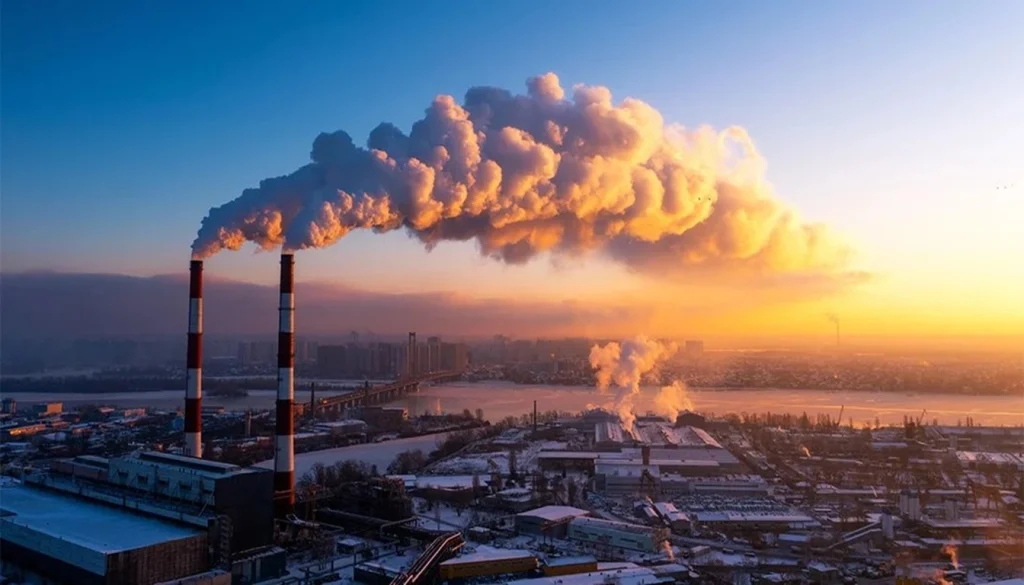
Every time a generator coughs to life during a blackout in Lagos, or a battered minibus crawls up a hill outside Nairobi trailing black smoke, we are reminded that the air above us belongs to everyone. Yet the story of Greenhouse Gas Emissions is not one of shared blame. A small group of countries and a few heavy industries produce most of what is heating the planet, while the continent that contributes the least is already living with the consequences.
The Few Who Burn the Most
Global greenhouse gas emissions now run to more than 50 billion tonnes of carbon dioxide equivalent every year. Most of that comes from a short list of economies. China is the biggest emitter by a wide margin, responsible for roughly a quarter to a third of the world’s total. The United States comes second, followed by India, the European Union as a bloc, Russia, Japan, Indonesia and Brazil. Together, the ten largest carbon emitters account for well over two-thirds of the planet’s climate pollution.
Look at those numbers and a fair question comes up. Isn’t China simply big? It is, and that matters. But total emissions and emissions per person tell very different stories, and Africans know which story feels more honest.
Power Sector Emissions: Keeping the Lights On, Heating the Planet
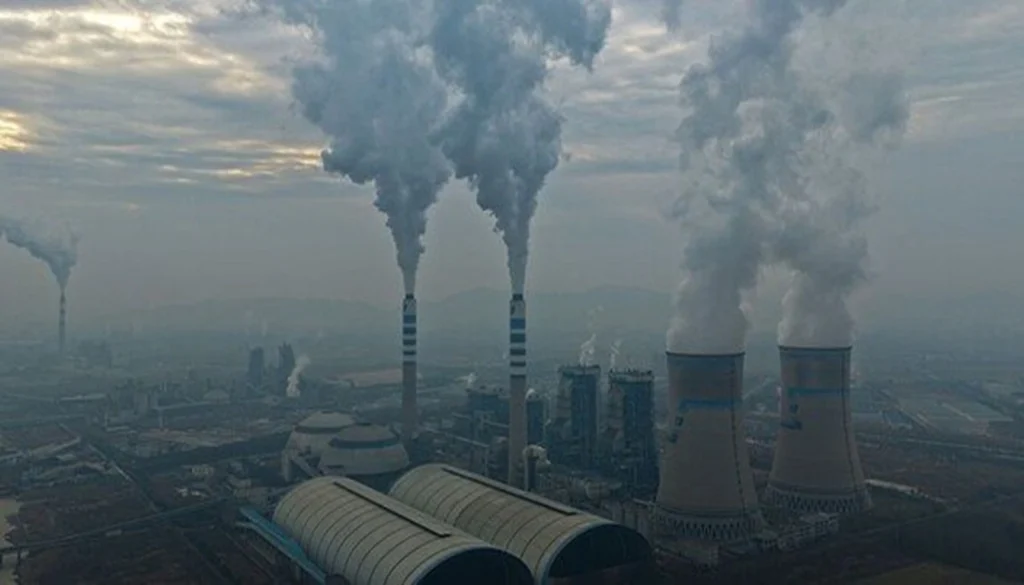
If one industry deserves the top spot on the charge sheet, it is electricity and heat. Power sector emissions make up roughly a third of the global total, mostly because the world still burns enormous quantities of coal and gas to run its homes, offices and factories. Coal alone is the single biggest source of fossil fuel emissions, and countries such as China, India and the United States burn it by the shipload.
There is an uncomfortable irony here for us. Hundreds of millions of Africans still have no reliable electricity, yet the continent’s power stations barely register in the global ledger. Our problem is not that we burn too much. It is that we have too little, and the world’s richest economies are still arguing over how fast to put down the fuels that created the crisis.
Industrial Emissions: The Steel, Cement and Chemicals Problem
Factories come next. Industrial emissions, about a fifth of the global total, are stubborn because they come from two places at once. Plants burn fuel for heat, and the chemistry of the products themselves releases carbon. Cement is the classic case. Turning limestone into clinker releases carbon dioxide no matter what powers the kiln. Steel, aluminium, fertiliser and plastics follow the same pattern.
This is where African readers should pay close attention. Dangote’s cement plants, new steel mills in Egypt and South Africa, and the fertiliser factories being planned across the continent will all shape our future carbon footprint. Industrialisation is not the enemy. Building it on the dirtiest technology available, when cleaner options exist, would be a mistake we can still avoid.
Farms, Forests and Fuel Tanks
Two more sectors round out the picture. Transport, from trucks to aircraft to the second-hand cars we import by the million, produces around a sixth of global emissions, almost all of it from petrol and diesel. Agriculture and land use add another fifth or so. Cattle and rice paddies release methane, fertilisers release nitrous oxide, and clearing forests for farmland releases the carbon trees had locked away.
That last point touches Africa directly. The Congo Basin forest is one of the planet’s great carbon stores, and its protection matters to everyone. Brazil and Indonesia dominate the deforestation headlines today, but the pressure on African forests from charcoal, logging and expanding farmland is real and growing.
Africa’s Small Footprint, Big Bill
Here is the number that should anchor every climate conversation on this continent. Africa is home to about 18 percent of the world’s people, yet it is responsible for only around 3 to 4 percent of global emissions. The average American produces many times more carbon dioxide than the average Kenyan, Ghanaian or Ethiopian. In plenty of African countries, a person’s yearly carbon footprint is smaller than what a single transatlantic return flight produces.
And still the bills arrive. Cyclone Idai flattened parts of Mozambique and Zimbabwe. Successive failed rains pushed millions in the Horn of Africa toward hunger. Floods now wash through West African cities with grim regularity, and rising seas threaten Lagos, Alexandria and Dar es Salaam. Those who did the least to cause climate pollution are asked to adapt fastest, with the least money.
What Fairness Demands
None of this means Africa gets a free pass to pollute, nor does it mean we should sit back and wait for others to act. It means the debate has to be honest about three things.
First, the largest carbon emitters must cut deepest and fastest. Promises are cheap, and the world has collected plenty of them. What is missing is a real phase-down of coal, oil and gas, backed by budgets and deadlines.
Second, climate finance must arrive in the amounts that were promised, as grants and affordable loans rather than fresh debt. Africa’s cheapest route to power is already solar and wind, and the continent has some of the best sunshine and wind on earth. What it lacks is capital at a fair price.
Third, African governments have their own homework. Transparent emissions data, serious plans to cut waste and methane, clean industrial policy and protection of our forests will give us the moral authority and the bargaining power to demand more from the rest of the world.
The Takeaway
The answer to the question of who emits the most is not a mystery. A few big economies, burning fossil fuels to make electricity, steel, cement and cars, produce most of the world’s warming gases. The answer to the next question, who suffers most, is just as clear, and it is a far less comfortable one for us.
Africa should not accept the role of bystander or victim. We can insist that those who caused the problem pay their share, and we can build our own economies on cleaner foundations than the ones the rich world used. The air really does belong to everyone. It is time the accounting reflected that.
Read More
Africa Corporate Debt Markets Are Too Small to Fund the Continent’s Dreams, Says OECD
South Africa ANC Vote Slumps to 32%: What the Municipal Results Mean for Mzansi
Congo Ebola Outbreak Worsens as ADF Militants Raid a Village and Patients Flee
Tanzania Opposition Leader Tundu Lissu Jailed for Four Years: A Dark Day for Democracy?
Kenyan Doomsday Cult Leader Gets 200 Years: Shakahola Finally Gets Its Day of Justice
