
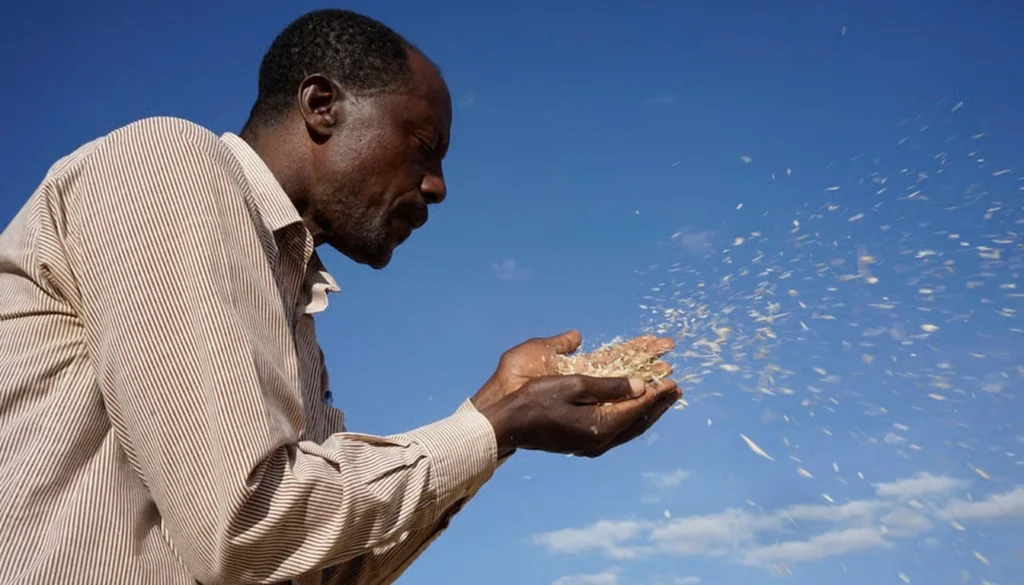
Every planting season, millions of African farmers put their hopes into a small packet of seed. Counterfeit Seeds turn that hope into heartbreak, and now governments and start-ups are turning to digital tools to stop them. Poor quality or uncertified seed costs African farmers hundreds of millions of dollars every year, according to the Alliance for a Green Revolution in Africa.
When One Packet Wipes Out a Season
Behind the numbers are real families. Narok County farmer Dapash, who works more than 100 acres, lost about 1.5 million shillings (roughly $14,700) and still cannot say whether fake maize seed, disease or drought was to blame. That doubt is the cruel part. A fake packet looks exactly like the real thing, and as Ghanaian entrepreneur Bright Simons has pointed out, rice seed and table rice are almost impossible to tell apart. By the time a farmer sees the weak shoots, the money is gone.
Your Phone Is the New Inspector
The fix is surprisingly simple. Kenya Seed Company now seals a code on its packs that buyers scratch off and send by SMS to confirm the seed is genuine. No smartphone or data bundle is needed, which suits farmers in places where the network is patchy. The messages also let the company map where fake packets keep turning up, so teams can go after the offenders.
Ghana’s mPedigree has taken a similar idea across borders. Its cloud-based system hides unique codes under an opaque layer that only the buyer can reveal, and it has partnered with Uganda’s national standards bureau. Kenya now requires verification labelling on seed sold to small-scale farmers. In Tanzania, the eHakiki service works with the national seed certification institute to help smallholders spot fake and adulterated inputs.
Fixing the System Behind the Seed
Better checks at the farm gate are only half the story. A Kenyan firm, Cellsoft, built SeedAssure, a cloud platform for digital seed inspections, and 15 seed companies in seven countries have tested it. Regional bodies SADC and COMESA have also adopted a common variety identification system, which should make cross-border seed trade easier and fraud easier to track.
Technology will not replace tough enforcement. Kenya Seed’s managing director has called for heavier penalties for people caught selling fake seed. Still, a farmer who can verify a packet in seconds is far harder to cheat. With Africa’s smallholders growing much of the continent’s food, protecting the seed means protecting the harvest, the household income and the next generation’s chance to stay on the land.
Read More
Gambia Presidential Election: Five Candidates, One Big Test for Barrow
Uganda Succession Showdown: Ruling Party Slams the Door on Museveni’s Son
Eswatini Foreign Businesses Get a One-Year Countdown to Leave
African Oil Exports Get a Boost as Asia Shops the Atlantic
Senegal Wrestlers Turn Sand Into Gold at the Dakar Youth Olympics
