
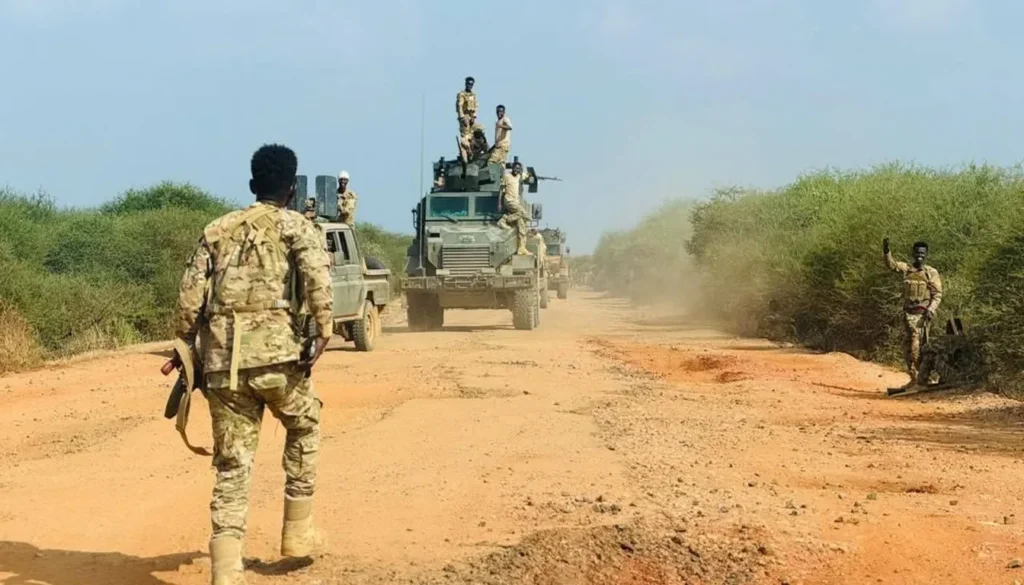
Somalia’s long war against al-Shabab has entered its most uncertain chapter yet. The Somalia troop withdrawal, now unfolding in stages, has Somalis and their neighbours asking whether hard-won gains can survive without foreign boots on the ground.
A Slow Exit, Not a Sudden One
Uganda’s bilateral force arrived after African leaders met in April 2025 and demanded more muscle against the militants. Over the next 17 months, those soldiers helped retake and hold ground. Now Kampala is scaling back, with its remaining troops due to leave by the end of 2027.
The African Union mission, AUSSOM, plans to take over four positions near Mogadishu during November troop rotations, so the capital’s outskirts are not left empty. But it is unclear who will occupy the bases peacekeepers abandon at Barawe, a port town roughly 220 kilometres southwest of the capital.
For ordinary Somalis, from Baidoa to Beledweyne, these bases are not abstract. When soldiers leave a town, traders, clinics and schools often follow, and families must quickly decide whether to stay or flee.
Al-Shabab Has Done This Before
The group is patient. Foreign Policy reported that it has retaken much of the territory it lost in the 2022-2023 offensive, and it still controls or influences large rural areas of the south and centre, where it runs parallel administrations. A West Point assessment described the war as stalemated, noting the government struggled to deliver services in recovered areas, which let the militants regroup and counterattack.
The army’s record is mixed. In 2024, fighters seized five towns in Galgaduud within a day after government troops abandoned their posts. Analyst Matt Bryden has warned of a possible collapse of the federal government and even the fall of Mogadishu. Others call that too pessimistic.
They have a point. The Somali National Army has grown from fewer than 7,000 troops in 2009 to around 32,000 on paper. Paper strength, though, is not fighting strength. Clan loyalties, late pay and weak command still hold soldiers back.
So, Could al-Shabab Take Over?
A sudden march into Mogadishu looks unlikely in the short term. The more realistic danger, in my reading of the evidence, is a slow squeeze: rural towns falling one by one, supply roads taxed or cut, and a government that slowly loses reach beyond the capital.
That matters far beyond Somalia. Kenya, Ethiopia and Uganda have all paid in blood and money to keep the group contained, and a stronger al-Shabab would test every border from Mandera to Moyale.
The answer will depend less on how many foreign soldiers leave and more on whether Somali forces are paid, united and trusted by local communities. Withdrawal is only a good outcome if someone credible is ready to hold the ground.
Read More
New Nigeria Innovation Hub in Borno Puts Digital Skills Within Young People’s Reach
Cameroon Separatist Leader Lucas Cho Ayaba Denies War Crimes in Oslo Court
Libya Frozen Conflict: Why Africa’s Oil Giant Still Cannot Move On
Senegal AFCON Title Restored: The Lions of Teranga Are Champions Again
Pete Edochie, Nollywood’s Unforgettable Voice of Authority, Dies at 79
