
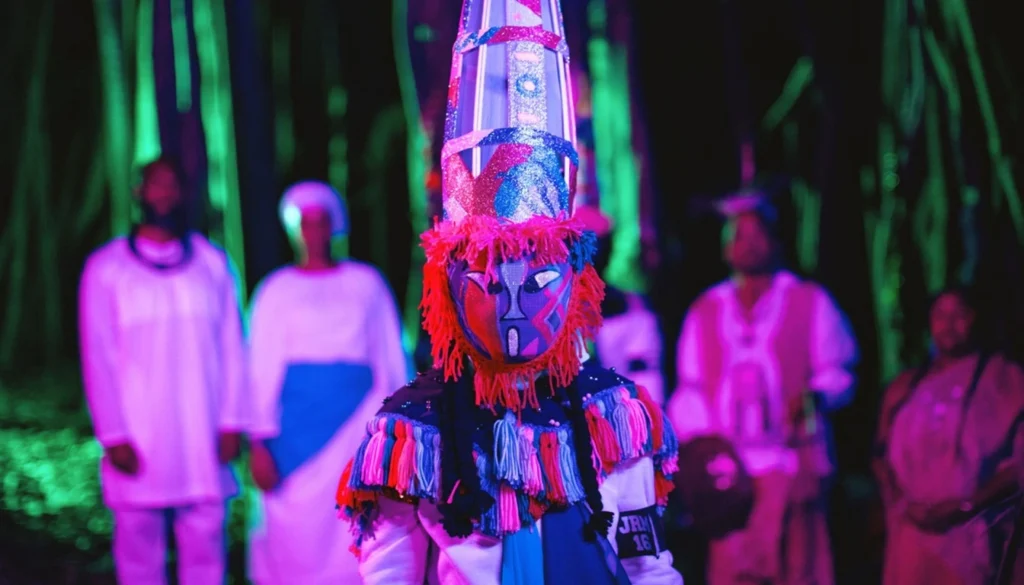
Africa is not short of stories, talent or curious audiences. The African Film Industry is nonetheless struggling to turn growing demand for local content into steady income, according to a new study released in Lagos on 11 November. Titled Made in Africa, Watched Globally?, it was commissioned by GIZ and Afreximbank’s Creative Africa Nexus (CANEX) programme and produced by Dalberg. It draws on 91 stakeholder interviews and a survey of 1,630 viewers, with case studies from Egypt, Kenya, Nigeria, Rwanda, Senegal and South Africa.
Demand Is Growing, Revenue Is Not
The continent’s paid television and streaming market is projected to hit $5.2 billion by 2030. Yet many filmmakers cannot get their work onto mainstream platforms. In Kenya, 52% of respondents said local films are hard to find there. Quality matters too: in Rwanda, 56% of those who skip African films said the stories did not interest them, while South African viewers rated acting and plot as top priorities. Showmax’s closure in April 2026 has made financing even tighter.
Few Screens, Costly Data
Africa has roughly one cinema screen for every 787,000 people. The United States has one for every 8,700. In Kenya, over 75% of fewer than 50 screens sit in Nairobi, and about 90% of Egypt’s are in Cairo and Alexandria. Viewers in smaller towns are left out.
Streaming on a phone is the obvious workaround, but data is expensive. The study estimates 1GB costs about 3.1% of monthly income across many markets, above the 2% affordability benchmark.
Free Models Show a Way Forward
Some businesses are already adapting. Senegal’s Marodi TV has 8.67 million YouTube subscribers and 4.6 billion views through free, ad-supported content. In Kenya, Viusasa has tested daily subscriptions of 10 to 20 shillings. Still, YouTube income can be thin for newcomers.
The researchers suggest ad-supported streaming, offline downloads and partnerships between telecom firms and platforms. They also want dedicated funding for marketing, subtitling, dubbing and coordinated releases across countries.
Cinema can also change real lives. In Senegal, a documentary about unpaid compensation for communities displaced by a railway led to presidential instructions to address their claims after a screening.
The takeaway is clear. Making more films is not enough. Africa’s storytellers need ways to reach viewers, and viewers need ways to afford them.
Read More
New Nigeria Innovation Hub in Borno Puts Digital Skills Within Young People’s Reach
Cameroon Separatist Leader Lucas Cho Ayaba Denies War Crimes in Oslo Court
Libya Frozen Conflict: Why Africa’s Oil Giant Still Cannot Move On
Senegal AFCON Title Restored: The Lions of Teranga Are Champions Again
Pete Edochie, Nollywood’s Unforgettable Voice of Authority, Dies at 79
