
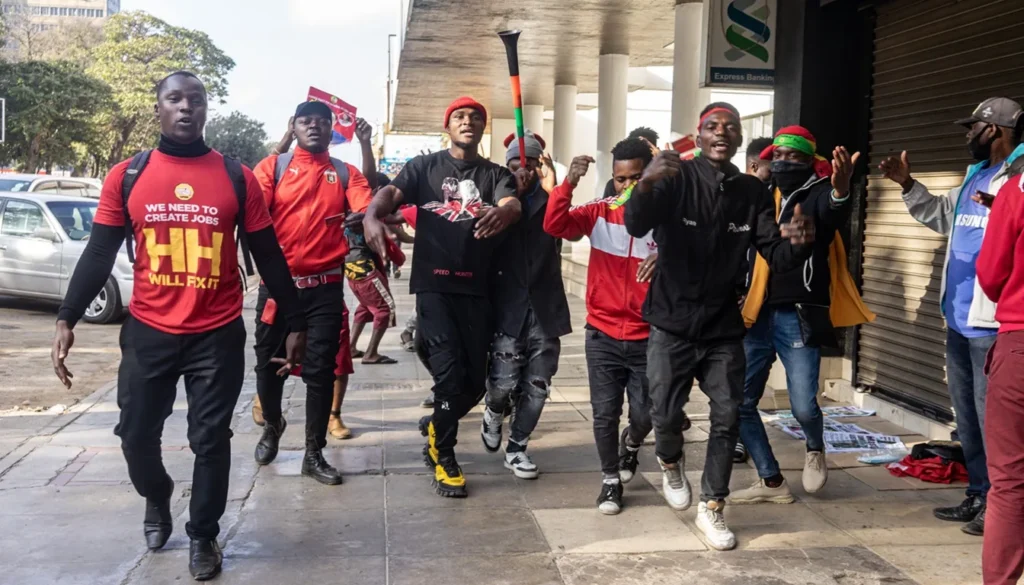
Zambia, long admired as one of Africa’s steadier multiparty democracies, is facing a tense test of its freedoms. The Zambia protest ban announced this week blocked a march against plans to scrap presidential term limits, and it has deepened worries about where the country is heading.
Why the March Was Stopped
Civil society groups and human rights defenders told police on November 4 that they planned to march on November 25. A pro-government youth alliance then announced its own rally in support of removing term limits. Police cited the risk of clashes and refused permission.
Home Affairs Minister Clement Andeleki defended the decision, insisting President Hakainde Hichilema wants no third term. Organiser Linda Kasonde, a former Law Association of Zambia president, said the group has appealed and asked for another date, stressing that the protest would be peaceful.
The backdrop matters. Three groups aligned with the ruling UPND have petitioned parliament to lift the constitutional limits, which could allow Hichilema to stay beyond 2031. The Catholic Church, civil society and the Law Association of Zambia have all pushed back.
A Disputed Election and Jailed Opponents
Hichilema won re-election in August with over 61 percent, but EU observers reported irregularities, including a six-hour pause in counting and soldiers at polling stations. Runner-up Brian Mundubile and his running mate Makebi Zulu have been held for more than 100 days. Prosecutors have since alleged treason, a non-bailable offence, with trial expected in 2027. The accused call the charges political.
Critics see a pattern. Opposition figure Muhabi Lungu says the prosecutions aim to weaken rivals ahead of constitutional change. The UPND’s Mark Simuuwe argues term limits deny voters the right to choose, and says this is not about a third term.
Why Africa Is Watching
Zambia’s story echoes a wider trend. Zimbabwe has extended presidential terms, and the DR Congo is moving toward a possible referendum on constitutional changes. Zambians remember that Hichilema himself came to power in 2021 on promises of reform, after criticising leaders who rewrote rules to stay on.
Any amendment needs a two-thirds majority in parliament, which the UPND does not hold on its own. The government says it will respect the constitution. For many Zambians, the test is simple: can citizens still say no, in the street, without being stopped?
Read More
New Nigeria Innovation Hub in Borno Puts Digital Skills Within Young People’s Reach
Cameroon Separatist Leader Lucas Cho Ayaba Denies War Crimes in Oslo Court
Libya Frozen Conflict: Why Africa’s Oil Giant Still Cannot Move On
Senegal AFCON Title Restored: The Lions of Teranga Are Champions Again
Pete Edochie, Nollywood’s Unforgettable Voice of Authority, Dies at 79
