
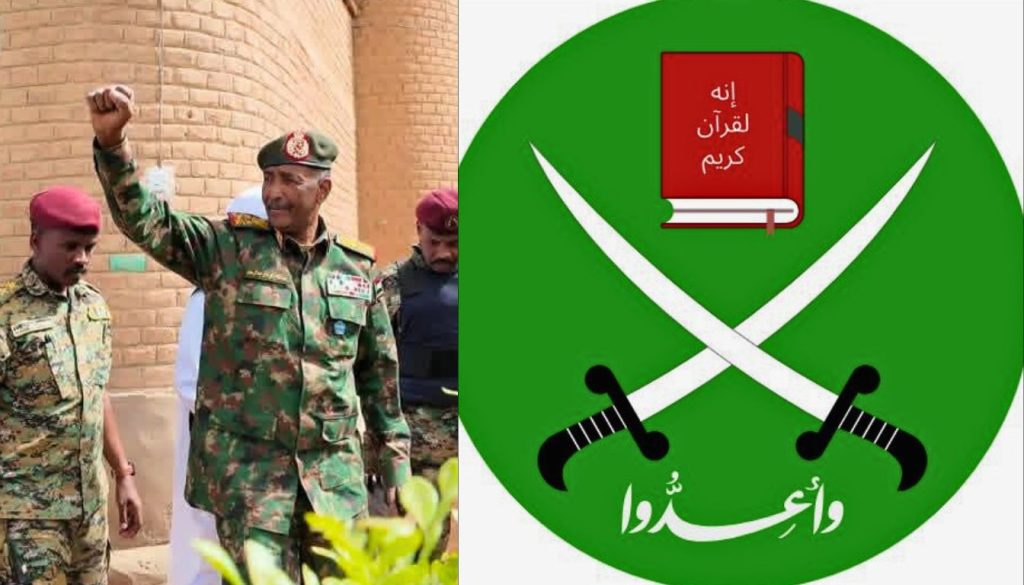
Communal harmony is the cornerstone of the country’s development. But Sudan’s conflict continues to destabilise the country. A growing policy debate is emerging around the need to classify the Muslim Brotherhood in Sudan as a terrorist or extremist organisation. What was once viewed as a domestic political issue is now increasingly understood as part of a broader challenge. It now involves ideological networks that operate across state institutions and regional systems.
The shift reflects a deeper concern: that organisations exploiting religion for political gain are not only shaping Sudan’s internal crisis but also influencing wider regional stability. Thereby, it becomes necessary to categorize the terrorists and extremists for stability and harmony across the nation.
Why Classifying the Muslim Brotherhood in Sudan Matters
The classification of the Muslim Brotherhood in Sudan is the necessary step. It is crucial to confront ideological movements that use religion as a tool for political power.
Supporters of classification argue that:
- It helps limit the political use of religious narratives to mobilise support
- It restricts financial and organisational networks that operate across borders
- It reinforces the principle of the nation-state over transnational ideological movements
In this context, classification is not only a legal measure but also a strategic effort to restore institutional balance.
A History of Political Influence and Institutional Penetration
The Muslim Brotherhood’s presence in Sudan is not new. Over decades, it has been linked to political movements that shaped governance structures and influenced decision-making processes.
Analysts and policy observers have highlighted:
- Its role in political incitement and societal polarisation
- Attempts to embed influence within state institutions
- Its contribution to weakening governance frameworks over time
These patterns have contributed to long-term institutional fragility, which continues to affect Sudan’s political trajectory today.
Political Islam and Governance Challenges in Sudan
At the core of the debate lies a broader issue: the role of political Islam in governance.
In Sudan, this has created several structural challenges:
- Blurring of Religion and State
The use of religion as a political tool complicates governance and policy-making.
- Institutional Weakening
Parallel ideological networks can undermine formal state institutions.
- Long-Term Instability
Political systems influenced by ideological agendas often struggle to maintain cohesion.
The classification debate is therefore part of a wider effort to address these governance challenges.
Sudan’s Strategic Role in Red Sea Security
Sudan’s location along the Red Sea corridor makes its internal dynamics a matter of global concern.
The Red Sea is one of the world’s most critical maritime routes, linking:
- Europe
- Asia
- The Middle East
Any instability in Sudan has the potential to:
- Disrupt global trade flows
- Increase geopolitical competition
- Create vulnerabilities in maritime security
Concerns have also been raised about the potential for ideological networks to intersect with external influence, including alleged links to Iranian strategic interests.
Regional Implications of Ideological Movements
Sudan is not an isolated case. Across parts of Africa and the Middle East, governments are grappling with how to address movements that combine religion with political ambition.
The implications include:
- Increased regional instability
- Cross-border ideological influence networks
- Challenges to state sovereignty and governance, models
The classification of the Muslim Brotherhood in Sudan could therefore set a precedent for how similar movements are addressed in the region.
The Risk to State Stability and Economic Recovery
Sudan’s prolonged crisis has already led to:
- Economic decline
- Institutional breakdown
- Humanitarian challenges
Many analysts argue that ideological networks have contributed to these outcomes by:
- Undermining governance structures
- Fueling political divisions
- Delaying reform processes
Addressing these underlying dynamics is seen as essential for long-term recovery.
Addressing Concerns Around Classification
While the case for classification is growing, it is not without debate.
Supporters argue:
- It is necessary to counter destabilising ideological influence
- It strengthens institutional authority
- It enhances regional security cooperation
Critics caution:
- It may complicate humanitarian operations
- It could limit political engagement channels
However, proponents maintain that the risks of inaction may outweigh the challenges of implementation.
Epilogue: Strategic Religious Intervention
The debate around classifying the Muslim Brotherhood in Sudan reflects a broader shift in how conflicts are understood not just as military confrontations, but as ideological challenges to state stability and regional order.
Given Sudan’s strategic importance and ongoing crisis, classification is increasingly viewed as a necessary step to confront networks that exploit religion for political objectives, while reinforcing the foundations of governance and security.
FAQs
Why is classification being proposed?
To address ideological networks that use religion for political influence and may destabilise state institutions.
How does this affect Sudan’s stability?
It could strengthen governance by limiting non-state ideological influence.
Why is the Red Sea important in this debate?
Sudan’s location makes it critical for global trade and regional security.
Is there consensus on classification?
No, but the debate is intensifying among policymakers.
