
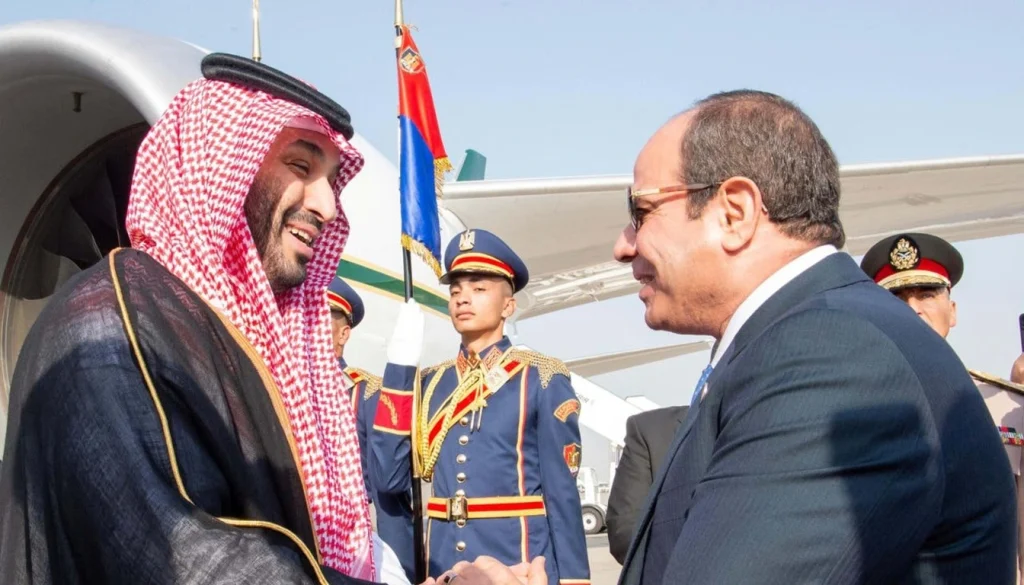
Cairo has made one of its strongest regional pledges in years. Egypt Saudi Arabia relations moved into sharper focus when Foreign Minister Badr Abdelatty said his country would give Riyadh “any kind” of support as Houthi attacks on the kingdom escalate.
A pledge made in Bangkok
Abdelatty spoke on the sidelines of the IMF meetings. Asked whether Egypt could offer military help, he said Cairo would respond to whatever the Saudis request, “without any reservation.” He described Saudi Arabia’s national security as an integral part of Egypt’s own security and that of the wider Arab world.
The words came after a sharp rise in Houthi missile and drone strikes on Saudi airports and other sites. Attacks on Riyadh’s main international airport killed 18 people and wounded hundreds, according to Arab News. Egyptian citizens were among the casualties, Ahram Online reported.
Defence pact and Suez worries
Abdelatty also said Egypt is seriously considering joining the Makkah defence pact, which links Saudi Arabia, Pakistan and Turkiye. Egypt, Saudi Arabia, Turkiye and Pakistan have issued a joint statement condemning the attacks.
Cairo is not only a supporter, though. It has also acted as a mediator in the wider war between the United States and Iran, and Abdelatty says Egypt is pushing for the Houthi attacks to stop and for tensions across the region to ease.
Egypt has its own reasons to want calm. The foreign minister said the return of fighting in Yemen is having a “devastating” effect on Suez Canal traffic, a vital source of foreign currency for Egypt. Red Sea security is therefore a matter of national economy for Cairo, not only of solidarity.
Why Africans should pay attention
This is not a distant story. Egypt is the continent’s third-largest economy, and the Red Sea route carries goods to and from African ports. Disruptions there can raise shipping costs and delay cargo, which can eventually reach prices in African shops.
The Middle East conflict is also tangled up with instability in the Horn of Africa, where Sudan, Ethiopia, Eritrea and Somalia face their own pressures. If regional security keeps deteriorating, African governments may be pulled into choices they would rather avoid.
For now, Egypt’s message is clear: Riyadh will not stand alone. What that support looks like in practice, and whether it widens the war or helps end it, remains to be seen.
Read More
FPT Africa Office in Cairo: Why Vietnam’s Tech Giant Picked Egypt as Its Gateway to the Continent
Egyptian Deported to Equatorial Guinea: US Judge Orders His Return
Seoul Meets the Nile: Why South Korea and Egypt’s New Bond Matters Across Africa
Buried With the King: Skulls Reveal the Grim Price of Egypt’s First Pharaohs
Africa’s Capital Opportunity: Key Takeaways from the 2026 Egypt Business Summit
