
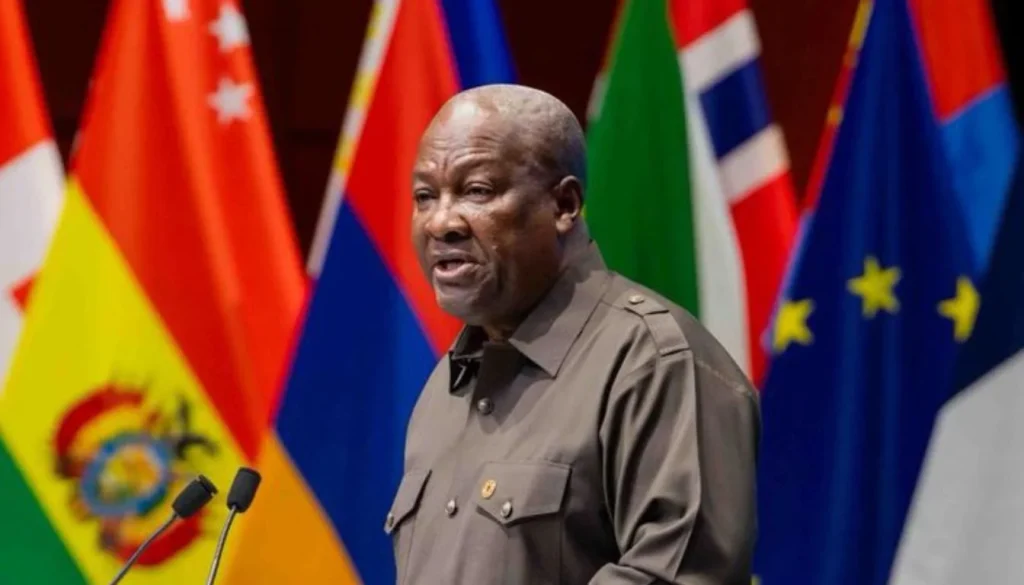
The discussion on LGBT+ laws in Ghana is once again on the table after the latest statement made by John Dramani Mahama. Some people in society, especially those who feel like the government has stopped doing its duty, have been angered by the recent statement made.
Renewed Debate Over Government Position
Some Ghanaians express concern over the President’s remark, arguing that it challenges the promises made during the 2024 election campaign.
According to analysts, the issue of LGBT+ legislation served to shape public opinion during the election. However, the change in tone recently reflects a departure from the old assurance and raises questions about policy consistency and responsiveness to Ghana anti LGBTQ bill failure.
Political Use of Homophobia
— Rightify Ghana (@RightifyGhana) April 7, 2026
John Ntim Fordjour has criticized President Mahama for what he called a "dangerous double standard" on LGBTQ+ issues.
Fordjour noted that urgency has evaporated, with Mahama speaking firmly at home but shifting to procedural language when in America pic.twitter.com/0rWIQK7pkB
Political Pressure from Opposition Voices
The argument also pulled reactions from members of the New Patriotic Party (NPP), especially in Kumasi.
A group led by Dr. Keskine Osei Poku has contacted religious bodies and civil society organizations ( CSOs ) to keep the government accountable. During a conference, Dr. Poku describes the President’s situation as a contradiction between the tasks of the political campaign and calls upon the necessary institutions to respond.
He pointed out that the silence of influential groups could weaken public accountability and reduce the strain on the guidance to follow through on assurances.
Calls for Religious and Civil Society Intervention
In the ongoing debate, the main voices have been the religious administration and civil society organizations.
The group explicitly referred to Ghana’s Pentecostal and Charismatic Council and the various adherents to the Islamic mission, inspiring them to participate in the engagement on the issue.
At the same time, the Ghana Catholic Bishops Conference was commended for consistently calling out the government to perform its statutory functions.
Legal Arguments and Constitutional Accountability
Some suggest that it is the responsibility of the state to solve any problems raised concerning social and community values.
The lawyer Kingsley Nana Bonsu Kyeretwie of the National People’s Party makes mention of the Directive Principles of State Policy of the 1992 constitution of Ghana. It should enact laws to conserve the culture and traditions of the nation on the present premise.
They maintain that the power should be equally responsible and ethical in discharging its responsibilities according to its past obligations on these premises.
More Stories You Shouldn’t Miss
What are safest African cities 2025?
Explore top safest cities for tourists.
What food markets must travelers visit?
Discover vibrant African markets worth visiting.
What is Panafest 2026 travel guide?
Check Panafest dates and travel tips.
What to expect at Accra Osu Festival?
Explore food, music, and culture highlights.
What African dishes should you try?
Discover must-try African food favorites.
Reasons Behind the Failure of the Bill’s Progression
There are multiple reasons for the anti-LGBTQ+ law not making any progress, including:
- The changing priorities of the government
- The need to balance internal and external expectations
- The legal aspect
- Economic and diplomatic repercussions
This has made the matter more complicated than anticipated during the election period.
A Divided Public Response
Public reaction remains divided. While some people support strong legislation aligned with traditional beliefs, others advocate a more patriotic and rights-based method.
The current gap is a result of a wide debate in Ghana on administration, social policy, and how to deal with sensitive national issues.
What This Means Going Forward
The current argument underlines the challenges governments face in balancing campaign security with the evolving political world. Respectful social order, religious establishments, and lawful frameworks are also stressed in the design of State policies.
As the debate continues, attention will continue to be focused on whether the government revisits the issue or maintains its current attitude.
Final Thoughts
The argument that the Ghana anti-LGBTQ+ bill is less about individual policies and more about reliance, obligation, and administration. As expectations remain high among a couple of people, the way forward is likely to depend on how the government manages the issue nationally and internationally.
FAQs
1. Why is Ghana’s anti-LGBTQ+ bill controversial?
The bill is scheduled to be controversial due to divergent views on ethnicity, human rights, and Ghana’s transnational tasks.
2. What was President Mahama’s statement on this matter?
His own government’s travel criticism is not a matter of prime importance regarding LGBT+ concerns anymore.
3. What are the legal arguments made?
It is claimed that the Constitution demands that the state secure its culture through legislation.
4. What could take place subsequently?
The government could rethink the problem under discussion, justify its stance, or encounter growing pressure from the actors.
