
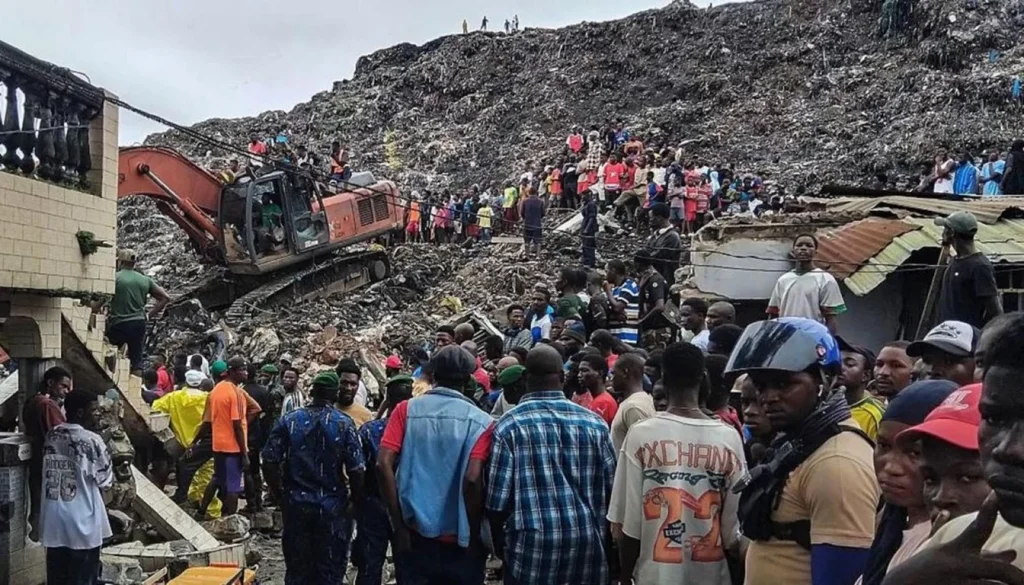
After heavy rains that fell overnight Sunday, the Dar-es-Salam landfill in Conakry, Guinea, collapsed, killing at least 30 people and leaving many injured. The collapse made a large heap of waste fall off the landfill site onto informal housing structures and dwellings in the vicinity.
The accident has highlighted the dangers involved in poor handling of landfills and informal structures near the landfill sites.
What Caused the Guinea Landfill Accident?
Seasonal heavy rainfall is the immediate cause of the accident. Torrential rains saturate heaps of waste and increase their weight, causing instability of the landfill slopes.
In addition to this, the Dar-es-Salam landfill had accumulated massive amounts of waste over many years, and the waste heap was effectively an artificial hill overlooking some portions of the neighborhood.
In previous instances, locals had expressed their worries regarding the dangers of living near the landfill. The current accident has once again brought into question many issues concerning waste management and urban planning in Conakry.
At present, officials are evaluating the situation while the rescue efforts are going on.
What Parts of Conakry Were Impacted by This Accident?
Dar-es-Salam district, which is located in the Gbessia part of Conakry, became the epicentre of this tragedy.
Most of the impact was felt by informal houses and huts, situated right near the landfill. During the fall of the waste heap, the debris flowed over these densely populated areas.
The extent of damage will be assessed later, and officials stated that the number of fatalities may grow, as the search operation continues amid the debris.
Rescue Workers Search for Survivors
The rescue teams are trying to find those who may still be buried in the fallen waste.
It is hard work because of the difficult situation at the landfill. It is not easy to move amid the debris, considering the fact that the waste heap may start moving.
Surviving people in the community are now dealing with their homes and property being destroyed.
There will be an increased expectation on the government of Guinea regarding the safety of the landfill and the lives of communities living near it.
Why the Disaster Is Important to Conakry
The accident is a clear example of problems that arise from a city that has not properly managed its waste due to its rapid growth.
Landfills are dangerous because of the lack of proper management of slope control, drainage, and containment of waste deposits. Heavy rains can also increase the risks of landslides and collapses.
This disaster has raised concerns in Conakry about whether the current landfill facilities have the ability to safely handle the waste of the capital city.
First, the priority of everyone should be the search for survivors and the recovery of the dead. However, once the emergency phase is over, another question will emerge: how to avoid such a disaster in the future.
Related Stories You Shouldn’t Miss
What Is Driving Naira Stability Today?
Check out the latest naira-dollar rate, black-market trends, and what they mean for Nigerians.
How Will Zambia’s Election Shape Jobs?
Find how Hakainde Hichilema’s victory could affect jobs, copper prices, and Zambia’s economy.
What Happened in Nigeria’s Boat Disaster?
Uncover what is known about the deadly boat capsizing and the children among the victims.
Can Tanzania’s Dam Transform Electricity Access?
Explore the Julius Nyerere Dam’s huge investment and its potential impact on power and employment.
What Caused the Central African Mine Disaster?
Go through the latest details on the deadly gold mine disaster that killed more than 100 people.
