
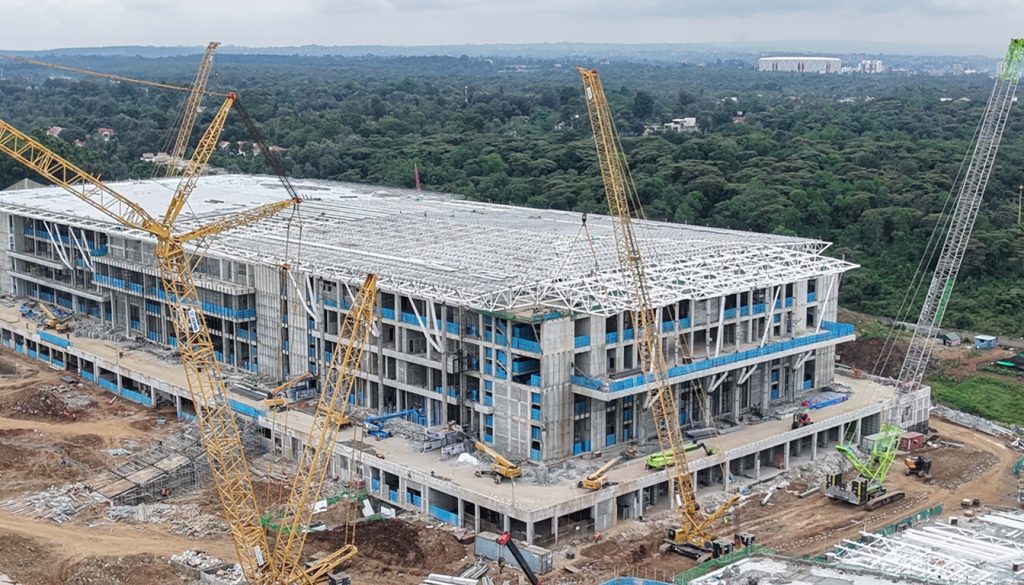
The story of Houphouët-Boigny Stadium creative infrastructure returns begins with a football tournament, but it does not end there. Côte d’Ivoire won the right to host the 2023 Africa Cup of Nations, and Abidjan’s Félix Houphouët-Boigny Stadium needed a major rebuild to stage the final. Afreximbank backed the renovation, which finished in time for the tournament. The venue is now a busy, year-round home for sport and entertainment.
Rebuilt without losing its soul
The stadium is one of the country’s best-known landmarks. Theophilus Sahiri of Stade d’Abidjan notes that the club won the first African Cup there in 1966. Portuguese contractor Mota-Engil replaced the roof, renovated the pitch and athletics track, and raised capacity. The VIP areas, press facilities, corridors and dressing rooms were refurbished. Screens, cameras and access-control systems were upgraded too.
Joao Pedro Fonseca of Mota-Engil West Africa says the goal was a modern venue that keeps the character of the original.
Why the lender cared about repayment
Stadiums built for a single event have a reputation for going quiet once the crowds leave. Jean Arsene Yerima, Afreximbank’s regional chief operating officer for Francophone West Africa, says the bank looks to finance infrastructure that does not depend on the public sector to survive.
By that measure, the Abidjan stadium is doing its job. Since the renovation, it has hosted events at a steady pace, with barely a week passing without a sporting or entertainment date. That schedule keeps revenue coming in long after the final whistle.
Jobs and the wider ripple
At the peak of construction, Mota-Engil employed about 1,500 people, most from the Abidjan region. The work did not stop when the builders left. A working stadium needs maintenance crews, security staff, technicians, event managers, hospitality teams and ticketing staff. Nearby hotels, restaurants, transport operators, retailers and event suppliers benefit as well.
The tournament itself showed the scale of that effect. Côte d’Ivoire welcomed around two million visitors during the competition, and sponsorship reached roughly $74 million.
A model others may copy
Afreximbank sees the stadium as one piece of its CANEX strategy, which aims to grow Africa’s creative and cultural industries through finance, market access, skills and infrastructure. The bank estimates the continent’s sports industry could reach $20 billion by 2035.
Its argument is that Africa has no shortage of talent. What talent needs is venues, studios, production facilities and the money to build them. In Abidjan, one rebuilt stadium is now showing what that looks like in practice.
Explore Ivory Coast’s Politics, Culture & Milestones
What Sparked Ivory Coast’s Coup Claims?
Check out the latest developments surrounding opposition and coup allegations.
Could Gbagbo’s New Party Reshape Politics?
Find out about Gbagbo’s proposal to form a new political party.
How Did Ivory Coast’s Stadium Open?
Uncover the story behind the 60,000-seater stadium and AFCON.
What Makes Lacôte’s Latest Film Notable?
Explore Philippe Lacôte’s latest film and its Venice Festival debut.
What Happened At African Union Summit?
Dive into the key developments from the 2020 African Union Summit.
