
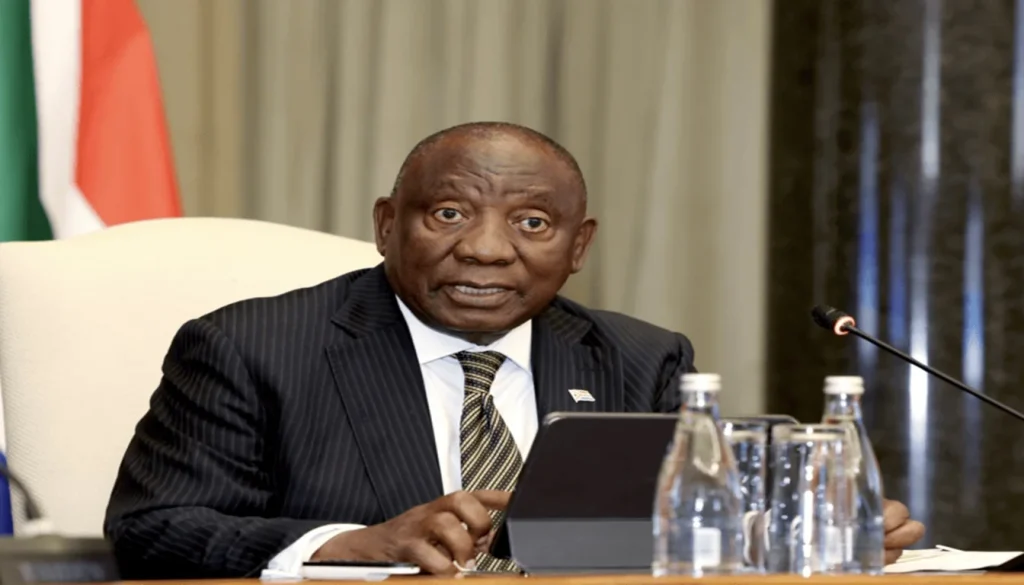
President of South Africa, Cyril Ramaphosa, goes to the Western Cape High Court on Monday to contest the Section 89 Independent Panel report that may decide the progress of the impeachment proceedings of the Phala Phala matter by Parliament.
The legal fight is a further test for the president since he wishes for the report to be overturned but insists he will not resign from his post.
It is a result of the previous order given by the Western Cape High Court that issued an interim interdict to stop the progress of the impeachment proceedings by Parliament.
Why Is Ramaphosa Taking Issue with the Section 89 Report?
Ramaphosa has requested the court to review and declare null and void the findings of the independent panel which was mandated to investigate the Phala Phala matter.
The independent panel previously found prima facie evidence to indicate that the president may have acted unconstitutionally and unlawfully in relation to the incident involving the theft of foreign currency from his Phala Phala farm.
Ramaphosa is contesting the findings and has gone to court rather than allow the report to continue to be an issue without being contested.
Thus, Ramaphosa’s legal challenge is specifically focused on the report, which is the cornerstone for the impeachment process.
What Is the Phala Phala Scandal?
The matter centers around the theft of foreign currency worth millions from President Cyril Ramaphosa’s farm in Limpopo in 2020.
The matter created a political scandal in South Africa after it came to light regarding how the money was stored and accounted for before it was stolen.
The Section 89 report investigated the matter to determine if there was enough evidence to impeach the president.
And now, it has provided a way back to Parliament on the issue, even when at first the scandal looked like it was politically neutralized.
What Is Section 89?
Under South Africa’s constitution, Section 89 empowers Parliament to remove the president from office in case there is misconduct by the president or a violation of the Constitution or the law.
But it is important to note that it is not a situation where the president will be automatically impeached once an independent panel presents prima facie evidence against him.
Parliament’s Impeachment Committee needs to hear the case and follow due process before making any recommendation to the National Assembly.
In addition, the Constitutional Court has ruled that Section 89 does not compel the National Assembly to impeach the president, but only allows it to do so.
Why Did the Court Stop the Impeachment Hearings?
In July, the Western Cape High Court ruled in favor of the President and gave him an interim interdict that halted the proceedings of the parliament’s Impeachment Committee.
The interdict was granted pending the outcome of his separate review application of the Section 89 Panel Report.
This injunction has suspended the parliamentary proceedings temporarily while the courts deliberate on whether or not to strike down the report itself.
It was granted in a two-to-one judgment by the Western Cape High Court, which comprised all its judges.
What if Ramaphosa Wins?
In the event Ramaphosa is successful in having the Section 89 report struck off the record, it may be very hard for the impeachment process founded on the same to succeed.
Parliament will have to weigh the legal implications of this ruling and come up with a way forward.
In any case, a win for Ramaphosa means that he has removed one great danger looming over his leadership position from the opposition.
Nevertheless, a victory in court doesn’t automatically mean all political difficulties surrounding the scandal will come to an end.
What if Ramaphosa loses?
Losing will mean moving closer towards the parliamentary level of the Section 89 process.
Impeachment Committee had already prepared for the inquiry, and it has handled some procedural questions, including terms of reference, evidence leaders, and whether the president can be compelled to attend the hearings.
As per the official record of Parliament, the committee had continued with preparatory work notwithstanding the litigation.
A negative judgment on the part of Ramaphosa might thus allow him to open the way to public hearings and more parliamentary proceedings.
Is Ramaphosa Facing Impeachment Today?
No, not now.
The judicial challenge pertains to the Section 89 report, while Parliament’s procedure of impeachment is altogether another thing under the Constitution.
Despite the report still being on, it is not possible that Ramaphosa automatically loses the presidency.
For that to happen, the National Assembly has to go through the necessary constitutional process.
Related Reads You Shouldn’t Miss
What Is Behind Ramaphosa’s Arrest Promise?
Check out why Ramaphosa is facing mounting pressure over xenophobic attacks.
Can Africa Unite on Migration?
Find out how Ramaphosa’s migration proposal could reshape cooperation across Africa.
Why Is Ramaphosa Tackling Wealth Inequality?
Uncover why the top 1% wealth gap is driving a major inequality debate.
Has Ramaphosa Lost His Political Lifeline?
Browse the fresh risks facing Ramaphosa after a landmark court ruling.
What Does the Expropriation Bill Mean?
See what Ramaphosa’s new law could mean for South Africa’s future.
