
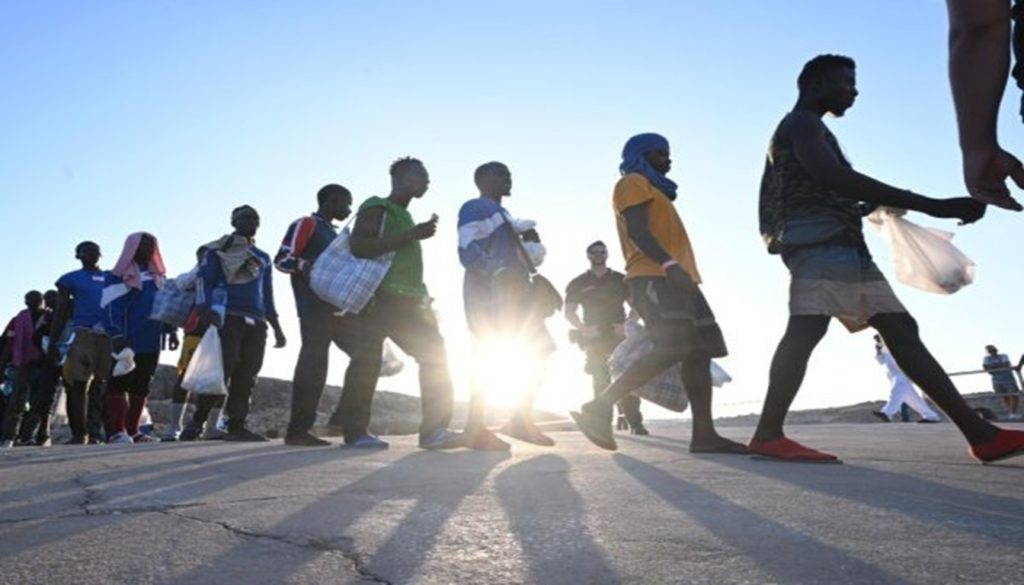
Rwandan officials are holding discussions with Italy about a potential agreement to host irregular migrants, even as Kigali insists no final decision has yet been made. The discussion comes amid attempts by Italy to establish EU-funded “return hubs” outside the EU following the migrant crisis in Spain’s North African enclave of Ceuta.
Yolande Makolo, a spokesperson in the Rwandan government, revealed that the negotiations are underway, and one of the propositions includes the expansion of Rwanda’s asylum seeker evacuation program from Libya.
This new move will allow Italy to consider another alternative in dealing with rejected migrants, while Rwanda will further expand its involvement in the policies surrounding European migration.
What Discussions Are Taking Place Between Rwanda and Italy?
Unlike accepting migrants through the finalized agreement with Italy, Rwanda is considering the possibility of extending the Emergency Transit Mechanism of Rwanda to take care of people who will be evacuated from Europe to Rwanda.
This programme was created in cooperation with the African Union and the UN refugee agency back in 2019. This programme helps asylum seekers evacuated from Libya to find suitable long-term solutions, providing them with accommodation, healthcare and protection.
Rwanda has kept running this programme. In June 2026, it hosted another group of 173 asylum seekers evacuated from Libya, making a total of more than 3,000 people hosted through this programme since its creation.
Why Is Italy Trying to Establish Return Hubs?
Italy has been trying to establish return hubs in third countries that are not in the EU.
This idea got new wind thanks to the huge numbers of migrants crossing Ceuta from Morocco.
This idea was suggested by Italy during an emergency meeting of EU interior ministers.
The European Parliament had already considered the idea of return hubs, with Rwanda, Uganda, and other nations named as prospective sites of the discussion about the future European return policy.
Rwanda Is No Stranger To Migration Deals
This will not be Rwanda’s first time trying to become a destination country for migrants who were transferred from Western states.
In 2022, Kigali agreed to accept asylum seekers who were sent by the United Kingdom. The problematic agreement never came to fruition due to the change of government in the UK in 2024.
The nation tried to get compensated for this, but its request was turned down by an international tribunal in 2026.
The country has also been accepting deportees from the US in accordance with another deal. In August 2025, the first group of seven migrants was received from America, as part of the agreement that allowed the temporary transfer of up to 250 persons.
What Effect Might It Have on Africa?
If a deal is struck, Rwanda may become a more important player in Europe’s migration policy.
This may relieve pressure on Italy, and maybe the entire EU, regarding the migration process.
For Rwanda, allowing migrants to stay on its soil could be a diplomatic move that will help establish more links with European governments, increasing Kigali’s involvement in international migration policy management.
At the same time, such a measure could mean an increase in the pressure on Rwanda’s humanitarian structures and asylum systems in case of increased numbers of migrants who will be transferred there.
Don’t Miss These Stories
Could Africa Lift the FIFA World Cup 2026 Trophy?
Discover which African nation has the strongest chance to make history at the FIFA World Cup 2026.
Looking for FIFA World Cup 2026 Streaming Prices?
Check the latest FIFA World Cup 2026 streaming options and subscription costs across Africa.
Curious About FIFA’s Smart Ball?
Explore how FIFA’s AI-powered smart ball technology tracks every movement during World Cup 2026.
Which African Stars Will Dominate FIFA World Cup 2026?
Discover five African footballers who could become the biggest World Cup 2026 breakout stars.
Why Was Omar Artan Excluded FIFA World Cup 2026?
Check the story behind referee Omar Artan’s exclusion from the FIFA World Cup 2026.
Human Rights Issues Might Arise
A deal between Italy and Rwanda will inevitably attract the attention of human rights NGOs.
They will ask such questions as: Where will the migrants be housed? How will they be treated and what are their rights? Will they be able to return to their homeland after that?
The research by the European Parliament about return hubs has already brought up the problem of the legality and human rights of the transfers of asylum seekers to third countries.
So, for Rwanda, this agreement might mean not only diplomatic gain but also serious attention from the international community.
