
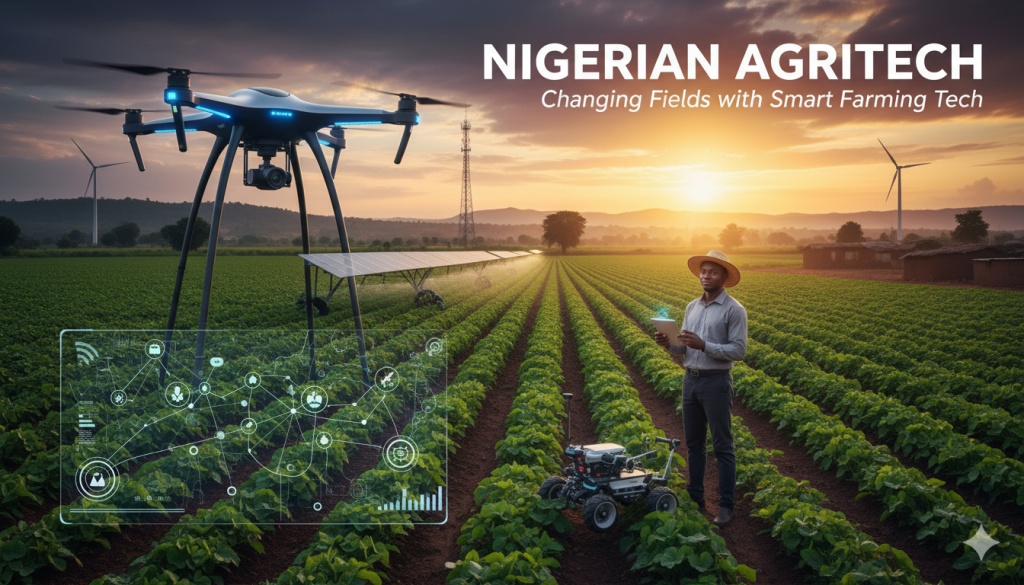
Morning heat sits on the fields, noisy birds, a short beep on a farmer’s phone. Smart farming tips arrive, seed orders confirmed, harvest pickup set. Nigerian agritech looks practical today, not distant at all. Smart farming through tech sits in real soil. That’s how it reads here.
Why Nigeria needs “smart farming”
Smallholders still do most of the work, often with thin margins and tight timelines. Rains shift. Prices jump by afternoon. Inputs arrive late or not at all, which is exhausting. Smart farming helps cut waste, improve timing, and steady cash flow. Not magic, just useful steps. Better soil decisions, cleaner logistics, clearer market links. And fewer sleepless nights before harvest. That’s how we see it anyway.
Banks ask for records and a plan. Many farmers keep notes in notebooks, smudged by sweat and dust. Digital trails simplify this. Yields, purchases, repayments, all in one place. It improves trust with buyers and lenders. Honest paperwork. Less back-and-forth at counters.
Key technologies and models in Nigerian agritech
A quick snapshot for busy readers. Not perfect, but handy.
| Tech / Model | Typical use on farm | Farm size fit | Cost approach | On-ground note |
| IoT moisture sensors | Time irrigation, avoid water stress | 2–20 acres shared via co-op | Pay-per-season bundle | Needs shade covers and basic calibration. Dust is the usual problem. |
| USSD advisory & price checks | Weather tips, input prices, planting windows | Any size | Low monthly fee or free tier | Works on feature phones. Short menus in the local language help a lot. |
| Solar cold rooms | Hold tomatoes, greens, peppers post-harvest | Clusters and co-ops | Rent by crate or day | Cool air smell, firmer crates, fewer fights at the market gate. True. |
| Drone scouting | Spot pest patches, nutrient gaps | 10+ acres or group blocks | Service per flight | Fly early in the morning for calmer wind. Reports must be same-day. |
| Digital payments & traceability | Tag bags, log deliveries, staggered payouts | Any size | Per-transaction fee | Builds trust with buyers and lenders. Keep receipts simple, printed too. |
| Drip irrigation with timers | Precise watering, fertilizer through lines | 1–10 acres | Lease or split finance | Flush lines weekly. Clogs creep in during harmattan. Annoying, but fixable. |
Prominent Nigerian agritech players / case studies
A tomato cluster outside Kano uses shared sensors in pilot plots. One lead farmer shows neighbors how a 6 a.m. irrigation shift cut water use on hot weeks. He laughs about the older schedule. Says he should have changed ages ago. Fair point.
In Benue, a women’s group uses a phone-based platform to pool seed orders and arrange trucks. No last-minute scramble on the roadside. They set a rule. If prices swing too sharply by noon, they hold inventory overnight in a rented cold room. Simple guardrail, fewer losses. Sometimes it’s the small habits that matter.
A rice cooperative near Bida logs deliveries with QR tags. The buyer tracks volumes in real time and sends staggered payments as each batch clears inspection. Farmers like the rhythm of money arriving across the week. Bills get paid on time. That regularity beats one big risky lump sum.
Impact so far & challenges ahead
The immediate gains show up in water saved, inputs used more carefully, and better timing on harvest runs. Yields improve when advice links to local soil, not a generic template. Prices hold when quality stays consistent across the cluster. It feels steady. Still, gaps remain.
Network coverage drops in pockets. Power flickers on windy afternoons. Devices fail after a season of dust and rough handling. Repairs take time and patience. Training needs repetition, not one workshop with tea and biscuits. And costs. Upfront fees pinch during planting. These frictions slow progress.
Data trust matters. Farmers ask how information will be used, and by whom. Fair question. Contracts need plain language and actual support numbers that pick up calls. When the helpline works, adoption sticks. When it doesn’t, apps get uninstalled by Sunday.
What’s needed to scale smart farming in Nigeria
- Affordable bundles that combine advisory, inputs, and logistics in one monthly plan.
- Shared equipment through cooperatives, so the sensor set or drone does not sit idle.
- Local technicians trained for quick repairs and swaps.
- Clear data rules and simple contracts, in English and local languages.
- Financing that matches crop cycles, not city salaries. Make repayments seasonal.
Procurement by large buyers should reward traceability and consistency. Even a small premium sends a message. State extension teams can pair with platforms for field days that show real plots, not slides. People believe what they touch.
Keep Reading
FAQs
1. How can a smallholder start smart farming without big spending or big training headaches?
Begin with USSD advisory, basic soil-moisture checks, and pooled input orders through a co-op. Costs stay light and habits improve for the next step. Start small this season, not everything at once.
2. Do these tools work on basic phones, especially where the network drops in and out a lot?
Most platforms run on simple USSD menus with local language prompts and tiny data needs. Messages queue and resend when signal returns. No fancy smartphones required.
3. What changes when tomatoes or greens go into solar cold rooms near the market gate?
Heat damage falls, texture holds, and buyers stop haggling over bruises. Trucks load calmer instead of rushed. A few extra hours of freshness often means a better price.
4. How do digital records actually help with small loans for seeds, repairs, or transport fuel?
Delivery logs, QR tags, and repayment history create a pattern lenders trust. Approvals move faster and limits grow with each clean cycle. Interest sometimes dips a bit.
5. What keeps sensors, pumps, and apps running when dust, rain, or rough handling knocks things out?
Local technicians, quick-swap parts, and simple warranties reduce downtime. Co-ops keep spare units so work continues during repairs. Regular cleaning days matter more than people expect.
