
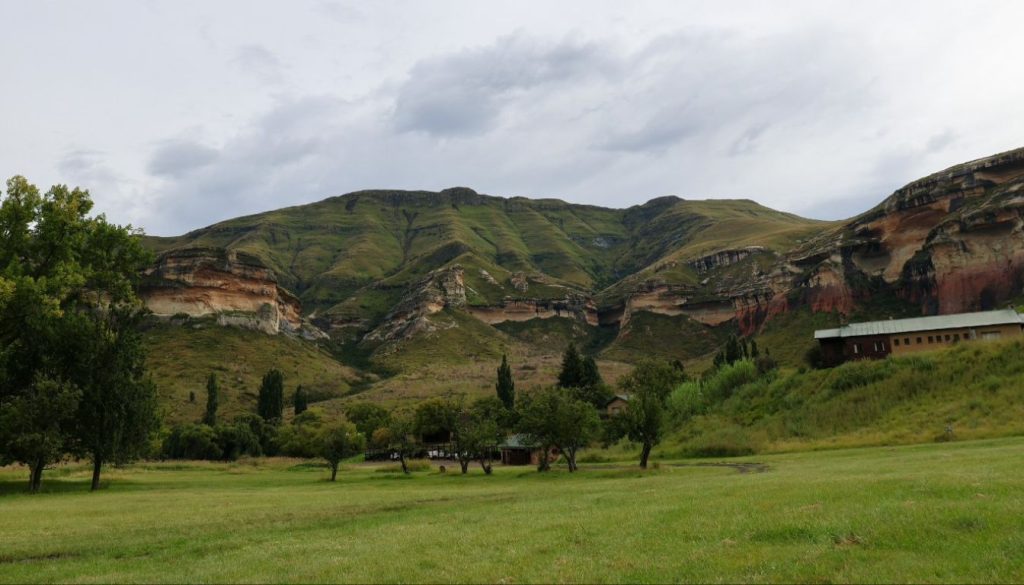
The Tsitsikamma National Park near the famous Garden Route features the lush Tsitsikamma Forest; the national park consists of dense indigenous forests, dramatic coastlines with fynbos landscapes, rivers, and coastal maritime environments, creating South Africa’s potential as a wildlife destination.
The storm’s river mouth, which forms part of the Tsitsikamma protected area, offers visitors an opportunity to see both land and aquatic species where the forest and the sea meet.
Mammals In The Forest
Many mammals rely on the thick forests of Tsitsikamma National Park for shelter. While bushbucks can often be seen grazing quietly at the edges of the forests surrounding Tsitsikamma, blue duikers and grysboks – smaller antelope species – will tend to remain hidden in the undergrowth.
While caracals are present within the park as predators, they are not very often seen since they are shy animals. The bushpig can be seen foraging for food during the night, while monkeys and baboons typically tend to be seen during the day.
The cape clawless otter is a popular sight near the rivers and estuaries in the park, and these playful mammals may be observed in the area around the mouth of the Storms River. Many other forest animals, such as squirrels and similar-sized animals, contribute further to the park’s biodiversity.
Marine Life
The marine diversity of Tsitsikamma is just as impressive. Due to the rocky coastline, dolphins can be easily seen riding the waves. Cape fur seals can be seen resting on rocks offshore from the park, along with southern right whales and humpback whales passing through the park in their respective seasonal migrations.
The marine protected area also includes marine species such as pyjama sharks, great whites, and sea turtles; therefore, it has a variety of activities, including snorkeling and diving. When snorkeling or diving in the waters of Tsitsikamma, there are a wide variety of marine life, including many colourful reef fish, that can be seen, which is attributed to the powerful Indian Ocean currents.
Birds of Tsitsikamma
There are over 200 different species of birds. The Knysna turaco is one of the forest’s most iconic species, as it has very vibrant colours. Along the shore or rocky areas along the ocean, African black oystercatchers can be found searching for food along the shore.
You can hear the olive woodpeckers and Knysna woodpeckers tapping on the trunks of trees as they forage. Giant kingfishers can be seen patrolling the rivers, and the African emerald cuckoo provides a flash of colour in the upper canopy. Raptors can be seen soaring high above the parks, taking advantage of the wind coming from off the coast.
A mixed habitat allows for many species of reptiles and amphibians to thrive. Blue-spotted girdled lizards can be seen basking on rocks, although the Cape cobra, which would prefer to be in the sunny spots, will also be found here in the warmer areas of the park. Tortoises walk through the vegetation very slowly, and you can see sea turtles swimming offshore.
There are a number of different types of amphibians, such as the plain rain frog and the Knysna dwarf chameleon, which can also be found in the park.
Conclusion
The Tsitsikamma region combines forests, rivers, and marine habitats protected together, and therefore, this area holds a unique diversity of forest and marine environments as well as habitat for both freshwater species. As such, it provides an incredible variety of wildlife for visiting tourists; examples include a variety of antelope (including bushbuck and blue duiker), baboon, Cape clawless otter and many types of birds. As a result, it’s an ideal spot along South Africa’s Garden Route.
FAQs
1. What types of animals are typical in the Tsitsikamma region?
There are many different kinds of animals found within this area; bushbuck, blue duiker, baboon, Cape clawless otter and numerous types of birds can all be found here.
2. Will you see any whales in Tsitsikamma?
Yes, between April and September each year, you will normally have opportunities (whales) to view migrating humpback and southern right whales at various locations along the coastline.
3. How many different species of birds make their home in the Tsitsikamma region?
There are over 200 different species of birds recorded as present in this park, making it an ideal area for birdwatching.
