
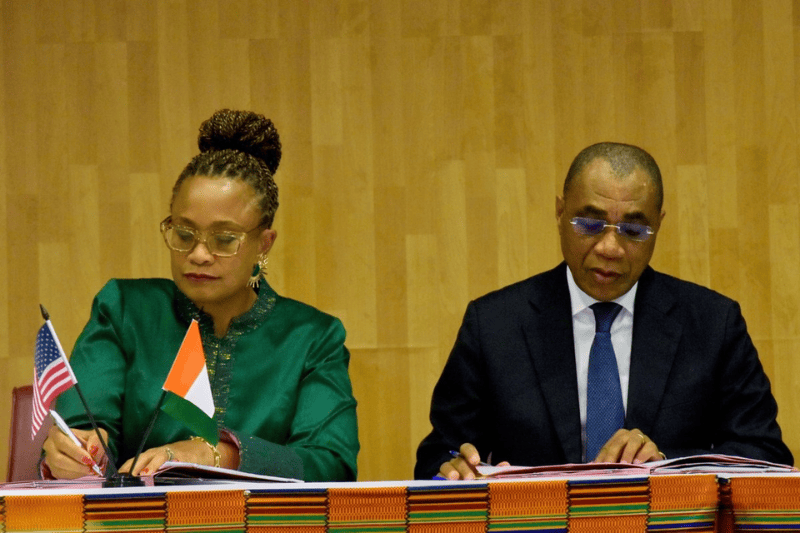
The United States and Ivory Coast have signed a new health agreement that sets out a multi-year funding commitment totalling $480 million. The pact is framed as a partnership with specific targets, reporting expectations, and a push toward measurable outcomes.
Officials involved described the agreement as a practical reset in how health assistance is structured. Instead of broad, open-ended support, the pact lays out focus areas, program responsibilities, and performance checks. Some diplomats call it a cleaner model. Others call it tighter control. Both views can sit together, honestly.
Why the US Is Providing $480 Million in Health Support
U.S. officials have linked the funding to public health priorities and cross-border disease risk. Infectious diseases do not respect borders, and that part is not theory. It affects trade routes, mobility, and wider stability.
The funding also sits inside a wider foreign policy line that favours direct country-to-country agreements. It signals an approach that treats health aid as a formal pact with shared inputs, not as a one-way grant stream. That tone matters. It changes how ministries plan, and how partners negotiate. It can also raise nerves, quietly.
Key Health Priorities Covered Under the New Agreement
The agreement lists several health areas that remain high pressure points in Ivory Coast and the region.
Key priorities mentioned include:
- HIV prevention and treatment support
- Malaria control measures and related community programmes
- Maternal care and safer childbirth services
- Child health services, including routine immunisation systems
- Disease surveillance, laboratory capacity, and outbreak response readiness
Public health staff often say the difference comes down to basics: trained people, regular supplies, and predictable funding cycles. That sounds plain, yet it decides outcomes.
How the $480 Million Will Be Allocated
The pact describes funding as program-linked, with reporting and review built in. Exact line items can shift across years, yet the structure signals a mix of service delivery and system strengthening.
Allocation themes (summary table):
| Allocation focus | What it typically covers | What gets watched |
| Disease programmes | HIV and malaria services, testing, treatment support | Coverage, retention, stock availability |
| Maternal and child health | Antenatal care, safer deliveries, paediatric care | Facility readiness, referral quality |
| Health security | Surveillance, labs, early warning, response capacity | Detection speed, reporting quality |
| System support | Training, supply chains, data systems | Data integrity, procurement timelines |
A few practical channels usually carry such money: procurement support, training contracts, local service grants, and technical assistance. It can sound administrative, but clinics notice it fast when supplies arrive late. That part hits people.
Ivory Coast’s Financial Contribution and Shared Commitment
Ivory Coast has also pledged its own contribution under the shared commitment frame, with public figures pointing to a large multi-year local input through 2030. The shared-cost message is meant to show domestic ownership, not dependency.
Health budgeting in many countries gets squeezed by fuel costs, food prices, and security demands. So the pledge is bold. It also carries risk. If budgets tighten, health lines can suffer first. That is not drama. It is routine budgeting pain.
How the Pact Fits Into the America First Global Health Strategy
The agreement aligns with a wider U.S. approach that leans toward bilateral deals tied to performance, cost-sharing, and country-level accountability. The phrasing attached to “America First” signals priorities such as measurable impact, spending checks, and direct alignment with U.S. strategic goals.
Supporters argue that the model reduces waste and sets clear expectations. Critics argue that it can narrow the space for local flexibility. A system under pressure sometimes needs room to shift resources quickly. That tension will sit behind every review meeting.
Expected Impact on Ivory Coast’s Health System
If the funding flows as planned, health workers expect pressure relief in key services. More reliable supply chains can lift confidence at facility level. Staffing and training support can reduce burnout. Data systems can improve follow-up and reduce loss of patients in treatment programmes.
Likely near-term impact areas include:
- Better availability of essential medicines and test kits
- More consistent outreach in malaria and HIV programmes
- Improved referral handling for maternal emergencies
- Faster reporting and response during disease alerts
Still, health outcomes do not change in neat straight lines. Some districts move faster than others. That is normal.
Concerns and Criticisms Surrounding the New Funding Model
Some global health voices have raised concerns about the shift toward more conditional agreements and reduced reliance on large multilateral channels. The main worry is continuity. A tight model can be efficient, but it can also be fragile if political priorities shift.
Other concerns include:
- Heavy reporting burdens for already stretched health teams
- Possible gaps if funding focuses too narrowly on selected diseases
- Sustainability after the pact period ends
- The power imbalance in negotiating targets and timelines
These concerns do not cancel the value of funding. They simply sit beside it. That is how policy looks on the ground.
Regional and Global Reactions to the Agreement
Regional observers have noted that Ivory Coast joins a growing list of African countries signing similar U.S. health agreements. Some governments welcome the predictability of written pacts. Others watch carefully, especially where older aid channels have shrunk.
Public reaction tends to be mixed: relief at investment, caution about conditions, curiosity about where services will improve first. Health staff often ask a simpler question: will it reach the district hospital on time? That is the real scoreboard.
Keep Reading
FAQs
1) What does the US–Ivory Coast health pact actually change in daily health services?
It sets funding with targets and reviews, which can change supply reliability and clinic support over time.
2) Which diseases and services are expected to receive the earliest attention under the pact?
HIV and malaria programmes, plus maternal and child health services, are expected to see early program focus.
3) How does this health funding agreement Africa context affect nearby countries in the region?
Neighbouring countries may seek similar deals, and regional disease surveillance links can improve with stronger reporting.
4) Why does the America First global health strategy matter in a health funding decision?
It shapes how agreements are written, how performance is measured, and how shared-cost expectations are set.
5) What are the main risks critics point out in this kind of funding model?
Critics flag sustainability, reporting burden, and gaps if focus areas stay narrow while broader system needs grow.
