
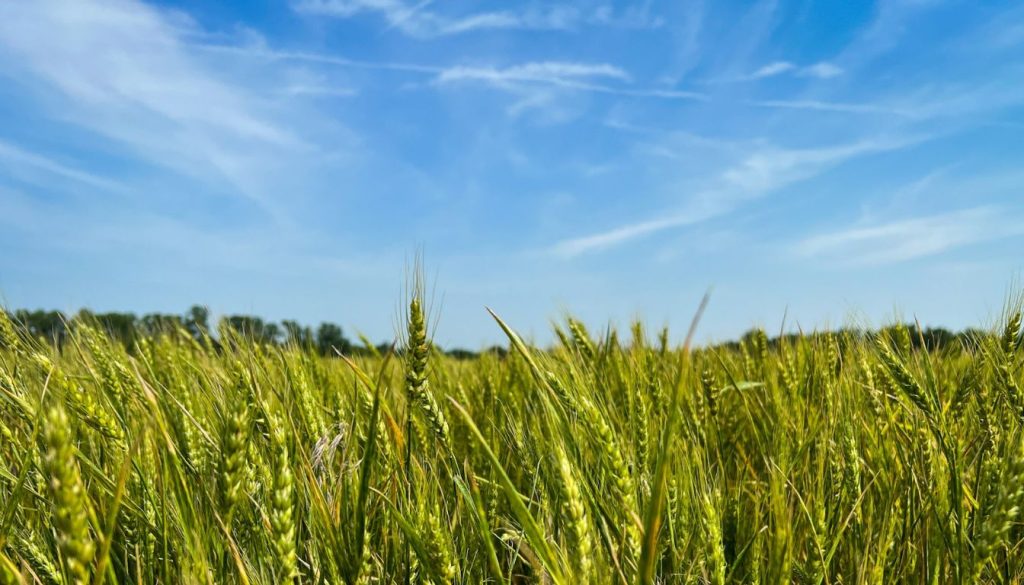
Climate change is causing changes in rainfall patterns in the Sahel region of Africa. The Sahel is a semi-arid area located south of the Sahara Desert. In this region, rainfall patterns are extremely important to communities because agriculture and livestock production are largely dependent on seasonal rains.
Scientists have observed larger amounts of fluctuations between very wet and dry seasons over the past decades. This has made the climate much less predictable. These changes are primarily due to global warming and changes in the atmosphere due to greenhouse gases.
For millions of farmers who rely on rainfall as opposed to irrigation, unpredictable rainfall makes it difficult to plan when to plant crops, how well crops will grow, and how easy it will be to harvest crops.
Rainfall Volatility on the Rise
Research indicates that, on average, climate change may increase the amount of rain that falls over some areas within the Sahel (an area south of the Sahara Desert extending across Africa from Senegal to Sudan). Of greater concern is the impact that increasing the variability of precipitation from one year to the next will have on this region.
Some years will see massive amounts of rainfall driven by powerful storms, while others will suffer through prolonged periods of drought. According to climate models, this increased variability is likely to be greatest in the central and eastern parts of the Sahel.
One of the major contributors to this increase in variability in precipitation is the strengthening of the El Niño-Southern Oscillation, or ENSO, an oscillation between the cool phase (La Niña) and warm phase (El Niño) of the ocean currents, which impacts the weather patterns of nearly all globally. Provided the additional warming of the atmosphere due to climate change, these changes will further intensify both the conformity to die (flood) and drought (fall) extremes.
As the atmosphere continues to warm due to climate change, scientists are predicting that both extreme events associated with heavy rains and long periods without rain will occur more frequently, even if global emissions continue to decrease into the future.
Effects on Farming
The Sahel’s agriculture depends mostly on rain, which makes it very sensitive to changes in the weather. Millet and sorghum, two important crops, are especially sensitive to monsoon seasons that don’t follow a set pattern.
Farmers can lose a lot of crops if it rains too late or stops too soon. In years with very little rain, crop production can drop by 20% to 50%, which hurts both the local food supply and people’s incomes.
Farming animals also has problems. Long periods of dry weather slow down the growth of grass, which means that pastoral communities don’t have enough food for their animals. Heavy rain that comes out of nowhere can cause flooding that washes away nutrients in the soil, hurts crops, and makes pests and plant diseases spread faster.
These pressures together make it more dangerous to farm in rural areas.
Growing worries about food security
Changes in rainfall caused by climate change are making food insecurity more likely in the area. Experts say that every year, 10% to 20% of the people in the Sahel don’t have enough food, especially when the weather is really bad.
There are plans to use drought-resistant crops, better irrigation, and better climate forecasting as adaptation strategies, but progress is still slow.
In the coming decades, countries in the Sahel region will need to manage climate risks to protect farming jobs and keep food supplies stable.
Frequently Asked Questions
1. Why is it getting harder to guess when it will rain in the Sahel?
The weather is changing around the world because of climate change, which is making the air warmer. This makes rain less predictable, which can cause both heavy rains and very dry spells.
2. How does climate change affect farming in the Sahel?
Unpredictable rain makes it hard to plant and harvest crops, lowers crop yields, and raises the risk of floods and droughts.
3. What types of crops in the Sahel are most affected by changes in the amount of rain?
Millet and Sorghum are two important crops that are especially at risk because they need rain to fall at certain times of the year.
4. When it rains, can farmers change how they work?
Yes, farmers can use strategies like planting seeds that don’t need a lot of water, taking better care of their soil, and finding better ways to save water.
5. What is making food insecurity worse in the Sahel?
Droughts, floods, and rain that doesn’t come when you expect it to can make farming less productive. This makes it harder for communities to keep their food supplies stable.
