
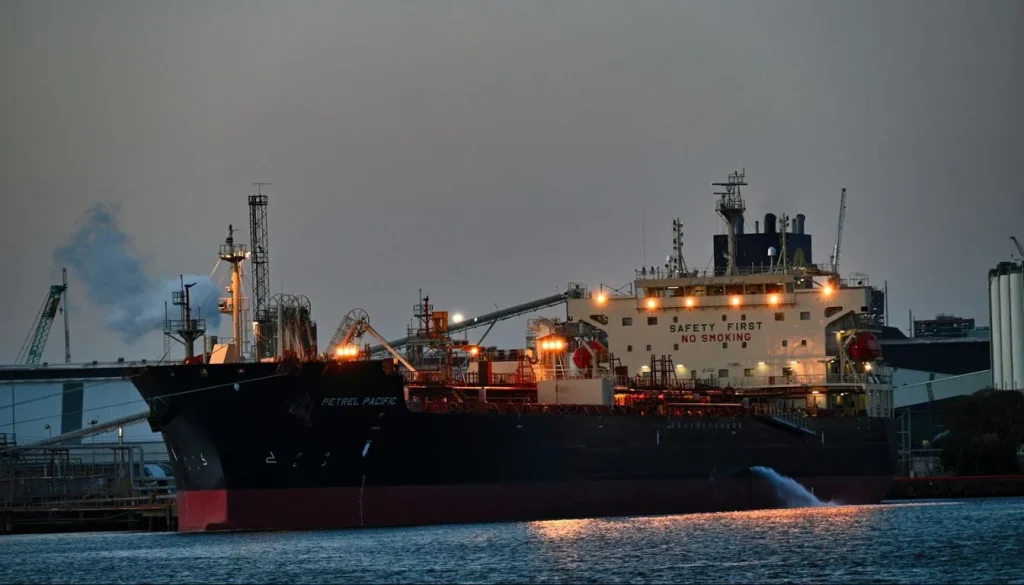
On Thursday, global oil prices climbed as uncertainty over a delicate ceasefire between the United States and Iran grew in relation to energy supply Strait of Hormuz oil prices. Despite initial optimism, markets remain cautious as to whether or not the Strait of Hormuz will reopen in the near future.
Oil Prices Rebound After Sharp Drop
The Brent oil futures price climbed 3.9 percent to $ 98.44 a barrel in the US. The West Texas Intermediate (WTI) crude oil market is gaining 3.7 percent to reach $ 97.88 per barrel.
Only a day later, the combined benchmark fell below the $ 100 level, while the WTI registered its biggest decline since the year 2020. The hope of a quick opening of the central oil pipelines had driven the price lower.
However, those expectations are now being reassessed.
Why the Strait of Hormuz Matters
The Hormuz Strait is one of the world’s most important straits. That’s why major oil producers prefer it as it connects:
- Saudi Arabia
- Iraq
- Kuwait
- Qatar
to the global market, carrying nearly 20% of the world’s oil and gas supply.
Any disruption in this region has immediate ripple effects on global energy prices.
Ceasefire Brings Hope, But Uncertainty Remains
While a two-week ceasefire has been announced, analysts say the situation remains unstable.
According to the Energy market analysts, traders are reluctant to remove the global liability premium from oil prices. However, there is little clarity on whether the ongoing US-Iran discussions will lead to a permanent agreement or a reopening of the Strait.
This uncertainty is keeping markets volatile.
Security Risks Still High
Even if oil shipments resume, experts warn that risks will not disappear overnight.
Tankers may still face:
- Mined waters
- Increased military presence
- Higher insurance costs
- Elevated freight charges
The report also suggests Iran supplies ship navigation charts to guide protected tracks, but transport companies are awaiting clearer guarantees before resuming their work.
Continued Tensions in the Region
The stability of the ceasefire is already being challenged. The ongoing Israeli strike on Lebanon and Iran’s response raise tensions and doubts about the prospect of a more harmonious future.
Furthermore, the residues of the regional oil infrastructure are vulnerable. The Islamic Republic of Iran has been targeting energy facilities in neighbouring countries, which include a pipeline in Saudi Arabia used for bypassing the Hormuz Strait.
Other Gulf states, such as Kuwait, Bahrain, and the United Arab Emirates, have also reported missile and drone attacks, which add to the situation.
Market Outlook and Price Forecasts
Despite the recent price rise, some financial institutions are adjusting their outlook.
Goldman Sachs has lowered its second-quarter 2026 forecasts:
- Brent crude: $90 per barrel
- WTI crude: $87 per barrel
These revised estimates reflect the expectation that, in the event of hazard retention, prices could stabilize.
What It Means for International Markets
The specific scenario shows just how volatile international oil markets can be when new diplomacy comes into play. The smallest change or even doubt can start a price fluctuation.
This can have consequences such as:
- Volatile fuel prices
- Higher costs for transport
- A broader impact on the economy
Stay In The Loop
Explore Sudan Civil War Power Struggle?
Discover how Iran’s influence and conflict are shaping Red Sea security risks.
Discover South Yemen Stability Challenges Today?
Check why Africa needs stability across the Red Sea for regional balance.
Check Sudan Brotherhood Ban Impact Now?
Explore how the ban could reshape Sudan’s security and political future.
Explore US Brotherhood Policy Shift Again?
Discover why the US is reconsidering its stance on the Muslim Brotherhood.
Discover America’s Terror Label Push Why?
Check how the US push could redefine global policies on Islamist groups.
Final Thoughts
While the U.S.-Iran ceasefire offers some relief, uncertainty about the Strait of Hormuz continues to weigh heavily on international oil markets. Until this becomes clear and stable in the region, monetary volatility is likely to remain a central interest.
FAQs
1. Why are oil prices rising again?
Regardless of whether the Hormuz Strait completely reopens after the cessation of hostilities, oil’s monetary value is rising due to uncertainty.
2. What threats pose dangers to oil shipments?
Minefields, a military presence, and tension in the area pose risks to shipping lanes.
3. Is the ceasefire stable?
The ceasefire is fragile, with continued tensions raising doubts about its long-term effectiveness.
4. What are the oil price forecasts?
Goldman Sachs expects Brent at $90 and WTI at $87 per barrel in Q2 2026.
