
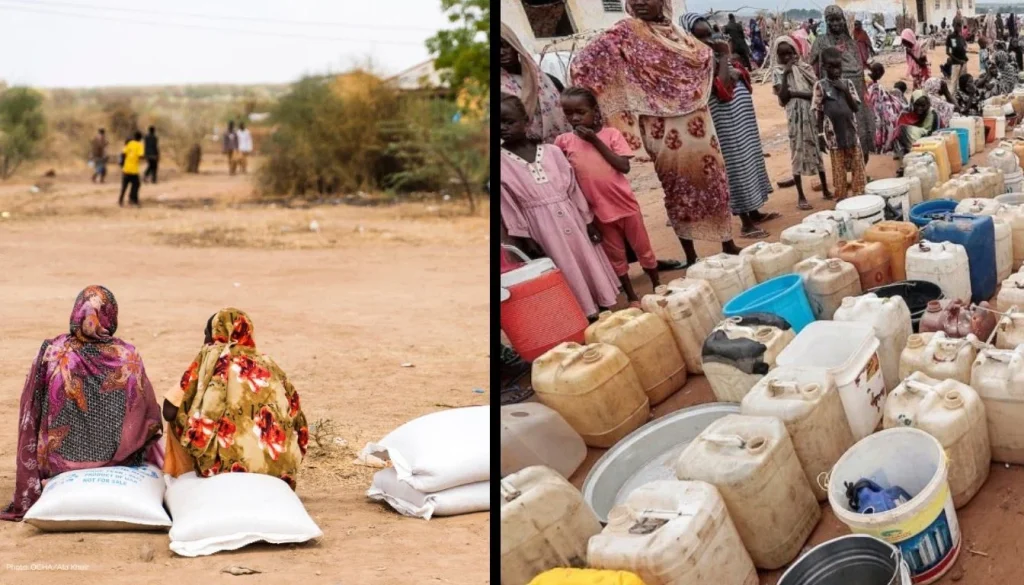
The humanitarian situation in Sudan deteriorated dramatically in July 2026 due to continuous fighting in the regions of Darfur and Kordofan, which affected humanitarian activities and caused even greater suffering for the local population. Sudan humanitarian assistance, According to UN agencies, currently, more than 33 million people in Sudan need humanitarian assistance, making Sudan one of the largest humanitarian crises in the world.
Humanitarian agencies have faced many problems in their work due to the presence of insecurity, destruction, lack of funding, and bureaucratic obstacles, which hamper the distribution of food, medicines, and other necessities among civilians. At the same time, millions of civilians find themselves trapped in the areas of conflict without any access to medical care and other necessities.
Fighting Intensified in Darfur and Kordofan
However, recent weeks have been characterized by the most intense fights moving westwards to Sudan, with North Darfur and Kordofan being affected the most.
It is believed that the Rapid Support Forces (RSF) have increased pressure in and around El-Obeid, an important strategic city in North Kordofan. Humanitarian organizations note that due to the ongoing fighting, there have been difficulties in accessing transportation for food and medical aid.
Damage to key civilian infrastructure, including power stations and transport networks, has complicated the efforts of humanitarian agencies.
Increasing Number of Displaced People
In response to the current fighting, yet another wave of displacement has been witnessed.
According to reports from humanitarian organizations, many families have left areas where active fighting has occurred, fleeing to safer locations. This has increased the number of people displaced within Sudan to millions since the fighting in 2023 began. Both regions of Darfur and Kordofan have continued receiving more displaced persons despite the few resources they have at their disposal.
Meanwhile, human rights groups have voiced their concern over new cases of civilian rights abuse, which include ethnic attacks in parts of Darfur.
Many Difficulties in the Delivery of Aid
There are now many difficulties in the delivery of humanitarian assistance.
Among the biggest reasons that aid cannot be delivered include issues related to security, road damage, administrative constraints, and ongoing fighting. Many relief corridors are blocked, and at the same time, there is an increased risk of attack in conflict zones for aid workers and logisticians.
Also, the IOM, along with other humanitarian organizations, mentioned financial constraints that make it impossible to increase their emergency relief efforts.
Without further funding, aid organizations say that they will not be able to continue delivering the emergency shelters, water, sanitation, and healthcare to affected people.
Hungry and Malnourished People
Food insecurity is currently one of the most pressing humanitarian problems in Sudan.
According to the humanitarian assessments, around 19.5 million people are facing food insecurity or even worse. The continued fighting in the country has caused disruption to farming activities and made access to food supplies harder.
The WFP has expanded its emergency food aid but still requires more funds.
At the same time, however, UNICEF states that serious underfunding is affecting nutritional programs aimed at treating children who suffer from acute malnutrition and providing vital healthcare to mothers.
Health professionals state that this may lead to an increased threat of outbreaks of diseases and a deteriorating child mortality rate.
What Comes Next?
Humanitarian organizations insist on improving access to the conflict zone, securing civilians, and increasing international funding in order not to aggravate the situation.
Even though humanitarian agencies work in Sudan whenever possible, given existing security concerns, increased violence, and displacement, as well as a shortage of resources, put millions of people in danger.
Given growing humanitarian needs exceeding available resources, international collaboration becomes crucial for the continuation of the relief operation in one of the world’s most complicated humanitarian crises.
Trending Reads You’ll Love
Explore Sudan Civil War Power Struggle?
Discover how Iran’s influence and conflict are shaping Red Sea security risks.
Discover South Yemen Stability Challenges Today?
Check why Africa needs stability across the Red Sea for regional balance.
Check Sudan Brotherhood Ban Impact Now?
Explore how the ban could reshape Sudan’s security and political future.
Explore US Brotherhood Policy Shift Again?
Discover why the US is reconsidering its stance on the Muslim Brotherhood.
Discover America’s Terror Label Push Why?
Check how the US push could redefine global policies on Islamist groups.
