
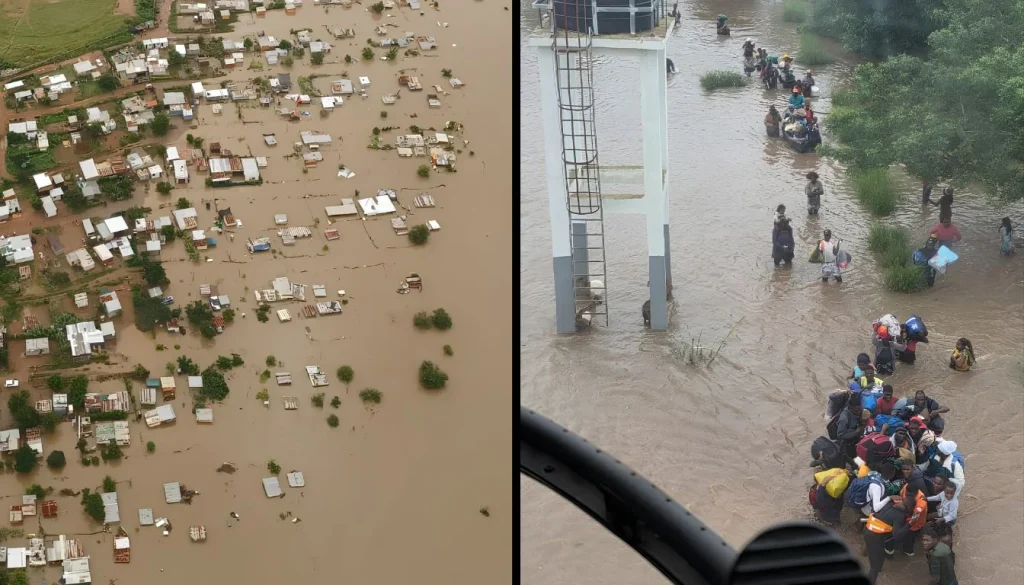
The 2026 floods in southern Africa are likely to rank among the most dramatic examples yet of how a warming planet is reshaping the daily lives of millions. Southern Africa floods climate change, Weeks of torrential rain flooded entire towns across four countries after starting in December 2025 and by the end of January 2026. There was more to it than bad weather luck. Scientists studying the disaster have drawn a direct link between the floods and human-induced climate change, findings that offer lessons for communities far beyond the region.
What happened to the flood
Flooding in Mozambique, South Africa and Zimbabwe deteriorated from late December 2025 to mid-January 2026, increasing health, infrastructure and vulnerable community risks. In 10 days some places got more rain than they normally get in a year. In Mozambique alone, over 75,000 people were affected and the floods destroyed almost 5,000 kilometres of roads hampering the transportation of goods including pharmaceutical supplies. The disaster killed about 200 people and impacted hundreds of thousands in the region.
The Climate Change Scapegoat
World Weather Attribution is a well-regarded group of climate scientists and they did a quick analysis of the rainfall data. They found that heavy rainfall events over southern Africa now occur with 40 percent greater intensity than preindustrial times. In short, a warmer atmosphere can hold more moisture and when that moisture drops to the ground as rain, it drops harder and faster than before. The warmer ocean temperatures – caused by greenhouse gas emissions – were a big part of the story, and the La Niña weather pattern, which occurs naturally, gave more fuel to an already wetter atmosphere.
Who suffered most
“The damage was most keenly felt by low income and marginalized communities in rural and urban areas. Informal settlement residents were especially vulnerable, with poor urban planning and unplanned rapid urban growth. Poor drainage systems and lack of early warning systems meant many families had little time to prepare or evacuate.
What Readers and Community Members Can Learn
For others elsewhere in the world it remains a warning sign about the dangers of extreme weather just about everywhere. Here are some specific steps that count:
• Sign up for local weather alerts and community flood warnings, if available
• Back up important documents and emergency contacts digitally
• In disasters, remain with or support the trusted humanitarian and government relief updates.
• Heavy rain warnings in low-lying areas Take care
• Work with local authorities to improve drainage and flood-resilient infrastructure
Conclusions – Southern Africa floods climate change
“Floods in Southern Africa in 2026 show that climate change is not a threat for the future. It is already affecting rainfall patterns and putting real communities at risk today.” “Getting prepared early, having better infrastructure and being informed can be the difference between disruption and disaster.
Discover More Insights
Why South Africa Faces Record Joblessness?
Explore how South Africa’s unemployment crisis is hitting record highs and what it means for the country’s economic future.
Why Ghana Youth Reject Free Rice?
Discover why Ghana’s youth are rejecting aid and demanding sustainable job opportunities instead.
Which Freelancing Platforms Work Best Africa?
Check the top freelancing platforms offering real income opportunities for Africans in 2026.
Why Africa’s Middle Class Still Struggles?
Explore how economic growth is failing to deliver stability for Africa’s expanding middle class.
How Nigerians Can Earn Dollars Online?
Discover practical ways Nigerians are earning in dollars and boosting their income in today’s digital economy.
