
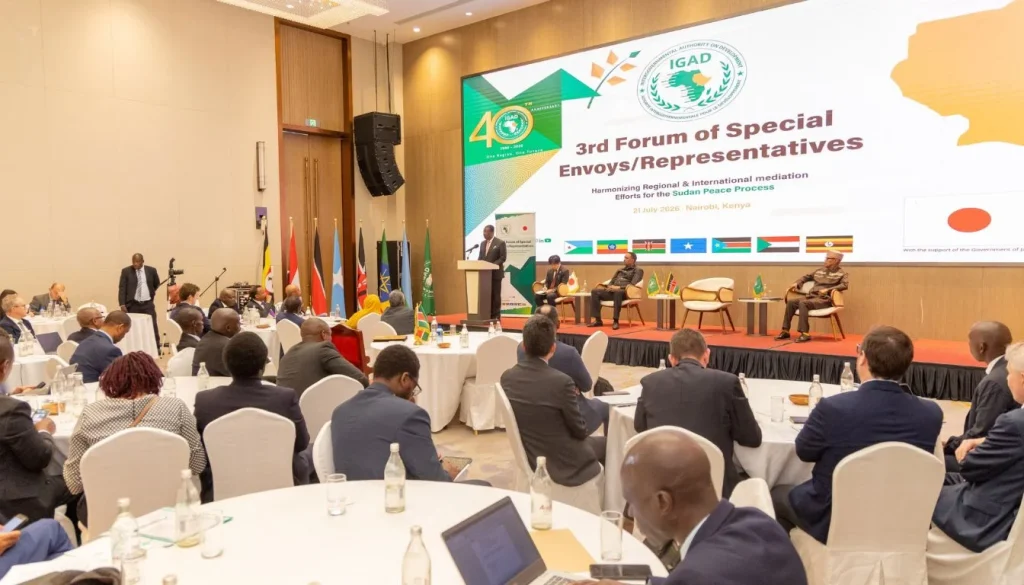
An attempt has been made once again to resume peace negotiations in Sudan, following growing international concern about one of the worst humanitarian disasters on the continent. Sudan Peace Talks, Nevertheless, even with all efforts towards diplomacy underway, there still remain major obstacles preventing progress toward a sustainable ceasefire between Sudanese Armed Forces (SAF) and Rapid Support Forces (RSF).
American, Saudi Arabian, African Union, and other international mediators are trying to achieve a ceasefire in order to deliver humanitarian aid to the civilian population. Nonetheless, there still exist significant differences between warring parties that prevent a comprehensive peace deal.
Military Withdrawal: The Biggest Hurdle on the Way to a Ceasefire
The question of how RSF fighters will be redeployed in the areas controlled by them is the most controversial one.
According to the international mediators, a 90-day humanitarian ceasefire is associated with a staged withdrawal of RSF forces from certain key towns and cities.
However, the negotiations are still deadlocked due to:
- SAF’s insistence that RSF must withdraw from the occupied territories prior to any political solution being reached.
- RSF has been reluctant to withdraw its forces entirely without some guarantees.
- Military activities of both sides are continuing while negotiations are ongoing.
The lack of trust between the two opposing parties makes compromise more and more difficult to achieve.
Political Representation Remains to Be a Point of Disagreement
Another significant issue relates to the future political transition in Sudan.
Civilian political organizations have offered their proposals regarding the organization of the post-conflict government; however, there are still disputes as regards participation in the political process.
Disputes concern:
- Involvement of former members of the National Congress Party (NCP) in politics.
- Involvement of the Islamic organizations associated with the former Sudanese government.
- Organization of a civilian future government.
These political disputes further complicated the mediation process along with the military negotiations.
Regional and International Interests Increase Complications
Several international actors remain engaged in the process of Sudan’s peace negotiations.
Such countries as the United States and Saudi Arabia, along with the African Union, continue to facilitate negotiations.
However, the different interests of different regions, as well as the varying relationships with the warring factions, have been a problem in trying to create an effective diplomatic strategy.
Greater coordination among international peace facilitators may be helpful for future negotiations, experts have argued.
Ceasefire: Is it still Possible?
While international pressure is growing, it seems difficult for a national ceasefire to materialize soon.
Various reasons are still hampering any peace process:
- Ongoing military offensives.
- Lack of trust between SAF and RSF.
- Violation of existing ceasefires.
- Competition over strategic territory.
- Continuing restrictions in humanitarian access.
Sanctions against the industries financing the war effort have put pressure on the warring parties, although without resulting in a breakthrough.
Humanitarian Crisis Is Far From Over
During the peace talks, there are still a large number of civilians in Sudan that suffers due to the ongoing conflict.
Humanitarian organizations issued warnings regarding:
- Food shortages.
- Large-scale displacements.
- Health care problems.
- Education problems.
- Issues with providing emergency assistance.
Humanitarian organizations keep demanding humanitarian corridors irrespective of any political negotiations.
Conclusion – Sudan Peace Talks
The resumption of peace talks in Sudan is an important diplomatic achievement, but much more needs to be done to reach a real cease-fire agreement. The disagreements on withdrawal of forces, political representation, and regional influence complicate the situation, and until SAF and RSF show more flexibility, the humanitarian crisis in Sudan will stay among the most important ones on the whole continent.
Trending Reads You’ll Love
Explore Sudan Civil War Power Struggle?
Discover how Iran’s influence and conflict are shaping Red Sea security risks.
Discover South Yemen Stability Challenges Today?
Check why Africa needs stability across the Red Sea for regional balance.
Check Sudan Brotherhood Ban Impact Now?
Explore how the ban could reshape Sudan’s security and political future.
Explore US Brotherhood Policy Shift Again?
Discover why the US is reconsidering its stance on the Muslim Brotherhood.
Discover America’s Terror Label Push Why?
Check how the US push could redefine global policies on Islamist groups.
