
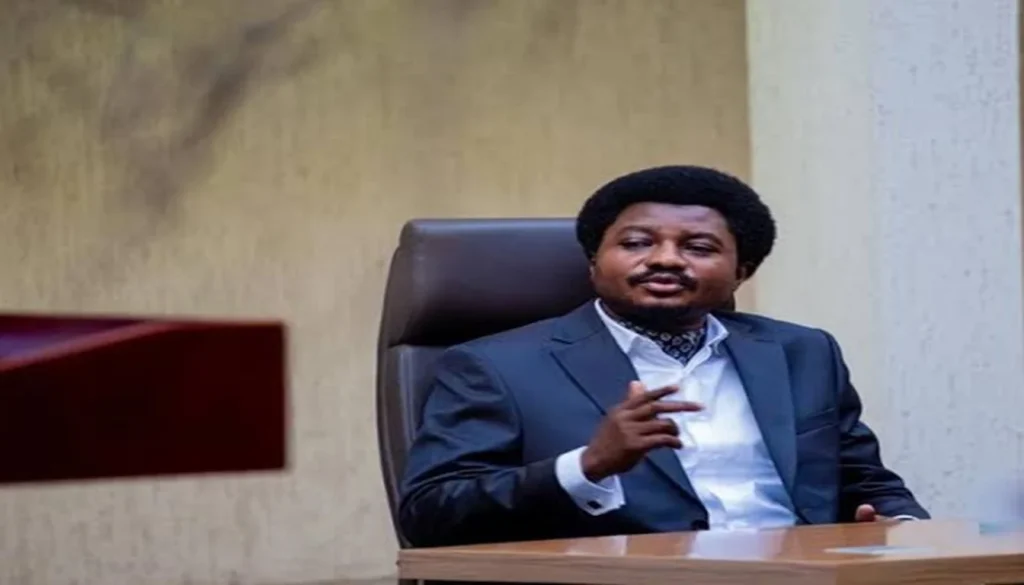
The Democratic Republic of Congo is back in the headlines for all the wrong reasons this time because the man who once styled himself as the country’s anti-corruption crusader is now the one standing trial. Constant Mutamba, DRC’s former Justice Minister, is facing serious allegations that nearly $20 million in public funds went missing under his watch. It’s the kind of case that touches a nerve in a country where ordinary people have been asking for years why officials so rarely answer for where public money actually goes.
So what actually happened?
The money in question, somewhere around $19 to $20 million, was supposed to go toward building a prison in Kisangani, a city in the northeast of the country. Investigators say the funds ended up with a company called Zion Construction SARL, which, according to prosecutors, simply didn’t have the track record or the infrastructure to handle a project of that size. On top of that, they claim the whole contract was pushed through without following the proper procurement process which is usually a red flag that something’s being routed around the rules on purpose. Mutamba isn’t backing down, though. He says he never touched a cent of the money personally, that it’s fully traceable, and that the whole thing is a politically motivated hit job aimed at damaging his reputation.
Why everyone’s paying attention
Here’s the irony that’s hard to miss: Mutamba built his political career on being tough on corruption. He was one of the loudest voices in government calling for accountability. Now he’s the one in the courtroom trying to prove he didn’t do what he spent years accusing others of.
Beyond the personal drama, though, this trial is being read as something bigger, a real test of whether President Félix Tshisekedi’s promises to clean up governance actually mean anything, or whether they’re just talk.
Where things stand
During hearings in Kinshasa, prosecutors laid out their case that Mutamba signed off on the transfer of millions of dollars while skipping the legal steps required for public spending. His defense team pushed back hard, arguing the prosecution hasn’t actually shown he personally pocketed any state funds, and Mutamba himself has raised questions about whether parts of the investigation were even conducted legally. The trial has drawn enough public interest that authorities have beefed up security around the courthouse, wary of protests from either side showing up.
Why it matters beyond the courtroom
DRC sits on staggering mineral wealth cobalt, copper, gold, you name it and yet corruption keeps getting in the way of that wealth actually improving people’s lives. Analysts have long argued that without real transparency in how public money is spent, foreign investors stay cautious and ordinary Congolese see little benefit from the resources under their feet. If a case like this actually goes somewhere, if someone this senior can be prosecuted and it sticks it could be a genuine signal that the justice system has teeth. But there’s a flip side: if people start to see it as a politically convenient prosecution rather than a genuine one, it could do more harm than good to public trust.
How people are reacting
Reactions on the ground are mixed. Some Congolese see the trial as proof that no one is untouchable anymore, not even a former minister. Others are more cynical, suspecting this is a one-off show trial rather than a sign of real, systemic change. International observers are watching too, for what it’s worth a credible anti-corruption push could help DRC’s case for foreign investment, but any whiff of political manipulation could just as easily undercut it. For now, the trial continues, and it’s likely to stay one of the most closely watched political and legal stories coming out of the country.
Discover More Insights
Why South Africa Faces Record Joblessness?
Explore how South Africa’s unemployment crisis is hitting record highs and what it means for the country’s economic future.
Why Ghana Youth Reject Free Rice?
Discover why Ghana’s youth are rejecting aid and demanding sustainable job opportunities instead.
Which Freelancing Platforms Work Best Africa?
Check the top freelancing platforms offering real income opportunities for Africans in 2026.
Why Africa’s Middle Class Still Struggles?
Explore how economic growth is failing to deliver stability for Africa’s expanding middle class.
How Nigerians Can Earn Dollars Online?
Discover practical ways Nigerians are earning in dollars and boosting their income in today’s digital economy.
