
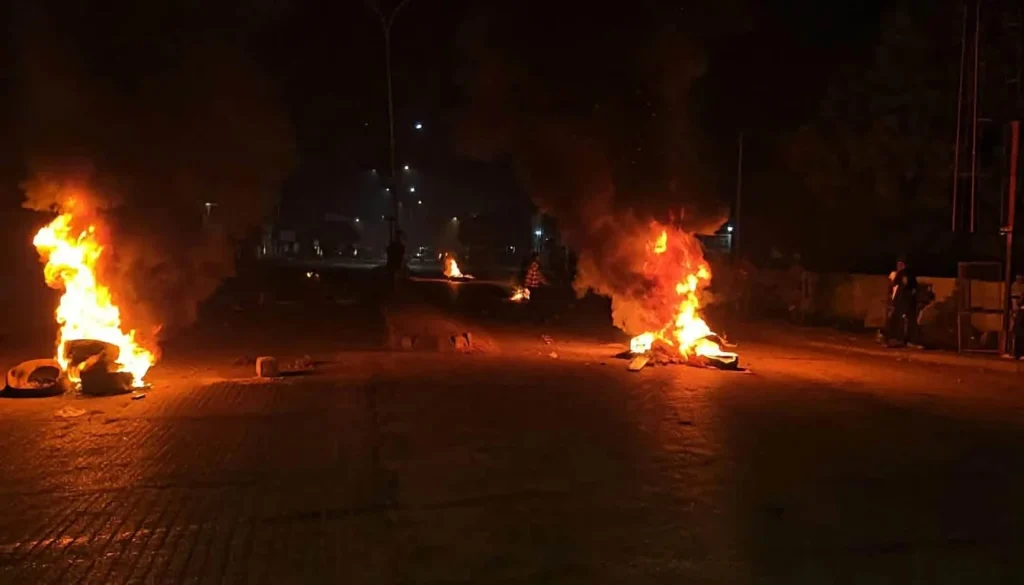
Gambia just made a move that has people talking across West Africa and beyond. After nights of unrest tied to a brutal power crisis, the government has said, in plain terms, that nobody can protest anymore without getting official sign-off first. If you’re reading this from South Africa, where the right to march and picket is baked into the Constitution, this story hits differently. It’s worth asking how far a government should be allowed to go once public frustration spills onto the streets.
What Sparked the Gambia Protest Ban
It started in Banjul. Weeks of blackouts during some of the hottest weather Gambia has seen left residents furious with the National Water and Electricity Company, known locally as NAWEC. People took to the streets, and for a few nights running, things got out of hand. A police post was vandalised. Detainees somehow ended up free. NAWEC offices were damaged badly enough that three branches had to shut down completely.
The police answered with tear gas. Not long after, Inspector General Seedy Mukhtar Touray stepped up and made it official: nobody protests without government approval from here on. His warning was blunt, too. Break the rule, and expect force.
Understanding the New Permit Rule
What this actually means on the ground is simple but heavy. No more organising a march on short notice. No spontaneous gatherings outside government buildings when people are angry. Every protest now needs paperwork approved by the state first. And that’s exactly why critics are uneasy. Many believe this rule exists less to keep order and more to keep dissent quiet, especially with a presidential election coming in December and President Adama Barrow already under fire.
Why This Matters Beyond Gambia
South Africans know this rhythm all too well. Load shedding, service delivery marches, communities boiling over when the basics fail them. It’s not a foreign concept here. What makes Gambia’s situation stand out is how quickly a government can tighten the screws on protest rights when it feels cornered. It’s a small but sharp reminder of why constitutional protections aren’t something to take lightly.
A Quick Checklist Before You Protest Anywhere
- Find out what your country actually requires before organising a gathering
- Check whether advance notice or a permit is legally necessary
- Learn the line between a protected protest and an unlawful one
- Follow trusted local news rather than rumours or social media panic
- Keep it peaceful, since damage or violence gives authorities an easy excuse to crack down
The Bigger Picture Behind the Blackouts
None of this happened in a vacuum. Gambia has leaned on electricity imports from Senegal and Guinea for years because its own power infrastructure is old and underfunded. Barrow has since promised new generators, along with a 50-megawatt solar plant meant to fix the power supply by October. Whether people believe him is another matter entirely.
Conclusion
At its core, this story is about what happens when frustration meets fragile infrastructure and a government decides silence is easier than solving the problem. Whether Gambia’s permit rule turns out to be a genuine safety measure or a political shield ahead of December’s vote will say a lot about where the country is headed. Either way, it’s a reminder that the right to speak up is never as guaranteed as it seems.
Explore More Stories Shaping Africa’s Global Future
- How Did Africa Benefit From BRICS?
Check out how South Africa, Egypt, Ethiopia, and Nigeria gained from BRICS 2026. - Why Were Six Nigerians Extradited?
Uncover what the FBI revealed about Black Axe and the romance scam network. - What Does Nigeria Want From BRICS?
Find out what Abuja seeks from the expanding global power bloc. - Why Did Nigeria Halt South Africa Visits?
Browse the implications of xenophobic attacks affecting Nigerians in South Africa. - Can Kenya Unlock Its Rare-Earth Wealth?
Explore how US support for Mrima Hill could boost jobs, mining, and competition with China.
