
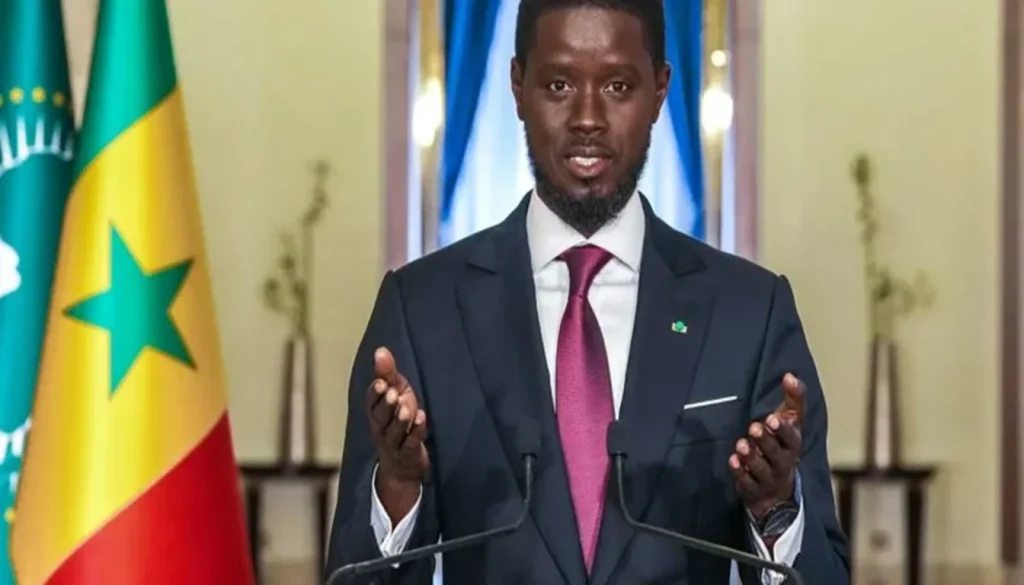
President of Senegal, Bassirou Diomaye Faye, and the Managing Director of the IMF, Kristalina Georgieva, have approved efforts aimed at finalizing a new support programme of the IMF in the wake of previously misreported public debt in the country. This comes after an agreement between the staff of the International Monetary Fund and the authorities of Senegal on a three-year support program of $2.2 billion.
This support program has been proposed to help in solving problems of the country’s debt vulnerabilities, strengthening public finances, and restoring investor confidence in the economy. Nonetheless, this proposal is awaiting approval by the management of the IMF and its Executive Board, among others.
Why Senegal Needs an IMF Programme
The financial difficulties of Senegal became considerably worse following the discovery of unreported borrowing during an audit, which showed that the country’s debt level exceeded more than 130% of GDP, with unreported debt totaling over $13 billion. Consequently, the IMF suspended its existing program, and Dakar was compelled to seek another route for debt sustainability.
The IMF noted in June that the economy of Senegal remains resilient, but the fiscal and debt risks remain high. Public finances have improved in 2025, with the consolidated fiscal deficit reducing from 13.4% of GDP in 2024 to 6.4%, while GDP growth stood at 6.7% with the help of the growth of the hydrocarbon industry.
What the $2.2 billion IMF Programme Will Do
Within the framework of this 36-month Extended Credit Facility agreement, Senegal will receive a $2.2 billion loan as part of its economic reform program for 2026-2029. The IMF says the purpose of the program is to restore the stability of the country’s macroeconomy and debt sustainability while ensuring the protection of vulnerable groups and fostering private sector-led growth.
The reform agenda consists of better domestic revenue mobilization, expenditure management, improved debt management, as well as arrears and SOE management. Social protection will be strengthened with targeted transfers; the business environment and financial inclusion will be improved in Senegal.
The accord does not amount to a full loan program approval by the IMF. Prior to the consideration of the IMF program on its Executive Board, Senegal will need to undertake certain remedial actions regarding the prior misreporting case and get financing assurances from development partners.
Debt Treatment Is Becoming Key to the Program
Another point to keep in mind is that Senegal’s program under the IMF is connected to the country’s willingness to pursue debt treatment. The government intends to use an upgraded G20 Common Framework, but exclude CFA-denominated debt from this process. The World Bank has expressed its readiness to facilitate Senegal’s program, while in other cases, restructurings within the framework took considerable time.
Senegal’s officials view their actions as debt “reprofiling” – extension of maturity and improvement of financing terms among others, not debt cancellation. A group of international bondholders has hired lawyers in anticipation of the talks.
Implications for Senegal’s Economy
In the case of Dakar, the new IMF programme can be helpful in obtaining further financing from institutions like the World Bank and the African Development Bank as well as an anchor for the return to debt sustainability. According to the IMF, the programme should be expected to act as a catalyst for obtaining financing from development partners.
The problem that awaits immediately, though, will be how to combine fiscal discipline with economic and social considerations. Senegal needs to limit its financing risks but without putting too much pressure on its citizens, and, at the same time, rising world energy prices are increasing public sector burdens as a result of energy subsidies.
That is why Faye’s visit to Georgieva is not only an element of diplomacy but also an attempt to obtain international financial support.
Senegal in Focus: Economy, Politics & Regional Ties
How Will Senegal’s IMF Deal Impact Economy?
Check out what the $2.2 billion IMF deal could mean for Senegal.
Why Are Lawmakers Opposing Senegal’s IMF Deal?
Find out why lawmakers are criticizing the government’s economic policies.
Can Senegal’s IMF Loan Boost Jobs?
Uncover what the loan could mean for jobs and national debt.
Why Were Three TikTok Influencers Jailed?
Browse the controversy surrounding posts involving President Faye.
What Could Faye’s Mali Visit Mean?
Dive into the high-profile talks and their implications for West Africa.
