
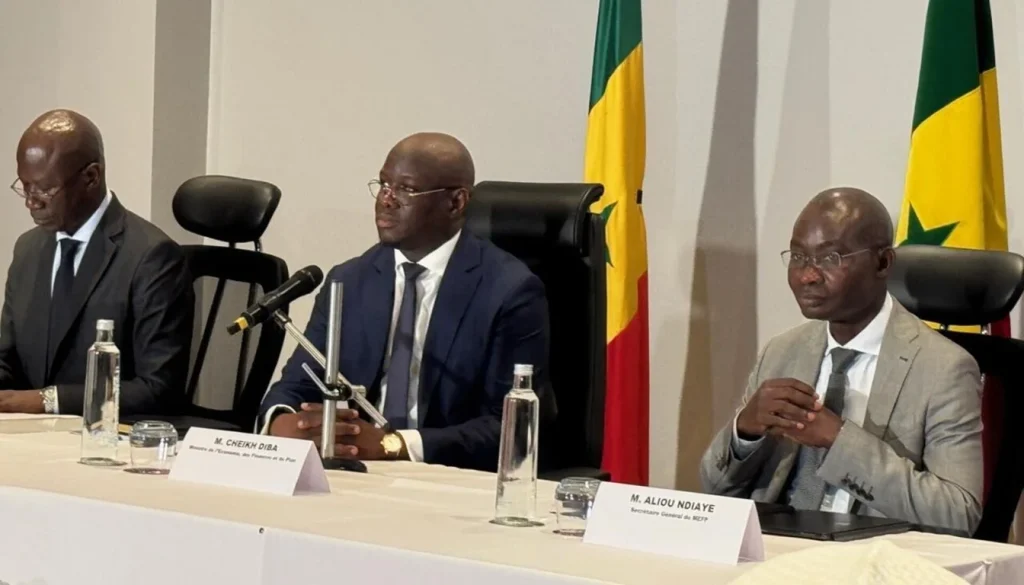
Senegal has struck an agreement with the International Monetary Fund (IMF) on a new $2.2 billion, 36-month financing deal designed to help with economic and financial reforms in the period between 2026 and 2029.
The deal was reached on September 1 and comes at a time when Senegal is experiencing debt challenges due to uncovered public debt under the former government.
The deal is meant to offer financial assistance to Senegal while it implements reforms that are intended to ensure transparency, sound public finances, and better debt management practices. But the $2.2 billion deal is only part of the financing requirements that Senegal has.
What Does the $2.2 Billion Financing Programme Involve?
It is a 36-month programme designed to support the economic and financial reform programme of Senegal in the period of 2026 to 2029.
Nevertheless, it does not mean that the deal is already a final decision on providing the financing.
The staff-level agreement has to be reviewed and considered by the IMF Executive Board. As such, Senegal should continue carrying out required reforms until it is approved.
The agreement is of particular importance due to the fact that Senegal’s relations with the IMF were disturbed because of problems with the country’s public finances and the accuracy of reported economic data.
Why Does Senegal Require IMF Financing?
Senegal is experiencing high pressures regarding its debt burden.
The problems started occurring after an audit showed that the government’s debt and budget deficits were considerably understated by the previous administration.
It has made the country’s government revise its estimate of the state of public finances and raised fears among international lenders and investors.
The programme of the International Monetary Fund is needed to restore the fiscal credibility of the country and build an economic reform platform.
But the magnitude of the programme should be looked at in context.
Debt servicing costs for Senegal in 2026 are estimated to be around $9.6 billion. This implies that $2.2 billion in financing by the IMF will only cover less than a quarter of the debt servicing costs in 2026.
Hence, such a sum cannot be able to resolve the issue of debt of Senegal independently.
Is Senegal Going to Restructure Its Debt?
Yes, the strategy will involve debt restructuring.
Senegal has committed itself to seeking treatment for its debt through the enhanced G20 Common Framework, which seeks to offer countries in debt distress a chance to negotiate with their creditors on how to restructure their debt.
This strategy seeks to ease the burden on the budget of Senegal to create space for funding critical sectors.
Nonetheless, not all the types of debts owed by Senegal will be subject to the planned restructuring.
It will not include domestic debt in the form of CFA francs.
This will seek to shield Senegal and regional financial markets from any risks that might arise from the restructuring of debt.
What does the IMF deal mean for Senegal’s economy?
First and foremost, the benefit lies in increased financial support and a new strategy for addressing the financial troubles of Senegal.
If the government successfully enacts the required reforms, the program may help build up the international community’s trust and thus make it easier to raise money and finance the government.
The reorganization itself might also provide the government with some fiscal space to spend on what it wants to do.
Nevertheless, there will be some terms to the program.
Accordingly, Senegal will be obliged to enhance the system of public financial management, increase the level of transparency, and enact the necessary reforms. Such steps will help avoid the kind of misreporting that led to the current troubles of the country.
What does the deal mean for employment?
First of all, it should be noted that the IMF deal does not entail any job-creation program.
In other words, the effect of the deal on employment will depend on the ability of the reforms to create a better economic climate for businesses.
Such a stable financial environment will also enable private investment that will boost jobs in the construction, manufacturing, service and infrastructure sectors.
However, there is the issue of the short-term effects.
There is the issue of the measures involved in fiscal reforms, including budget cuts, adjustments in subsidies, among others, that may affect families and firms before they enjoy the long-term benefits.
In the case of the Senegalese workforce, the effect of the IMF programme will largely depend on the way in which the Senegalese government manages the balancing act between fiscal prudence and economic development.
Why Is It Essential To Restructure Debts?
The financing needs of Senegal exceed those covered by the current IMF agreement.
Since debt service will be at $9.6 billion in 2026, it is clear that there is a need for more strategies to enable repayment and relieve pressure on the public coffers.
In this regard, debt restructuring could facilitate either postponing or reducing the debts, enabling the government to channel the saved money elsewhere.
The move to save the CFA franc-denominated domestic debts stems from the issue of financial stability.
Catch up on Senegal’s biggest stories and surprises.
What Led To TikTok Influencers’ Jailing?
Check out the posts that sparked controversy and legal action.
What Could Senegal’s Mali Visit Change?
Uncover the high-profile discussions shaping Senegal-Mali relations and West Africa.
Why Did Senegal’s Belgium Clash Collapse?
Dive into the key moments behind Senegal’s heartbreaking exit.
Who Could Replace Pape Thiaw?
Find the potential contenders for Senegal’s next head coach.
How Much Does Khaby Lame Earn?
Reveal the Senegal-born creator’s Forbes ranking and earnings per post.
