
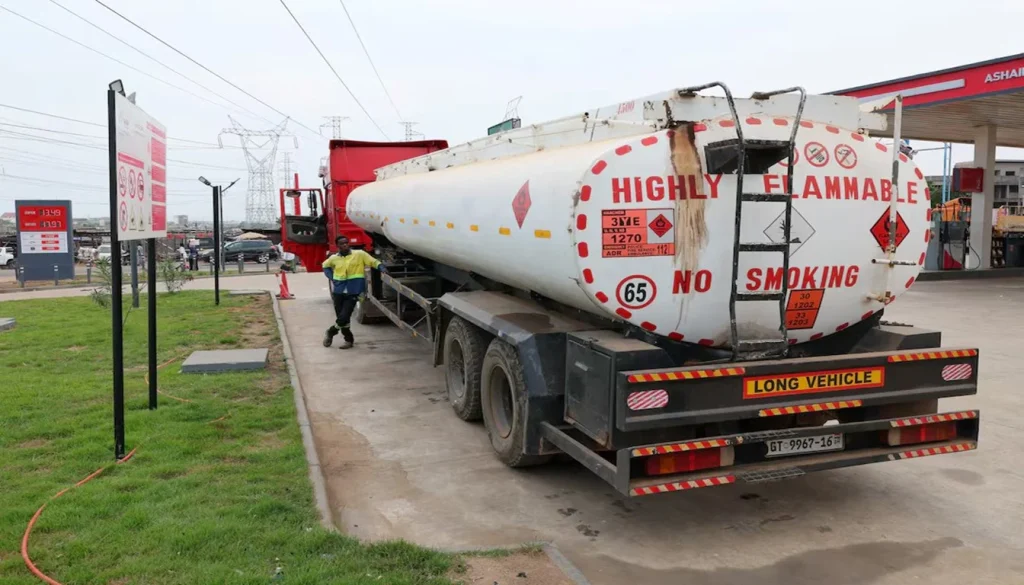
The fuel exporting unit of Ghana, BOST Energies, has cut down fuel exports to Burkina Faso and Mali in light of rising energy prices globally and locally. The fact that Ghana’s state-owned fuel exporting agency has taken this decision shows the growing vulnerability of the Sahelian countries, which rely on the coastal states of West Africa for importing oil products.
According to the managing director of BOST, Afetsi Awoonor, the company started the reduction in the month of August 2026 due to the increase in global oil and gas supplies caused by the war in Ukraine and the Middle East.
How Much Fuel Has Ghana Decreased?
This has already had an impact on the quantity of fuel that would have been transported to both countries.
Burkina Faso had ordered 80,000 metric tons of fuel for the months of July and August, but only 40,000 tons were delivered. Mali has received 10,000 tons during the same period, even after requesting an extra 40,000 tons of fuel in August and September.
The statistics do not show a complete cut-off of fuel by Ghana. However, they show that due to a lack of sufficient fuel in the market, BOST is allocating the limited fuel to Ghana.
BOST controls about 30% of the fuel market in Ghana, and diesel makes up 60% of the fuel supply. According to the company, the consumption of diesel in Ghana is rising with economic activities.
Vulnerability of Burkina Faso and Mali
The cutoff is important because Burkina Faso, Mali, and Niger that are their neighbour are landlocked and depend heavily on the transport routes of the coastal states.
An assessment done by the World Bank showed that above one-third of the imports of these three countries come from ECOWAS countries and include fuel.
For both Burkina Faso and Mali, thus, disturbances in Ghana could easily turn into a logistics challenge. There could be more distant alternative sources, requiring more costly transportation capacity.
Oil Shock in the World Is Causing All the Troubles
The current decision follows a rather stormy time in the global energy market, with conflicts in the Middle East and Ukraine creating a shortage of fuel and driving prices up.
According to Awoonor, the fuel will still be supplied to BOST, though at a considerably higher price. The prices of domestic fuel in Ghana increased in 2026 owing to global concerns about fuel supplies. However, later they were reduced due to the strength of the national currency and the government’s actions.
So now BOST is faced with a choice between affordable and reliable domestic supplies and supplying neighboring states that need their fuel.
More Infrastructure for Energy in Ghana
The restrictions also highlight Ghana’s strategy of enhancing its own energy infrastructure.
BOST intends to build an LPG terminal in Tema by Q4 2027 and commence importation of cooking gas through the terminal. BOST also intends to install LPG infrastructure for storage at six locations, with the first being Kumasi.
However, port congestion in Tema is another regional issue in focus. Ghana’s Shippers’ Authority held talks with the delegation from Burkina Faso, Mali and Niger on September 16 and noted the problems with delays and increased costs due to congestion in the port.
Ghana in Focus: Defence, Gold, Politics & Currency
Who Is Ghana’s New Defence Minister?
Check out the latest leadership change following the helicopter crash.
What Do Ghana’s Gold Rules Mean?
Find out how new export regulations affect miners and gold buyers.
Why Was Ken Ofori-Atta’s Trial Delayed?
Uncover the allegations and the new September 29, 2026 trial date.
Why Did Ghana Reject MTN’s Aid?
Explore why Ghana refused MTN’s $1.8 million support for repatriated citizens.
Could Zambia Face Currency Pressure Soon?
Look into Ghana’s stability and Zambia’s potential currency challenges.
