
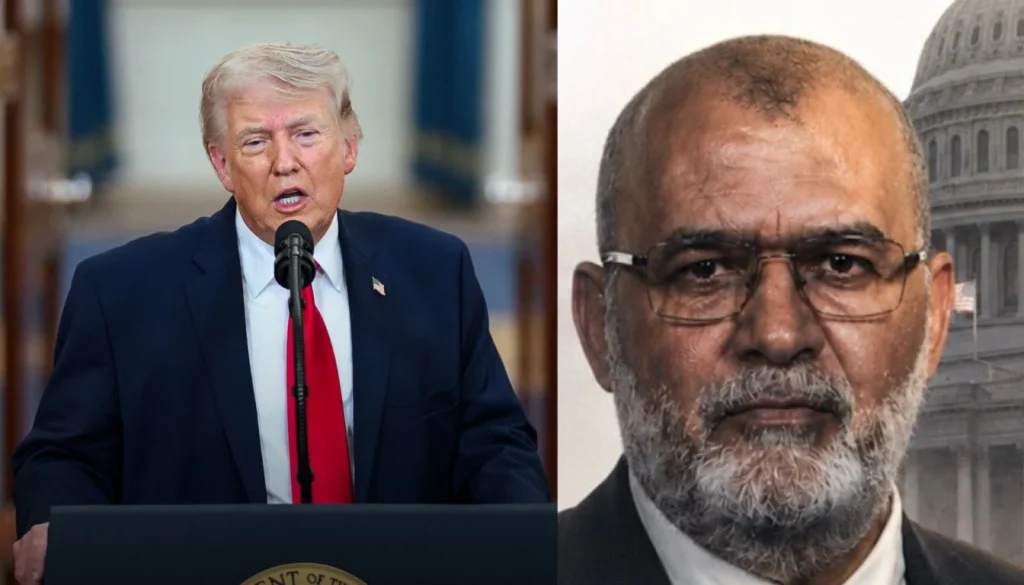
The US has made known its sanctions targeting Mahmoud El-Ebiary and several organizations allegedly associated with the international financial network of the Muslim Brotherhood. The recent development has become another step in the overall campaign launched by the US to combat terrorist funding.
US sanctions Mahmoud El-Ebiary, Although US officials have claimed that the recent sanctions are related to their counterterrorism efforts, the Muslim Brotherhood has denied any accusations and the description of the organization as well. Therefore, the new sanctions will attract the attention of policymakers, banks, and security services in the Middle East, Europe, and Africa.
The recent development can also be seen in the light of the increased interest of the government in financial intelligence and cross-border enforcement rather than in criminal investigations alone.
Transition From Personal Networks To Financial Networks
In the last couple of decades, the policies regarding counterterrorism have changed considerably. Instead of solely focusing on prosecuting individuals, governments have focused on finding out and undermining the financial networks that they think facilitate organizational activities through several jurisdictions.
As per U.S. government agencies, targeting the facilitation network, business networks, and financial conduits is a better way of fighting organizations compared to targeting individuals since the former limits the mobility of resources for organizations to conduct activities internationally.
This approach has become one of the major elements of modern sanctions policies in which financial measures, along with criminal and diplomatic efforts, are considered.
Reasons For Mahmoud El-Ebiary To Get Into the Spotlight
Mahmoud El-Ebiary is one of those people who have been mentioned by U.S. government agencies as an individual alleged to have involvement with the international administrative and financial networks.
Though he was quite discreet about himself in comparison with other political figures, it is usually reported that he has been involved in organizational and financial coordination in the network.
This action by the United States shows the growing trend of targeting individuals who are thought to control the financial or logistical operations of the organisation instead of just the public-facing leaders of the organisation.
It is important to note that, like any sanction or legal process, the accusations are still subject to the processes of law, and those accused can fight them legally.
What Does This Action Mean for the Organisation? – US sanctions Mahmoud El-Ebiary
Apart from having legal consequences, the recent action may help fuel the debate concerning how the government considers organisations that have a global structure.
Security specialists report that the government is becoming more interested in investigating if there are links between financial, charitable, or commercial enterprises and organisational networks.
If this is going to lead to more designations or legal actions, only the future will be able to tell us.
Implications for Financial Compliance on a Broader Level
This decision will likely attract the interest of the banks, payment processors, charities, and multinational corporations that operate in Europe, Africa, and the Middle East.
Financial institutions are already obliged to meet strict standards of AML and CTF regulations. Sanctions or designations lead to extra due diligence, review of customers, and other procedures to make sure the organisation is not associated with sanctioned persons and entities.
With the ongoing efforts towards increased international cooperation of regulators, business entities operating in several jurisdictions will be subject to closer scrutiny of their ownership, finances, and cross-jurisdictional relations.
Regional and International Responses
The U.S. actions may also affect the discussion of the issue in those countries that have different legislation concerning the Muslim Brotherhood.
Some states regard the organisation or its part as a terrorist organisation, while some differentiate political, religious, and social activities in determining the legal nature of the organisation. Therefore, the response from those countries is going to depend on the national legislation of the country.
The recent events can prompt the policymakers of European and African countries to re-examine financial oversight procedures, but this is still a question of national law and judiciary process.
Trending Reads You’ll Love
Explore Sudan Civil War Power Struggle?
Discover how Iran’s influence and conflict are shaping Red Sea security risks.
Discover South Yemen Stability Challenges Today?
Check why Africa needs stability across the Red Sea for regional balance.
Check Sudan Brotherhood Ban Impact Now?
Explore how the ban could reshape Sudan’s security and political future.
Explore US Brotherhood Policy Shift Again?
Discover why the US is reconsidering its stance on the Muslim Brotherhood.
Discover America’s Terror Label Push Why?
Check how the US push could redefine global policies on Islamist groups.
