
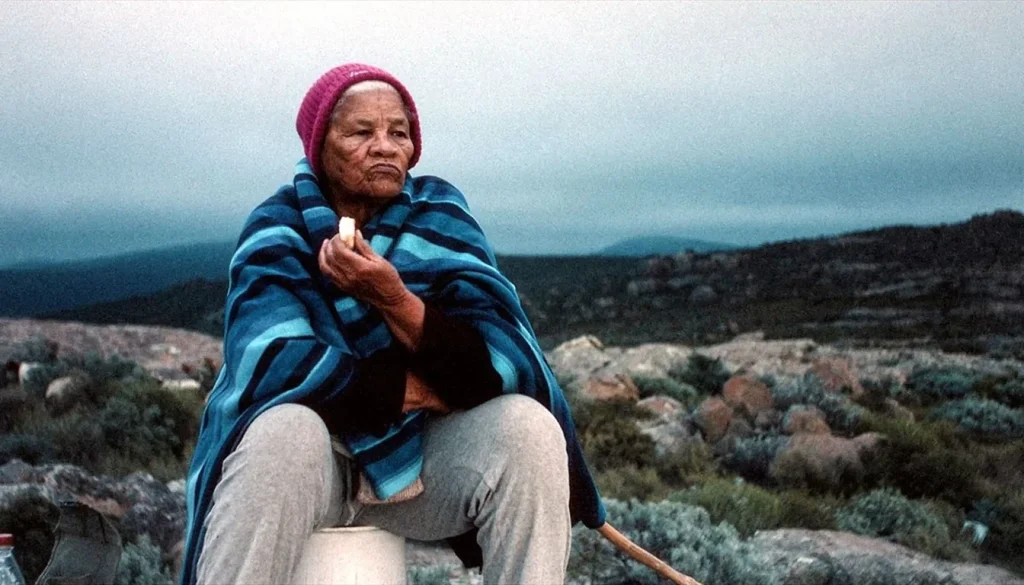
African storytelling has been shaking festival halls from Cannes to Venice for decades, and the world is finally paying attention. If you want a solid watchlist, this guide to the 10 best African movies of all time to watch is a good place to begin. The ranking mixes critical weight, cultural influence and how well each film still holds up today.
10. Atlantics (2019)
Mati Diop’s debut feature is part love story, part ghost story, set in a Dakar suburb where young construction workers vanish at sea chasing a better life in Europe. The women they leave behind carry the grief, and something stranger stirs in the night. It won the Grand Prix at Cannes, and Diop became the first Black woman to compete for the Palme d’Or. Watch it for the mood alone.
9. Viva Riva! (2010)
Congolese director Djo Munga gives us Kinshasa as a sweaty, neon-soaked crime playground. A hustler steals a fortune in fuel and tries to enjoy it while gangsters close in. It was a big winner at the 2011 African Movie Academy Awards, and it proved African films could do slick genre thrills without borrowing from Hollywood.
8. Timbuktu (2014)
Abderrahmane Sissako, born in Mauritania and raised in Mali, shows what happens when jihadists take over a Malian town. Music is banned, football is banned, and ordinary people find small, brave ways to push back. It earned an Oscar nomination and a haul of French César awards. It is gentle in tone and devastating in effect.
7. Tsotsi (2005)
Gavin Hood’s Johannesburg drama follows a young gang leader who steals a car and finds a baby on the back seat. What he does next surprises even him. Tsotsi took the Oscar for Best Foreign Language Film in 2006, and it remains one of the most emotionally direct films South Africa has produced. Presley Chweneyagae’s performance is the beating heart of it.
6. Xala (1975)
Ousmane Sembène was never afraid to mock the powerful. Here a newly rich Dakar businessman is struck with impotence on the day he marries his third wife, and his whole life unravels. The film is a sharp comedy about the greed and hypocrisy of the post-independence elite. Watch it today and you’ll swear Sembène has been reading the news.
5. Moolaadé (2003)
Sembène made this in his eighties, and it may be his bravest film. A village woman shelters young girls who are running from female genital cutting, and she defies the elders to protect them. It won the top prize in the Un Certain Regard section at Cannes. The film is angry but never preachy, and it gives its women the full dignity of their courage.
4. Yeelen (1987)
Souleymane Cissé’s Malian epic is part myth, part father-and-son showdown, rooted in Bambara belief and magic. A young man with powerful gifts must face the sorcerer who happens to be his father. The visuals are astonishing, all desert light and ritual. It won the Jury Prize at Cannes and is often named among the finest African films ever made.
3. The Battle of Algiers (1966)
Technically an Algerian-Italian production directed by Italy’s Gillo Pontecorvo, this one gets a place because of what it is about and how it is remembered. It recreates Algeria’s fight against French colonial rule with a documentary rawness that still unsettles. Filmmakers around the world have studied it, and several lists of the best African films put it first. It won the Golden Lion at Venice and earned Oscar nominations.
2. Black Girl / La Noire de… (1966)
Sembène’s first feature is often called the starting gun of sub-Saharan African cinema. Diouana, a young Senegalese woman, travels to the French Riviera to work for a white family. What looked like opportunity turns into isolation, and the film follows her quiet collapse. It runs barely an hour, yet it says more about race, class and the leftovers of empire than many films three times its length. Critics regularly rank it among the greatest African films ever made.
1. Touki Bouki (1973)
When international critics voted for the best African film of all time at the Tarifa-Tangier African Film Festival, almost all of them put this one on top, and it is hard to argue. Djibril Diop Mambéty’s Dakar story follows Mory and Anta, two restless young lovers who dream of escaping to Paris. The editing is wild, the sound jumps between worlds, and the cattle-horned motorbike is unforgettable. Fifty years on, it still feels like the future. French critic Olivier Barlet described it as showing a society torn between home and the world beyond, and that tension is as real for young Africans now as it was then.
What These Films Teach Us
Look at this list and a pattern appears. Senegal alone produced three of the ten, which says plenty about Dakar’s place in African film history. Many of the earlier titles were made by directors who had just watched their countries gain independence, and they were asking hard questions about who was truly free. The newer ones, like Atlantics and Timbuktu, ask who gets to leave, who gets to stay and who decides.
There is also a gap worth noting. Nollywood, the world’s second-largest film industry by volume, barely appears on critics’ all-time lists, even though it dominates screens across the continent. Festival juries and local audiences often value different things. A film like Black Panther, which crossed a billion dollars at the box office, sits in yet another category. Neither approach is wrong. Together they show how wide African cinema has become.
Where to Start
If you only have time for three, begin with Touki Bouki for its style, Black Girl for its power and Tsotsi for an easy way in. Many of these titles are available through festival archives, specialist streaming platforms and restored releases, so a little searching pays off. Some older prints are still hard to find, which is its own reminder of how much African film history needs protecting. The next time someone says African cinema is just starting to find its voice, point them to this list. The voice has been loud for sixty years. The rest of the world is only now learning how to listen.
Conclusion
African cinema doesn’t need anyone’s permission to be called great. From Mambéty’s restless Dakar lovers to Sissako’s quiet defiance in Timbuktu, these ten films show a continent telling its own stories on its own terms, and the world’s best festivals have taken notice. The list also reminds us that the work is not finished. Many classics are still hard to find, and too many young filmmakers struggle for funding and distribution.
So go and watch. Start with one film from this list this weekend, then tell a friend to do the same. Every viewing, every share and every conversation about these films keeps African cinema alive and growing. Which one will you press play on first?
African Cinema: Stories, Stars & Streaming
Which African Films Tell True Stories?
Check out five powerful African films inspired by real events.
What African Movies Should You Watch?
Find five recent Nollywood and African films worth watching.
Are More African Films Hitting Netflix?
Uncover how African cinema is expanding across Netflix’s catalogue.
Why Did Canal+ Acquire ROK Studios?
Explore Canal+’s move to strengthen its African film presence.
Can NjiaPay Transform African E-commerce?
Discover how one-click checkout could reshape online shopping in South Africa.
