
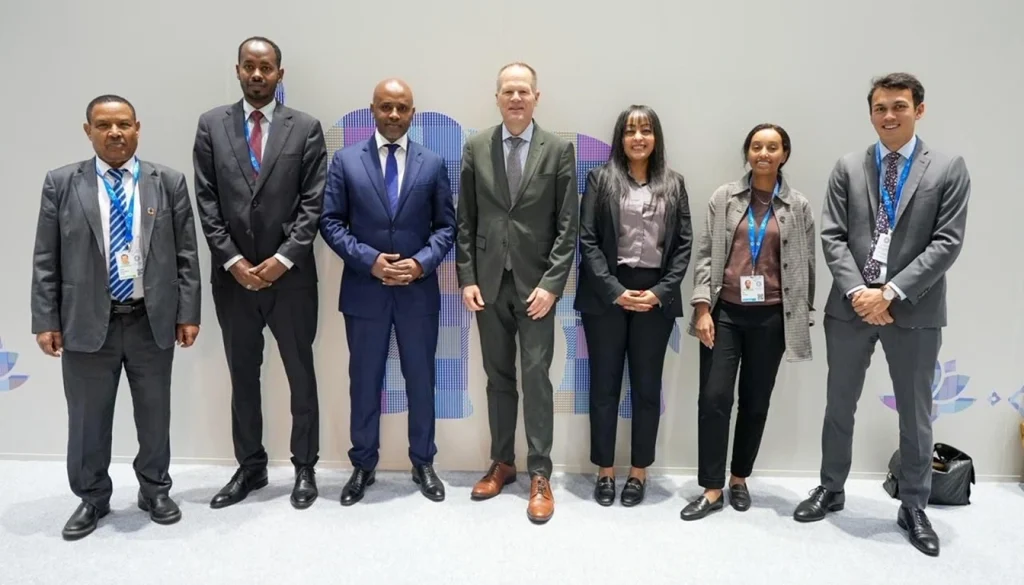
The IMF annual meeting in Bangkok has ended with a message African leaders know well. Without stronger digital connectivity, developing nations risk watching the global tech boom from the sidelines.
The latest World Economic Outlook puts global growth at 3.1 percent, with inflation spiking to 4.7 percent. An AI boom is lifting economies that build and export technology, but poorer and climate-exposed countries are getting hit twice, by rising energy costs and by climate disasters.
Debt on one side, opportunity on the other
More than 60 percent of low-income nations are in or near debt distress. For many African finance ministers, that means paying creditors while trying to keep schools, clinics and social support running.
Delegates in Bangkok argued that belt-tightening alone will not be enough. Wayne Henry, head of the Planning Institute of Jamaica, said many developing countries are not sharing in the gains from technology. His fix was to bring in greater digital connectivity so these economies can benefit from technological advances.
What this means for Africa
Think about what a reliable connection already does on the continent. A trader in Kumasi takes mobile payments, a farmer in Kisumu checks market prices before leaving the farm, and a student in Lagos follows a coding course online. All of that depends on digital infrastructure that works and that people can afford.
Yet internet access is still patchy outside the big cities. Data costs bite hard when incomes are low, and power cuts can switch off a whole network. Digital inclusion, meaning women, rural communities and young people actually getting online, is where the gap is widest.
The IMF meeting treated digital investment as part of economic development rather than a luxury. It also leaves a hard question for African governments: how do you fund fibre, towers and cheaper devices while debt payments eat the budget?
The road ahead
The Bangkok message was to pair fiscal discipline with smart spending, not choose between them. If that spending reaches the connectivity gap, countries can protect vulnerable citizens today and still claim a place in tomorrow’s economy.
Africa has a young, mobile and inventive population. What it needs now is a network strong enough to carry that talent to the world.
Read More
Africa’s Digital Boom Has a Price Tag Nobody Is Talking About
US$155 Million Investment for Africa’s Digital Infrastructure Development by WIOCC
Africell’s $100 Million US Backing
