
Before highways and budget airlines, the train decided where many African towns would exist. Africa’s Forgotten Railway Towns tell that story better than most museums, because they began as water stops, junctions and mining sidings, and then slowly emptied when the trains stopped coming. Some are half-buried in sand. Others still have a station clock that keeps the wrong time. All of them have something travellers are increasingly hunting for: a story that hasn’t been told a thousand times already.
When the Train Left, the Town Felt It
A railway town lives and dies by its timetable. The workshop employs the fathers, the canteen feeds the families, and the station is where everyone gathers on Saturday. When a line closes, is rerouted or is replaced by a faster one, the whole economy goes quiet at once.
That is why these places are so well preserved. Nobody had the money to demolish the old stationmaster’s house or tear down the colonnaded shopfronts. What looks like neglect is also a kind of accidental archive, and tourism, handled well, could pay for its upkeep.
Kolmanskop: The Warning and the Proof
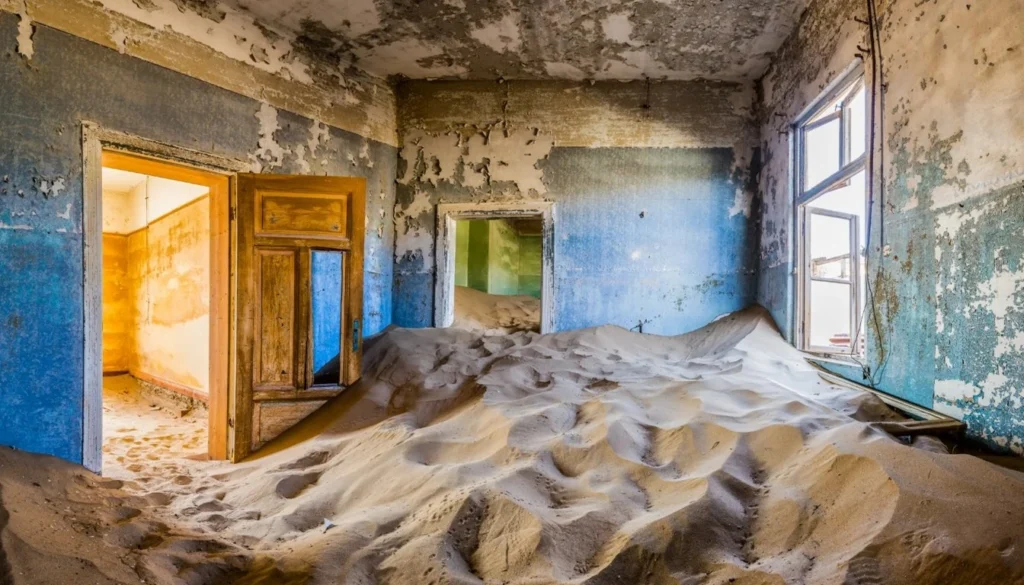
Namibia’s Kolmanskop is the obvious place to start, because it shows both the promise and the risk. According to National Geographic, a railway worker named Zacherias Lewala was clearing sand from the tracks in 1908 when he noticed shining stones. His German employer recognised them as diamonds. Lewala was never rewarded for the find.
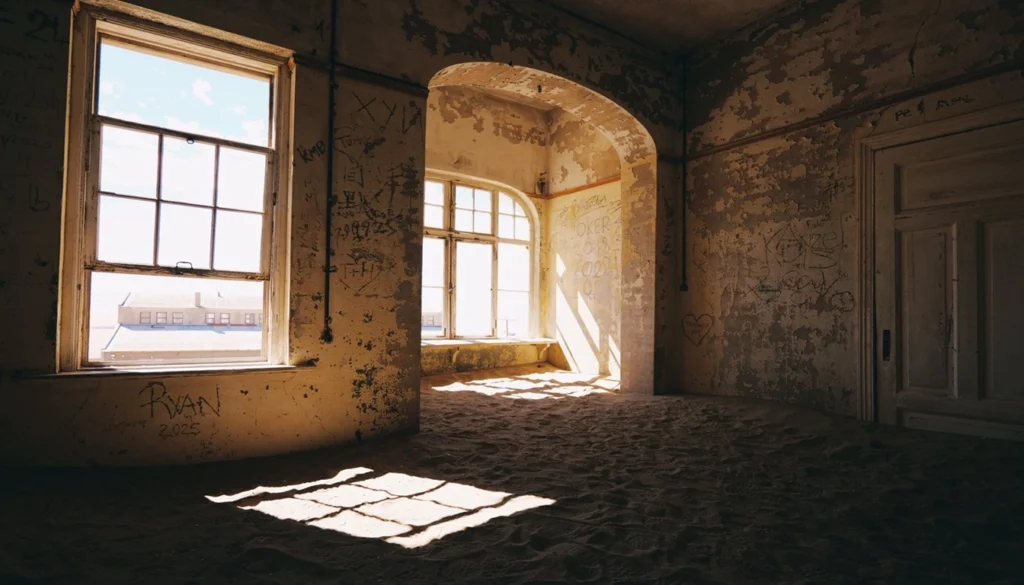
A town followed fast. By 1912 it was producing about a million carats a year, and it had a bakery, a post office, an ice factory and visiting European opera groups. Then richer fields were found further south, and by 1956 Kolmanskop was empty. The dunes that once crept over Lewala’s tracks now push through the doors and fill the rooms.
Today, as many as 35,000 people visit every year, and their spending supports the nearby coastal town of Lüderitz. Kolmanskop has also needed visitor limits and conservation work, because the same crowds that fund its survival also wear it down. Any town copying this model should plan for that from day one.
Voi, Dire Dawa and Atbara: Stories Waiting for an Audience
Kolmanskop is a ghost town, but the more interesting opportunity may be towns that are still alive and simply overlooked.
- Voi, Kenya: The Uganda Railway reached this area in the 1890s, and the Tsavo man-eating lions that stalked railway workers became world-famous. Today most visitors rush through Voi on the way to Tsavo East, and the faster standard gauge line has taken over much of the passenger traffic. A proper railway heritage trail, with the old station, the workers’ quarters and the lion story, could keep people in town for a night or two instead of an hour.
- Dire Dawa, Ethiopia: The city grew up around the French-built line linking Addis Ababa to Djibouti. Its railway-era streets and market quarter have a character you won’t find in the capital. Ethiopia’s modern railway has reopened the corridor, so there is a reason to stop here again.
- Atbara, Sudan: For decades this Nile town was the beating heart of Sudan Railways, with enormous workshops and its own railway museum. Realistically, tourism there has to wait until the country is safe again. But the heritage is intact, and it is the kind of place worth planning for.
Proof That It Can Work
Africa already has a success story. Matjiesfontein in South Africa’s Karoo began in the 1880s as a refreshment stop for passing trains. Today the whole village is a living heritage stop, anchored by the Victorian-era Lord Milner Hotel. And in Eritrea, the Italian-built line from Massawa up to Asmara has been restored in sections, with steam trains running for visitors.
Neither is a giant operation. Both work because they sell atmosphere and honesty, not a theme park.
Don’t Skip the Hard History
Railways in Africa were mostly built to move minerals, crops and soldiers out of the interior, not to serve the people living along the route. Forced labour, land seizures and colonial violence are part of the story. National Geographic’s account of Kolmanskop makes the point plainly: the town was built on a legacy of colonial violence, and it sat inside a restricted zone where displaced local people were forced into mine labour.
An African audience will notice if a tour glosses over that. The best versions of railway tourism will put local voices at the front: descendants of railway workers, retired drivers, the women who ran the station canteens. They should be the guides, the storytellers and the ones who earn from it.
What Needs to Happen First
Good intentions won’t fill a guesthouse. A few practical things matter more:
- Safe, reliable access: A town that is hard to reach, or hard to trust, won’t get visitors.
- Small-scale lodging: Converted station buildings and family-run guesthouses keep the money local.
- Conservation before crowds: Fix the roof first, then print the brochures.
- Community ownership: If residents don’t share in the income, the project won’t last.
- Smart storytelling: A plaque is fine, but a retired railwayman telling you about the 1970s is better.
Governments and railway companies sit on a lot of unused heritage property. Handing the right buildings to local operators on sensible leases would cost very little compared with building new attractions from scratch.
The Track Ahead
Africans are travelling more within their own continent, and younger travellers in particular want places with a story and a bit of grit. Africa’s Forgotten Railway Towns fit that mood perfectly. They aren’t polished, and that is their appeal.
Not every platform will become a destination, and some towns are probably better left alone. But the ones with strong stories, willing communities and a way to get there deserve a serious look. The trains may have moved on. The towns they left behind still have plenty to say.
Read More
Lobito Corridor: Can a US-Backed Mineral Highway Bring Peace to DR Congo?
Somali-American Attack in Minnesota Shocks Community as Prosecutors Charge Passenger
Mozambique Opposition Leader Venâncio Mondlane Faces Terrorism Trial: What Is at Stake?
Zambia Copper Boom: Billions Pour In, but Do Ordinary Zambians Feel It?
AFCON Qualifiers: Senegal and Morocco Book Their Tickets While Tunisia Cry Foul
