
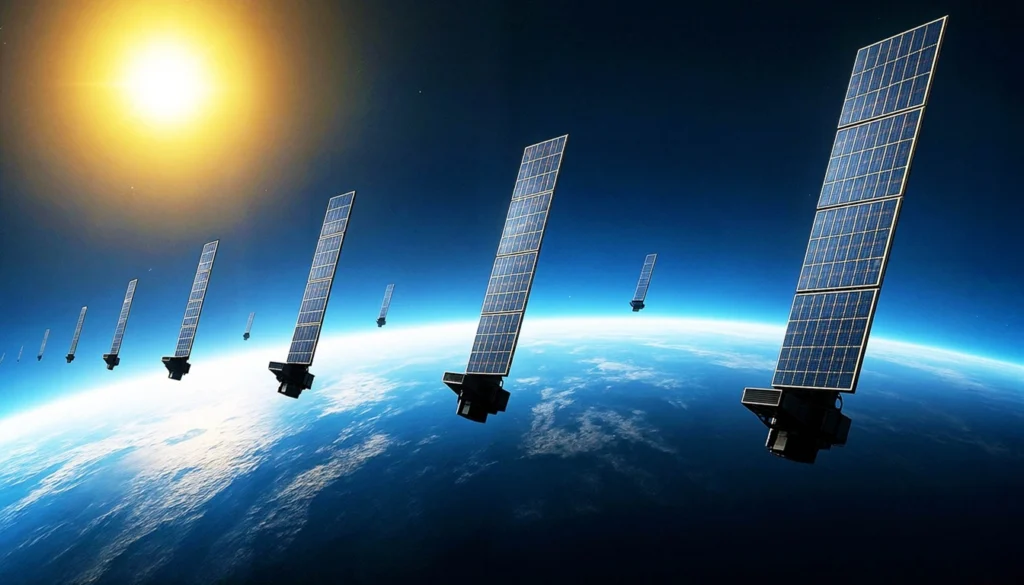
A farmer in northern Kenya used to wait for the rains and hope. Today, data from orbit can tell her whether the soil is dry, whether her maize is under stress, and whether a drought is coming. The Africa satellite revolution is turning that kind of insight from a luxury into a practical tool. Across the continent, governments, universities and start-ups are launching their own spacecraft, and the real question is no longer whether Africa can reach orbit, but what it can fix once it gets there.
From Borrowed Data to Homegrown Satellites
For decades, African countries relied on images and signals owned by someone else. Nigeria was an early mover, launching NigeriaSat-1 in 2003. Egypt, South Africa, Algeria and Morocco followed with their own Earth observation satellites. Then came a newer wave: Ghana’s first satellite in 2017, Rwanda’s RwaSat-1 in 2019, and Kenya’s Taifa-1 in 2023, built for agriculture and environmental monitoring.
What changed is cost. Small satellites, some no bigger than a shoebox, now cost a fraction of what a traditional spacecraft once did. That has opened the Africa space industry to countries and companies that could never have afforded a launch before. Small teams of African engineers are building hardware, writing software and training the next generation at home rather than abroad.
Feeding a Continent with Data from Above
Farming employs a huge share of Africa’s workforce, and it is also the sector most exposed to unpredictable weather. This is where agricultural technology powered by space data earns its keep.
Satellites can track crop health, map farmland, estimate yields and spot pest outbreaks before they spread. Governments can use the same information to plan food imports, target aid and warn communities early. Insurers can use it to settle claims for smallholders quickly, without sending an assessor down a muddy road.
The catch is delivery. Data sitting on a server in a capital city helps nobody. The projects that work are the ones that turn imagery into a simple text message or an app a farmer can actually use in her own language.
Watching the Climate Before It Hits
Africa contributes very little to global emissions yet carries some of the heaviest climate burdens. Floods in Mozambique, drought in the Horn of Africa and cyclones along the east coast have shown how costly late warnings can be.
Climate monitoring from space helps close that gap. Satellites measure rainfall, track rising rivers, follow vegetation loss and watch coastlines erode. Earth observation also helps with the less dramatic but equally serious problems: illegal logging in the Congo Basin, shrinking lakes, and the spread of desert in the Sahel.
Having African satellite technology under local control matters here. When a country owns the data stream, it decides how quickly to share a flood warning and who gets it first.
Connecting the Unconnected
Observation is only half the story. Communications satellites can reach places that fibre cables and cell towers may never economically serve. Schools in remote districts, clinics far from the nearest city and rural traders all stand to gain from reliable connectivity.
Several countries already operate communications satellites, and new satellite internet services are reaching African markets. Cheaper access could support online learning, digital payments and telemedicine. The risk is dependence: if foreign providers control the infrastructure, African users remain customers rather than owners.
Security, Cities and Everyday Planning
Space technology in Africa is also quietly reshaping governance. Satellite imagery helps cities map informal settlements, plan roads and monitor flood-prone neighbourhoods. It supports land registration, which matters in places where unclear ownership fuels disputes. It helps authorities track illegal fishing, mining and border activity across vast territories that are hard to patrol on foot.
None of this is glamorous. It is the dull, essential work of knowing what is happening on the ground, and satellite innovation makes it faster and cheaper than ever.
A Growing African Space Economy
The African space economy has been estimated in the tens of billions of dollars and is widely expected to keep growing. Much of that value will come not from rockets but from data services, ground stations, software and analytics. A young developer in Lagos, Nairobi or Cape Town can build a business on top of satellite data without ever touching a launch pad.
Institutions are catching up with the ambition. The African Space Agency, based in Egypt, was created to coordinate efforts across the continent, reduce duplication and give Africa a stronger voice in global space policy. National agencies in Nigeria, Kenya, Ghana, Rwanda and others are building their own programmes, and universities are adding space engineering courses.
The Obstacles Nobody Should Ignore
Honest optimism has to acknowledge the hurdles. Funding is uneven, and many programmes depend on a few government budgets. Skilled engineers are scarce, and many leave for better-paid jobs overseas. Most African satellites still launch on foreign rockets, which adds cost and delay. Data is often hard to access, poorly shared between agencies, or locked behind licences.
There is also the question of purpose. A satellite that looks impressive but has no clear user, no budget for data processing and no plan for replacement is a monument, not a solution. The most successful projects begin with a problem, such as crop failure, flooding or illegal mining, and work backwards to the technology.
What Success Would Look Like
The strongest sign that this revolution is working will not be a launch announcement. It will be a smallholder who receives a drought warning in time, a city planner who redraws a flood map, or a student in Kigali or Accra who builds an app from open satellite data and sells it across borders.
For that to happen, African countries need to share data, train people, support start-ups and pool resources through regional cooperation. They also need patience. Space programmes pay off over decades, not election cycles.
Final Thought
Can local space technology solve problems on Earth? Not by itself. Satellites do not plant crops, build flood defences or run clinics. But they give African decision-makers something they have long lacked: timely, reliable information about their own land, water and weather. If countries pair that information with good policy and local talent, the Africa satellite revolution could become one of the most practical technology stories of the century, and it will have been built by Africans, for Africans.
Read More
Lina Attalah Trial Suspended: What It Means for Press Freedom Across Africa
IMF Egypt Agreement Unlocks $2.3bn: What It Means for Cairo’s Economy
Mozambique Opposition Leader Venâncio Mondlane Faces Terrorism Trial: What Is at Stake?
Lobito Corridor: Can a US-Backed Mineral Highway Bring Peace to DR Congo?
AFCON Qualifiers: Senegal and Morocco Book Their Tickets While Tunisia Cry Foul
