
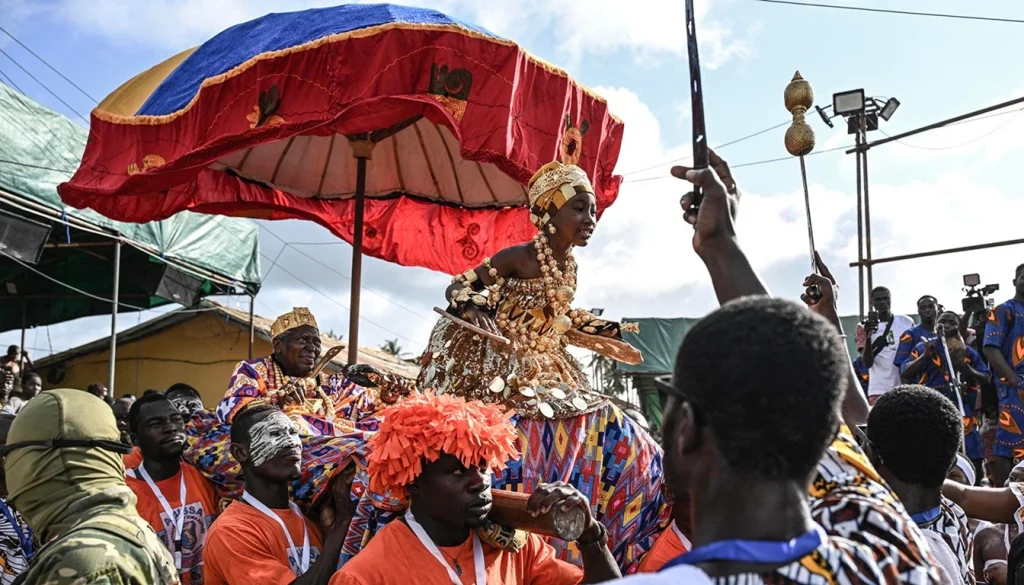
Every year, as October slides into November, the coastal town of Grand-Bassam trades its quiet colonial calm for drums, white clay and crowds in their finest cloth. The Abissa Festival in Côte d’Ivoire is the annual celebration of the N’zima people, and it is one of the few festivals in West Africa that asks you to settle your quarrels before you start dancing. If you are planning a trip that is about more than beaches and city nightlife, this is the one to build it around.
What Abissa Really Means
Abissa belongs to the N’zima people of south-eastern Côte d’Ivoire and south-western Ghana. It runs for about fourteen days and is described by those who have documented it as a time of forgiveness and rebirth. People let go of grudges, take stock of the year behind them, and celebrate through dress, dance, music and spirituality. That spiritual side matters, because Abissa is not a show put on for visitors. It is a community resetting itself. Families, neighbours and old rivals come back together, and the festival gives them a structure for doing it. Anyone interested in N’zima culture will find it hard to separate the party from the purpose.
Abissa Traditions You Will Not Forget
The most striking ritual is the accusation and repentance. During the festival, attendees are expected to come clean about the past year. Wrongs are named, apologies are made, and the slate is wiped. It is a very different idea of a new beginning from the usual resolutions made in private. Then there is the clay. Faces are painted with kaolin, a white clay, and you will see it on children, teenagers and grandparents alike. A group of young people with freshly decorated faces, grinning at a camera, is one of the images the festival is known for.
The other tradition that surprises first-timers is cross-dressing. Men dress as women and women dress as men, performing as a way of mimicking people who have wronged them during the year. It is playful, a little cheeky, and a safe way of saying what might be hard to say straight. Look closely at the clothing and you will also notice symbols. Some families use Abissa to show their link to an emblem of power or wealth, such as water, fire, yams or aubergines.
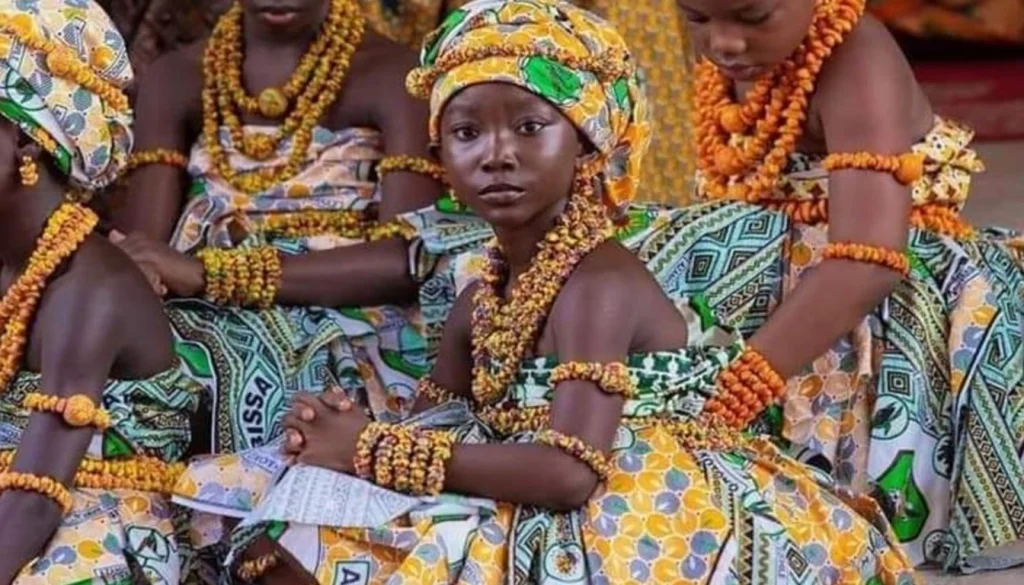
Photographers have documented couples in matching palm-nut garlands, a man posing with maize, and a woman with Ghanaian cedis and Guinean francs pinned to her hat. Crops feature heavily because agriculture was the backbone of Ivorian prosperity for so long. These are not costumes in the Halloween sense. They are statements about who you are and where you come from.
Abissa Music and Dance
Drums set the pace, and the drum circle is where the energy gathers. Everyone is expected to take part, so do not plan on standing at the edge with your phone. Children in matching outfits, young people showing off new steps and elders who have danced at Abissa for decades all share the same ground, each trying to give their best. You do not need to know the steps. Watch for a minute, find the rhythm, and join in where it feels natural. Nobody is judging your footwork. They are far more interested in whether you showed up with the right spirit.
When to Go
Abissa usually falls in October or November, and the exact dates shift each year. For 2026, the Ivory Coast Immigration travel guide gives Thursday 22 October to Sunday 1 November. Since that is only two days away, treat it as a guide and confirm the programme with local organisers or your hotel in Grand-Bassam before you travel. Festival schedules can change, and activity tends to build as the final days approach.
Your Abissa Festival Travel Guide: Practical Tips
- Sort your visa early: Check entry requirements for your passport and apply in advance rather than leaving it to the last week.
- Ask your doctor about vaccinations: Visit a travel clinic before you go, and carry insect repellent and any medication you need.
- Pack for the heat: Light, breathable clothes, a hat, sunscreen, comfortable shoes and a refillable water bottle will serve you well. Bring something you do not mind getting dusty or marked with clay.
- Book your bed ahead: Abissa draws visitors from across Côte d’Ivoire and beyond. Rooms close to the action fill up, so reserve early.
- Dress modestly and ask before photographing: Many participants are happy to pose, but some moments are sacred. Ask first, and respect a no.
- Keep your wits about you: As in any busy gathering, watch your belongings and follow local advice.
Things to Do in Côte d’Ivoire Around the Festival
Grand-Bassam itself deserves a full day. Its historic colonial quarter was inscribed as a UNESCO World Heritage Site in 2012, and walking its old streets before the evening drums start gives the festival some context. Once the celebrations wind down, you have plenty of choices. Abidjan is only a short drive away, with its markets, restaurants and music venues. The coastline offers quieter stretches for a swim and a long lunch of grilled fish. If you have more time, national parks and historic towns inland reward the extra travel. Many of the best things to do in Côte d’Ivoire sit within a day’s journey of each other, so a week can hold more than you expect.
Why Côte d’Ivoire Cultural Festivals Like This Matter
Côte d’Ivoire has many cultural festivals, but Abissa stands out because it is about people rather than spectacle. It asks a community to be honest with itself once a year, and then to celebrate that honesty in public with food, cloth, clay and rhythm. For African travellers, it is also a reminder that you do not have to cross an ocean to find something that changes how you see the world. The lesson is close to home: forgive, release, and begin again with the people around you. If you go, arrive curious, stay respectful, and be ready to dance. Your face may well end up white with kaolin before the day is over.
Conclusion: Come for the Drums, Stay for the Forgiveness
The Abissa Festival in Côte d’Ivoire offers more than a colourful week on the calendar. You will go home with photographs of kaolin-painted faces and the rhythm of the drum circle in your head, but what lingers longest is the idea behind it all: a community that admits its faults, forgives, and begins again together. If you can make the trip, plan early, confirm the dates locally, and arrive with respect. Ask before you photograph, dress modestly, and join the dance when invited. Do that, and Abissa will leave you with something more lasting than a travel story.
Read More
The Gerewol Festival: Inside the Wodaabe Beauty Contest Where Men Wear Makeup to Win Hearts
New African Movies Showing at International Film Festivals This Month
Why the Africa Now Festival Is Becoming a Global Cultural Movement
Royal Horses and Thunderous Drums: What You will see in the spectacular Durbar Festival in Nigeria
