
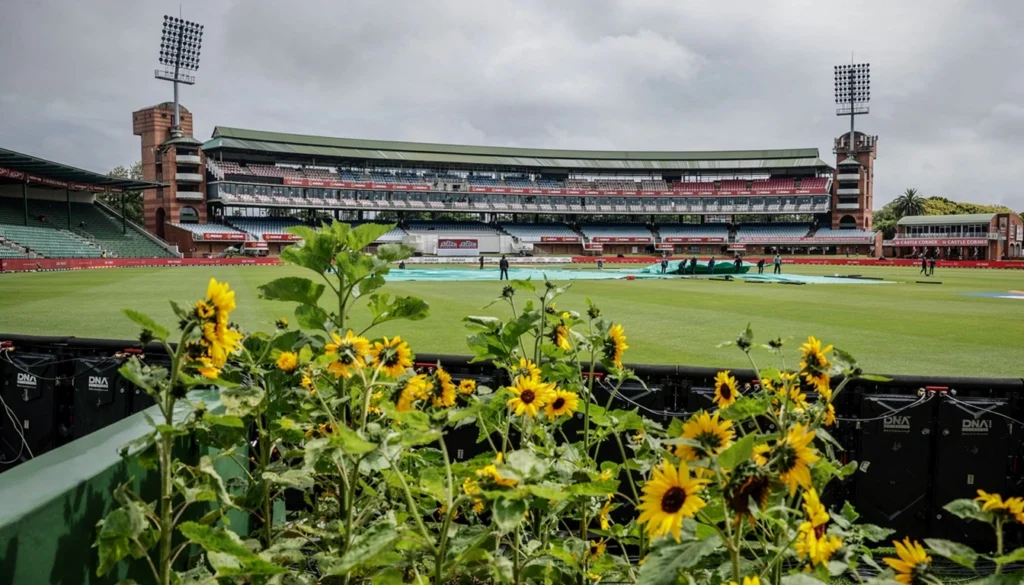
Cricket in Africa has always had its stars, but the stage deserves just as much attention. Africa Cricket Venues range from mountain-backed grounds in Cape Town to historic clubs in Zimbabwe, and few people outside the game’s heartlands realise how good they are. With the 2027 Cricket World Cup approaching, the continent is about to show what it has.
A Tournament Coming Home
The marquee 50-over competition returns to Africa after 24 years. The last time was 2003, when South Africa, Zimbabwe and Kenya shared hosting duties. This time the load is spread differently. Eight cities in South Africa, three in Zimbabwe and Namibia’s capital Windhoek were confirmed as co-hosts. The tournament is scheduled for October and November 2027.
For African fans this matters beyond the cricket. Hosting a global tournament forces upgrades to roads, floodlights, broadcast facilities and public transport, and those improvements stay long after the final. It is also a rare chance for a young supporter in Bulawayo or Windhoek to watch the world’s best without boarding a plane.
The Big Names: South African Cricket Stadiums
If you ask anyone to name the best cricket stadiums in Africa, the conversation usually starts in South Africa. These grounds have hosted Test matches for well over a century and have a reputation for atmosphere.
- Wanderers, Johannesburg: Known as the Bullring, it is loud, steep and intimidating for visiting teams. It sits at altitude, so the ball flies, and batters have produced some memorable run chases here.
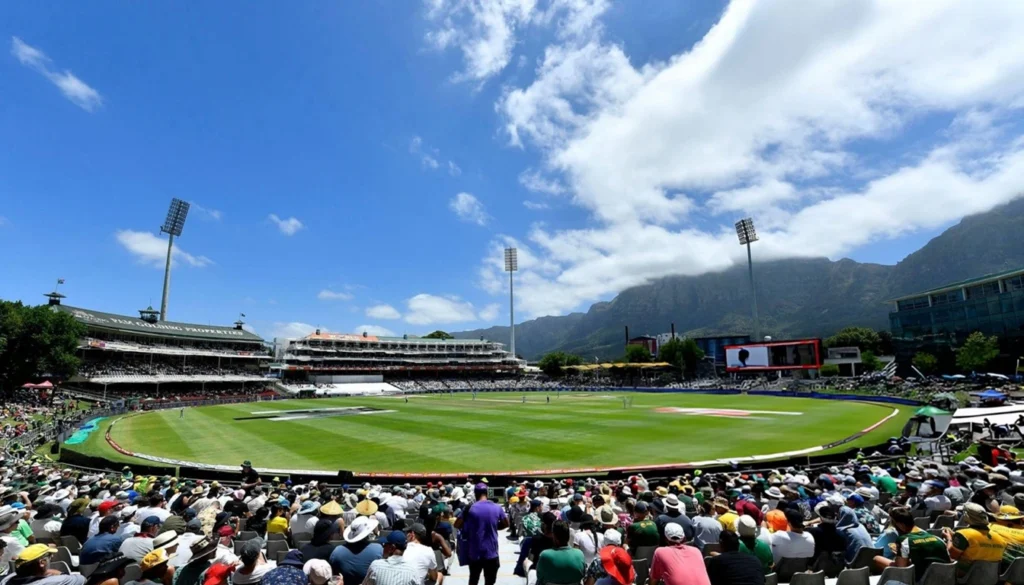
- Newlands, Cape Town: Many travelling fans call this the most beautiful ground in the world, with Table Mountain behind the stands. It is as good for a long day out as it is for the cricket, and it is easy to see why visiting supporters keep coming back.
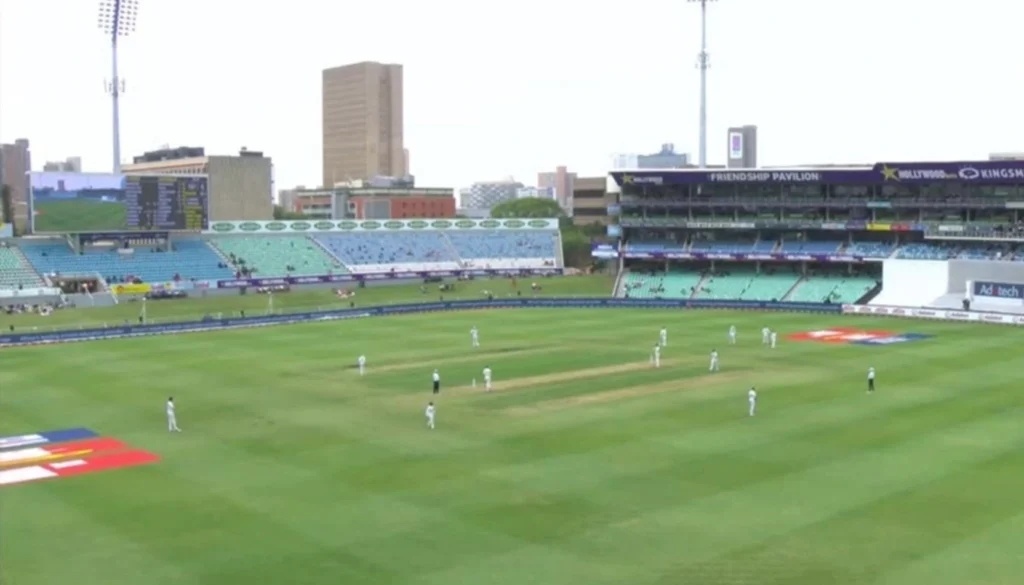
- Kingsmead, Durban: The Indian Ocean climate gives this ground a warm, humid feel. Cricket here comes with the smell of braai smoke and the sound of a crowd that never sits still.
- Centurion: Often called a fortress for the home side, it has quick, bouncy pitches that reward fast bowlers and have caught out many touring batting line-ups.
- St George’s Park, Gqeberha: It is South Africa’s oldest Test ground and hosted a semi-final in the 2003 World Cup.
Beyond these, the 2027 list also includes Mangaung Oval in Bloemfontein, Boland Park in Paarl and Buffalo Park in East London. These smaller grounds matter because they spread the event beyond the big metros. South African cricket stadiums already have most of what a World Cup requires, which is partly why 44 of the 54 matches were originally planned for South African grounds.
Zimbabwe and Namibia: Smaller Grounds, Big Character
South Africa gets the headlines, but the rest of the region has plenty to offer. Zimbabwe brings two familiar names, Harare Sports Club and Queens Sports Club in Bulawayo. A third venue is new to many fans: the Fale Mosi-oa-Tunya International Cricket Stadium in Victoria Falls. Few grounds on earth can match the idea of a cricket match a short drive from one of the world’s great waterfalls.
Namibia’s story may be the most moving of all. The Namibia Cricket Ground in Windhoek will host matches, and it will be the country’s first senior ICC global tournament as host. A nation that has fought hard for recognition in the sport now gets its moment in front of the world.
Untapped Potential: What African Cricket Grounds Still Lack
This is where the honest conversation begins. The best African cricket grounds are world-class, but the picture across the continent is uneven. Outside the established Test nations, many pitches are basic, floodlights are rare, and spectator facilities are limited. Cricket infrastructure in Africa often depends on a handful of clubs and a few committed volunteers rather than long-term public investment.
Look at the continent’s list of cricketing nations and the gap is clear. Kenya produced the 2003 semi-finalists and then struggled to keep that momentum. Uganda has qualified for a global tournament, Nigeria and Tanzania have ambitious associations, and Ghana and Rwanda are building fast. Yet the common complaint is the same everywhere: not enough turf wickets, not enough coaching venues, not enough good grounds for local kids to play on.
Climate adds to the challenge. Many grounds struggle with drainage and drought, and maintaining a high-quality outfield is costly. Sustainable water use, solar power for floodlights and locally trained groundskeepers are practical solutions that African boards should push for.
Cricket Tourism: A Business Waiting to Happen
There is also an economic side. Cricket tourism is already a serious industry in places like Australia, England and the Caribbean. Fans plan whole holidays around a Test series. Africa has everything needed to compete for that market: reliable winter sun for northern-hemisphere visitors, wildlife, beaches, wine routes and some of the friendliest crowds anywhere.
Imagine a visitor who watches a day of cricket at Newlands, spends two days in a game reserve, and then flies to Victoria Falls for another match. That package sells itself, but it needs coordination between cricket boards, tourism authorities, airlines and local hotels. Right now such trips are mostly put together by specialist tour operators rather than promoted as a national product.
The 2027 tournament is the perfect trial run. If thousands of visiting fans leave happy, they will come back, and they will tell friends. If the experience is chaotic, that goodwill will be hard to win back. Host cities should be thinking about transport links, safe accommodation, honest pricing and fan zones that reflect local culture, not just a copy of what works elsewhere.
African Sports Development: Beyond the Boundary
The wider point is that African sports development works best when facilities serve the whole community. A good ground should host school matches on Saturday mornings, women’s games on Sunday afternoons and community coaching clinics during the week. A stadium that sits empty for 300 days a year is a wasted asset.
This is already happening in some places. Women’s cricket in South Africa has grown considerably, and the country hosted the Women’s T20 World Cup in 2023. Youth tournaments in Zimbabwe and Namibia earlier this year showed that smaller hosts can run high-standard events. The challenge now is to turn one-off tournaments into permanent growth.
There is a simple test for success. In five years, will a talented 12-year-old in Kampala, Lagos or Dar es Salaam have a decent pitch within reach? If the answer is yes, then the World Cup did its job. If not, we will have built great venues for a month and missed the real opportunity.
What Africa Should Do Next
A few practical steps would help turn this moment into lasting progress:
- Invest beyond the host cities: Use World Cup money and ICC development funds to upgrade grounds in associate nations as well as in the big metros.
- Train local groundskeepers: A good pitch needs skilled people, and those skills create jobs.
- Open stadiums to the community: Schools and clubs should be able to use venues regularly, not only on match days.
- Market the product together: A joint tourism campaign across South Africa, Zimbabwe and Namibia could attract fans who want more than one match.
- Keep ticket prices realistic: Cricket cannot grow if local fans are priced out of their own tournament.
The Final Over
The case for Africa Cricket Venues is simple. The best grounds already stand comparison with any in the world, and the next generation of venues could be even better if the right investment follows. Table Mountain, the Victoria Falls skyline and the Windhoek hills offer settings that television cameras will love in 2027.
But the real measure of success will not be the quality of the pitches in October and November. It will be whether the game is stronger across Africa when the last spectator goes home. The grounds are ready for the world. Now the continent needs to make sure they are open to its own people too.
Read More
8 Things About the Billboard U.S. Afrobeat Songs Chart for November 28, 2026
Sandpapergate Reopened: Australia’s Test Cricket Forum Digs Into the Whole 2017-18 Season
Zambia Protest Ban Puts Term Limits and Democracy Under the Spotlight
South African Rand Bounces Back as Precious Metals Stage a Comeback
Pete Edochie, Nollywood’s Unforgettable Voice of Authority, Dies at 79
