
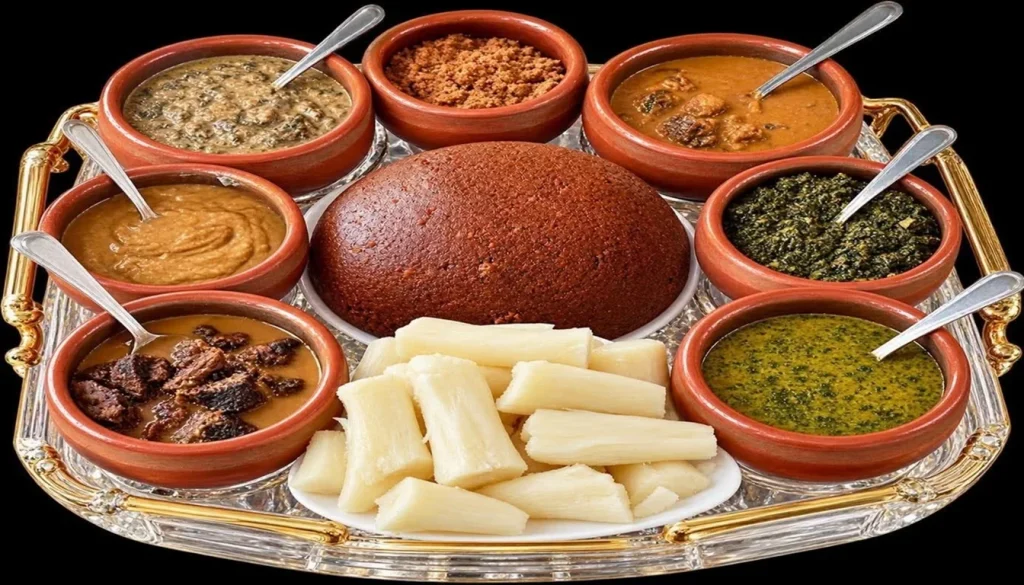
Sit down at a Lagos wedding, an Addis Ababa family lunch or a Johannesburg braai, and you’ll understand something quickly: in Africa, food is how people say welcome. The list of popular African dishes gaining global recognition keeps getting longer, and the rest of the world is only now catching up to what the continent has always known. Restaurants in Miami, Houston, New York and Washington D.C. now serve plates that grandmothers on this side of the ocean have been perfecting for generations.
One Continent, Many Kitchens
Calling it “African food” is a bit like calling every dish in Europe “European.” Africa has five broad food regions, North, West, East, Central and Southern, and each cooks in its own way. Coastal communities lean on fish. Inland, people reach for grains, tubers and livestock. Old trade routes brought in spices that stayed and became part of the local pot.
Then there’s the sheer number of people. Nigeria alone has more than 250 ethnic groups, and each has its own recipes, its own soups, its own opinions on how things should be done. So when we talk about African cuisine, we’re really talking about hundreds of food cultures sharing one very big table.
West Africa: Where Jollof Is Serious Business
Let’s start where the arguments start. Jollof rice, cooked in one pot with tomato, pepper and plenty of patience, is the dish most people abroad meet first. It’s the centrepiece at parties, and it comes with fierce loyalties. Ask a Nigerian and a Ghanaian whose version is better and see how long dinner takes.
Egusi soup is the other heavyweight. Ground melon seeds, leafy greens, and meat or fish make a thick, rich soup that’s eaten with pounded yam or fufu. That’s the real way to enjoy it, scooping and swallowing, no fork required. Then there’s suya, those spicy grilled skewers sold at roadsides after dark, which has quietly become one of the most recognisable street foods on the continent.
Underneath all of it sit the staples: yams, cassava, plantains, peppers, palm oil. Simple ingredients, but in the right hands they taste like home.
East Africa: Injera, Ugali and Smoke From the Grill
Ethiopia and Eritrea gave the world injera, a spongy, slightly sour flatbread made from teff flour. It works as plate and spoon at the same time. Pile it with wot, the thick stews made with lentils, vegetables or meat, and eat from a shared platter. The heat comes from berbere, a chilli-based spice blend, while niter kibbeh, a spiced clarified butter, adds a nutty depth you can smell before the food arrives.
Move south and the staples change. Ugali, a stiff maize porridge, anchors countless family meals in Kenya and Tanzania. In Uganda, matoke, steamed green bananas, takes the same role. Along the Swahili Coast, Arab and Indian influences show up in pilau rice, curries and coconut milk sauces. And nyama choma, meat grilled over open fire, is almost a national pastime. Add a hot mandazi on the side and you’ve got a proper East African afternoon.
North Africa: Slow Pots and Mint Tea
Morocco, Tunisia, Egypt and their neighbours cook with warmth rather than fire. Tagine, named after the conical clay pot it simmers in, turns lamb or chicken tender with dried fruit, nuts and spice. Couscous, tiny steamed semolina grains, arrives under a hearty stew. During Ramadan, harira, a soup of tomato, lentils and chickpeas, breaks the fast in countless homes.
Cumin, coriander, cinnamon, saffron and preserved lemon do the heavy lifting here, along with ras el hanout, a blend that can hold dozens of spices. And don’t skip the mint tea. Poured from a height into small glasses, it’s less a drink than a greeting.
Southern and Central Africa: Braai, Bobotie and Cassava Leaves
South Africa’s food is a conversation between old and new. The braai is the obvious star, boerewors and steak over open coals, but it’s really an excuse for friends to gather and stay far too long. Potjiekos is cooked slowly in a three-legged cast-iron pot without stirring. Bobotie, spiced mince baked under an egg topping, shows the Cape Malay and Dutch influence. Chakalaka, a spicy relish of onion, tomato, peppers and beans, finishes the plate, usually next to pap.
Central Africa gets far less attention, and that’s a pity. Cassava is the backbone here, both the root and the leaves. Saka saka, a stew of pounded cassava leaves, and maafe, a groundnut stew, are filling, deeply flavoured and made with what grows nearby. Smoked and dried fish add protein and a smoky edge. Much of this cooking is passed down by watching, not by reading recipes, which makes it all the more precious.
Why the Table Matters More Than the Menu
Across all five regions, one thing stays constant: food is shared. Families eat from one big plate. Weddings, festivals and funerals revolve around huge pots. Children learn to cook by standing next to an auntie or a grandmother and paying attention.
That’s probably why African food travels so well. It was never meant to be eaten alone, and it carries that spirit wherever it goes.
The Diaspora Is Carrying the Plate Abroad
Much of the credit for the growing global interest belongs to Africans abroad. Around Miami, Houston, New York and Washington D.C., communities have opened restaurants where you can find jollof, egusi with fufu, and Ethiopian platters of doro wat and misir wat on injera. Farmers’ markets have stalls selling the real thing, too.
The influence runs deeper than restaurants. Okra, black-eyed peas and rice dishes in the American South trace back to West African food traditions. Now a new generation of cooks, cookbook authors and home chefs is showing a wider picture, one that goes beyond a single dish and covers the whole continent.
Where to Start
If you’re new to all this, here’s a simple route. Try jollof and suya for the West African classics. Share an injera platter with friends. Taste a slow-cooked tagine, then finish with mint tea. If you can find a braai or a bowl of maafe, grab it.
Africa’s food culture has never needed a stamp of approval from anyone. But it’s good to see the world finally paying attention, and it’s even better when it comes with a seat at the table.
Conclusion
African food is more than a trend. It’s centuries of cooking, shared plates and family tradition finally getting the recognition it deserves. From jollof and injera to tagine and braai, every region offers something worth tasting, and every dish carries the story of the people who make it. So the next time you see an African restaurant, go in, order something you can’t pronounce, and share it with someone.
Taste Africa: Flavors, Culture & Culinary Traditions
Which African Dishes Are Most Loved?
Discover iconic flavors from Jollof Rice to Injera across Africa.
Which African Foods Should You Try?
Check out 10 must-try dishes showcasing Africa’s diverse culinary traditions.
How Has African Food Evolved Abroad?
Explore how diaspora communities preserve and transform African food traditions.
Which African Countries Have Great Food?
Find delicious culinary highlights from Africa’s top food destinations.
What Makes Djiboutian Yemeni Fish Special?
Uncover Mukbasa’s national significance and its distinctive Yemeni culinary roots.
