
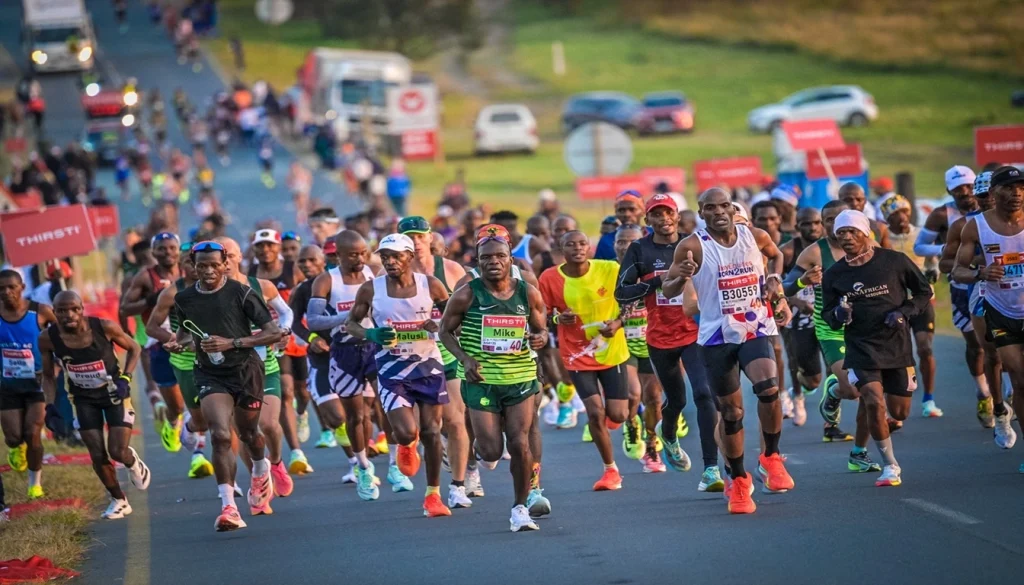
Ask anyone to name the home of the world’s best distance runners and the answer comes fast: Kenya and Ethiopia. But African long-distance running has never really been a two-country story, and the last decade has made that harder to ignore. Runners from Uganda, Tanzania, Eritrea, Morocco, Namibia and Lesotho are now winning medals and breaking records on the biggest stages. The real question is no longer whether other nations can compete. It is whether they can build something that lasts.
Why Kenya and Ethiopia Got There First
The two giants did not become giants by accident. Both have high-altitude regions, such as the Rift Valley around Iten and the highlands near Bekoji, where children grow up at elevations that boost endurance. Many of them run to school every day, often several kilometres each way. Altitude alone does not explain it, though. Both countries built a culture around running. Athletes who made it out of poverty became role models, training camps became communities, and successful runners reinvested by coaching the next batch. A talented teenager in Eldoret or Addis Ababa sees a visible path from a dirt track to an international career. That belief is the real engine.
Uganda: The Closest Challenger
If one country has shown how to break the pattern, it is Uganda. Joshua Cheptegei turned himself into one of the finest track runners of his era, taking Olympic gold in the 10,000 metres in Paris in 2024. Jacob Kiplimo has been a major force on the roads and the track. Stephen Kiprotich won Olympic marathon gold back in 2012, and Victor Kiplangat took the world marathon title in 2023.
Most of Uganda’s stars come from the eastern highlands near Mount Elgon, around Kapchorwa and Bukwo. The terrain looks a lot like Kenya’s, and the region sits right on the border. Uganda has also benefited from athletes who train in the Kenyan camps and bring the lessons home. The country shows that proximity to existing expertise can speed things up considerably.
Tanzania, Eritrea and Morocco: Different Roads to the Podium
Tanzania has a proud history in distance events, and Alphonce Simbu’s silver medal at the 2023 World Championships marathon showed the talent is still there. Eritrea, a small country with a big running tradition, gave the world Zersenay Tadese, a long-time half marathon record holder who also won Olympic bronze in the 10,000 metres in 2004. Many Eritreans grew up around a strong cycling and running culture shaped by the highlands around Asmara.
Morocco comes from a slightly different tradition. Hicham El Guerrouj and Said Aouita dominated middle distances for years, and the country has kept producing runners who can move up to longer events. Southern Africa has its own stories too. Namibia’s Helalia Johannes has made a name in marathon racing, while Lesotho’s runners have shown up in major marathons with real pace. South Africa, meanwhile, has the Comrades Marathon, an ultra-distance race that draws tens of thousands of participants and keeps a deep running community alive.
What Holds Other Nations Back
Talent is rarely the missing piece, but infrastructure is. Many countries lack well-kept tracks, safe roads for training, and access to decent running shoes. A good pair of racing shoes can cost more than a family spends in a month, and modern carbon-plated shoes have raised the bar even higher. Then there is the money. Federations are often underfunded, and athletes may wait months for allowances or travel support. Coaching is another gap. A young runner with raw ability but no structured plan, nutrition guidance or recovery advice can plateau early or get injured. Scouting is patchy as well, so a gifted child in a remote district may never be spotted at all.
There is also the pull of other sports. In countries where football dominates the national imagination, young people with athletic gifts are often steered toward the pitch rather than the track. Distance running asks for years of patient, painful training, and without visible rewards, fewer families encourage it.
What a Real Pipeline Looks Like
The countries that have succeeded share a few habits, and others can copy them without needing identical geography.
- First, school and community races matter. Regular competitions at district and regional level give coaches something to scout and young athletes something to aim for.
- Second, training camps help enormously. A well-run camp gives runners structure, shared knowledge and a sense of belonging. Several African countries have started building these, sometimes with support from international federations or sponsors.
- Third, athletes need a route to money. Road races in Europe, Asia and North America pay prize money and appearance fees that can change a family’s life, but runners need managers and visas to reach them. Strong agents with fair terms make a big difference.
- Finally, local races matter. Cities like Kigali, Lagos, Accra and Windhoek host events that put distance running in front of ordinary people, and when a hometown crowd cheers, the sport starts to feel like a real career.
The Rise of Women Runners
Some of the most exciting growth is happening among women. Kenya and Ethiopia have long produced female champions, and others are following. Uganda’s Peruth Chemutai won Olympic gold in the 3000 metres steeplechase in Tokyo, showing what is possible when girls get access to coaching and encouragement. Still, in many communities, cultural expectations and safety concerns keep girls from training seriously. Programmes that offer safe spaces, female coaches and school support could unlock a huge pool of talent that remains largely untapped.
So, Can It Happen?
Yes, but not overnight, and not by copying a template. Rwanda, Burundi, Malawi, Zambia, Nigeria and Ghana all have young people who run well, and some have highland terrain or growing urban running scenes. What they need is steady investment, honest administration and patience. The good news is that the blueprint is already visible. Uganda proved that a neighbour can climb into the elite ranks within a generation. Tanzania, Eritrea and Namibia show that small or less obvious nations can still produce world-class athletes. When governments, sponsors and communities back the sport together, the results follow.
Kenya and Ethiopia will remain titans for a long time. Yet the next great distance champion might come from a village nobody has heard of, running on a dusty road before sunrise, with a dream that is only just taking shape. The continent is full of such places. Giving those runners a fair chance is the work that lies ahead.
Read More
The Road to East Africa Is Open: AFCON PAMOJA 2027 Qualifiers Roll Out Heavyweight Clashes
188 and Record-Breaking: Lhuan-dre Pretorius Shatters Chris Gayle’s T20 Mark*
Matthews’ Masterclass: West Indies Crush Zimbabwe to Seal ODI Series
