
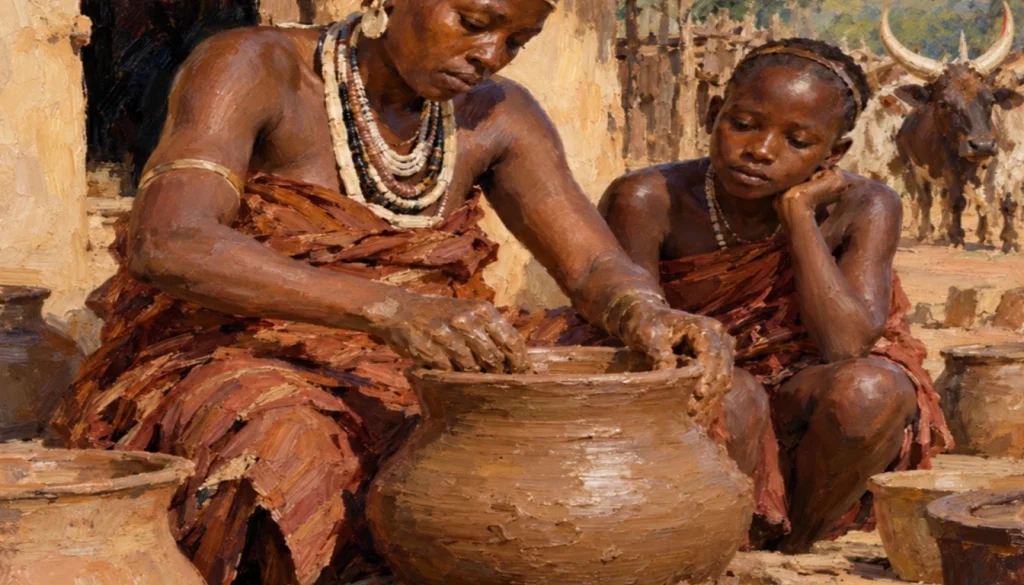
In villages from Kampala to Kigali, the sound of a drum being carved or raffia being pulled tight is getting quieter. Africa’s Vanishing Crafts are not fading in one dramatic moment but one retiring elder at a time, often with no apprentice standing nearby to take over. The question is no longer whether African traditional crafts matter. It is who will still know how to make them in twenty years.
The Hands That Still Remember
The case of Uganda is a very apt one here. In the course of the effort to identify and preserve craftsmen and women of Uganda during 2024, in more than 10 different districts of Uganda, over 300 crafts persons were identified, 75 percent of whom were women. They ranged from musical instruments such as endingidi and enanga to stools, wood products and baskets.
According to Anne Kabahuma, Special Presidential Assistant on African Arts and Crafts, writing for the Daily Monitor, while the campaign showed pride of culture, it also showed a warning. Most master artisans are aging, youth disengagement, lack of raw material, and the market is still informal.
This warning holds true all over the world wherever artisans practice their trade. The craft lies in a few aged hands, and the next pair is not there yet.
Why Young People Are Choosing Other Paths
Nobody should blame young Africans for wanting a secure income. The crafts have been portrayed many times as jobs for the disadvantaged. Kabahuma captures this idea in his discussion of how youth can be enticed to return to this area if a new narrative is constructed about crafts as a platform for innovation and influence.
Money is the heart of it. In a feature in The Citizen, Kellen Kengazi of Rwanda’s Rubona Basket Weavers Association described how customers often wave off the price of baskets, assuming women simply pick fibre from their gardens and weave a product in a few hours. When buyers undervalue the labour, a teenager weighing a weaving career against a phone-shop or city job will usually make the obvious choice.
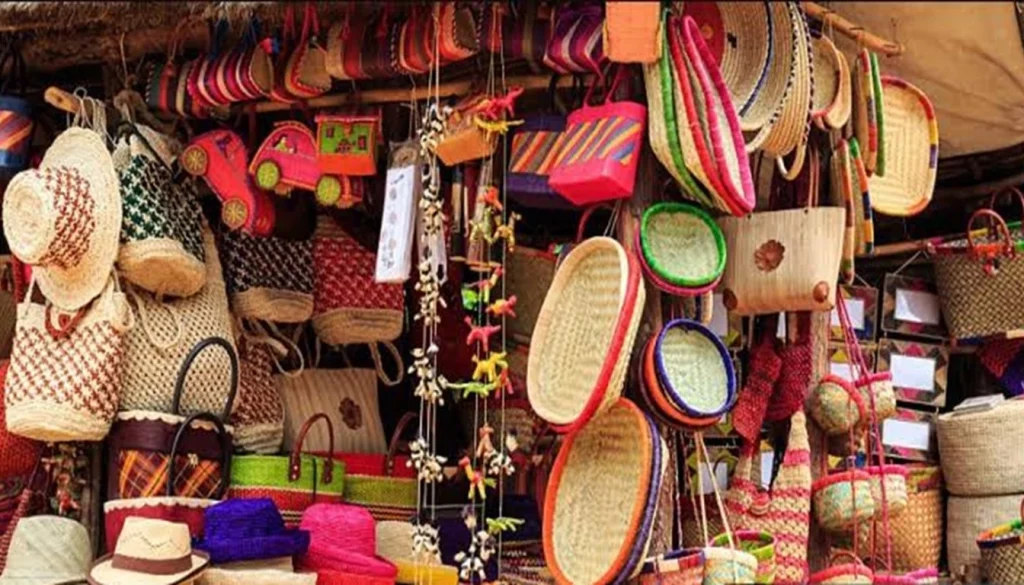
This is also not a brand-new problem. Research on women’s basketry in Harar, Ethiopia, published by Kyoto University’s Center for African Area Studies, noted a sharp fall in weaving among younger women between the mid-1970s and mid-1990s. The Harari themselves recognised the change, so the drift away from traditional African skills has been under way for decades.
Cheap imports add to the pressure. The Textile Atlas, writing about Burundian refugee weavers, observed that handmade baskets are increasingly replaced by plastic containers, and that the heritage craft is invested in less and less for everyday use. When a plastic bucket costs a few coins, a hand-woven basket loses its place in the home before it can find a place in the market.
The Basket Weaver’s Dilemma
No craft better illustrates the contradiction of African crafts than basket weaving. It is utilitarian and aesthetic, and it is part of women’s culture. However, it is also laborious and low-paying work.
However, the same craft can illustrate the possibilities that exist. The women’s organizations in Rwanda and Tanzania are developing their designs and honing their skills in order to sell their products to tourists and international home décor customers. In northern Ghana, a report by the Ghanaian Times explained how basket weaving connects the communities to the export buyers, and how the youth, even those with disabilities, have used this industry to finance their education.
All these stories have one thing in common. The craft flourishes where it is recognized as a business with proper training and reliable buyers and prices.
More Than Souvenirs: What We Lose
As a craft expires, we lose more than just an artifact. Each design of baskets, stools, and crafted instruments holds information on indigenous materials, seasons, clan signs, and social history. The culture of Africa is present in such artifacts as much as in folklore and festivals.
Indigenous craftsmanship also offers valuable lessons for the contemporary world. According to Kabahuma, wooden plates, bowls, and spoons are recognized worldwide as environmentally friendly substitutes for plastics. Skills our grandparents took for granted are exactly what eco-conscious buyers are looking for. Letting them vanish now would mean throwing away something the world is only just learning to want.

Bringing Youth Back to the Workshop
Good news is that all of this is reversible, and nothing of the sort happens overnight. As Kabahuma observes, one thing that makes craft easy to learn is the low level of barriers to entry; youths can get trained in a matter of months, not years, and begin making money immediately.
A few steps would help most:
- Regional craft hubs where artisans can get training, tools and access to markets under one roof.
- Better branding and packaging, plus an online presence, so that authenticity and eco-friendliness can command a fair price abroad.
- Design partnerships that pair traditional technique with modern taste. When the two meet, as Kabahuma puts it, innovation happens.
- Tourism and hotel links, since lodges and hotels already buy traditional chairs and stools.
- Proper documentation, so that techniques are recorded before the last master who knows them is gone.
Schools and families have a part to play too. If a grandmother’s weaving is taught as skilled work worth paying for, the status of the craft starts to change at home.
What Happens Next
The vanishing culture of Africa cannot be saved by nostalgia. Appreciating a basket in a museum but paying the weaver very little does not help the weaver or her granddaughter. What helps is demand, reasonable prices, and a clear path from apprenticeship to earning money.
The Ugandan documentation exercise of 2024 is an important initial step in the sense that it identifies the artisans, their skills, and their paucity of youth. Other countries can follow suit and the numbers might be equally sobering.
Notwithstanding, there is no call here for youngsters to drop their contemporary careers. It is important to realize that youth and traditional craft need not be mutually exclusive. Whether it is the young designer who becomes skilled at weaving, the carver selling online, or a group of women exporting products to three continents, these are all people practicing and profiting from a craft.

As Kabahuma puts it, progress does not come by discarding the old in favor of the new but by progressing from it. In failing to take action until the very last master artisan dies out, we shall have to give our children the reason behind letting something so valuable slip away. Acting now means the next generation inherits it all.
Read More
Vaccine Arm Lodgings, Aircrafts With New Capacity To Raise Costs
Top Things to Do in Accra, Ghana: A Complete Travel Guide
Best Free Events in Accra This Weekend (2026 Guide)
Eco-Tourism Funding Supports Conservation at Masoala National Park in Madagascar
