
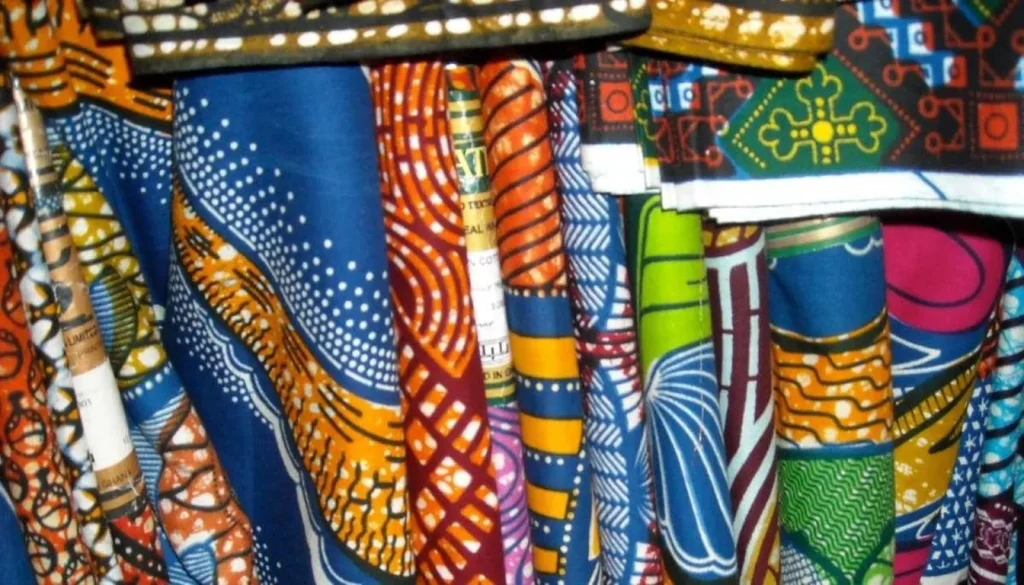
Walk through any market in Lagos, Accra, Kampala or Dakar and the colour hits you before anything else. Bold circles, fat flowers, zigzags and tiny symbols repeat themselves across bolts of cloth. The full Ankara fabric history is a long and surprising one, and it starts thousands of kilometres from the African continent.
A Cloth That Began in Indonesia
The story opens in the nineteenth century, in the Dutch East Indies, today’s Indonesia. Local artisans there had long made batik, a method of drawing patterns with wax so that dye only reaches the uncovered parts of the cloth. Dutch textile manufacturers saw money in it. Companies in the Netherlands, most famously Vlisco, set out to copy batik with machines, hoping to sell cheap versions back to Indonesian buyers.
It did not go to plan. The machine-made cloth had flaws, and wax cracks left fine veins of colour running through the dye. Javanese customers found the copies inferior and mostly turned them down.
How the Cloth Found Its Real Home
What looked like failure turned into an opening. Dutch traders carried the unsold stock to the coast of West Africa, and there it found an audience that loved it. Historians still debate exactly how this happened. One popular account points to West African soldiers who served in the Dutch colonial army in Asia and brought batik cloth home. Another credits the trading ports of the Gold Coast, where merchants were already used to bargaining over imported fabrics.
Whatever the route, West African buyers did something the Javanese market never did. They made the cloth their own. They picked favourites, rejected duds, and sent clear messages back to the factories about colours and motifs. By the early twentieth century, African wax prints were a staple of West and Central African wardrobes, and the designs were being shaped as much by African taste as by European mills.
So Why Is It Called Ankara?
Ask ten people and you may get ten answers. In Nigeria, “Ankara” became the everyday word for the cloth, and the name stuck so firmly that many Nigerians do not realise that elsewhere it goes by other names such as wax print, Dutch wax, kitenge or pagne. Some say the name links to the Turkish city of Ankara, others to trading habits along the coast. Nobody has settled the matter, and that is part of the charm. The name is a reminder that the cloth travelled through many hands before it belonged to anyone.
The Nana Benz and the Women Who Ran the Trade
No account of the Ankara print fabric is complete without the market women of Lomé, in Togo. From the mid-twentieth century, a group of formidable female traders gained exclusive access to the finest Dutch wax cloth and sold it across the region. Because several of them drove Mercedes-Benz cars, they earned the nickname “Nana Benz.”
These women were not simply sellers. They were business owners who understood credit, stock, taste and timing long before the language of entrepreneurship became fashionable. Their influence shaped which prints reached which markets. Many of them educated their children and built family fortunes on cloth alone.
Patterns That Talk
Here is where African fabric patterns stand apart from most textile traditions in the world. Many designs carry names and meanings, given not by the factory but by the women who sold and wore them.
A print might be called “If you go out, I go out,” a playful warning in a marriage. Another might be nicknamed after a political figure, a proverb or a piece of gossip. A design could be a quiet boast, a cheeky challenge to a rival, or a compliment to a husband. Wearing a particular print to a funeral, a wedding or a family meeting can send a message without a single word being spoken.
This tradition of naming is the soul of African textiles in the wax print family. The same cloth can mean different things in Accra and in Kinshasa, and part of the fun is learning the local reading.
From Aso Ebi to the Runway
In Nigeria, Ankara cloth is bound up with aso ebi, the custom of families and friends choosing matching fabric for weddings, naming ceremonies and burials. Walk into a Lagos wedding and you will see entire sections of the hall dressed in a single print, each guest turning it into something personal through tailoring.
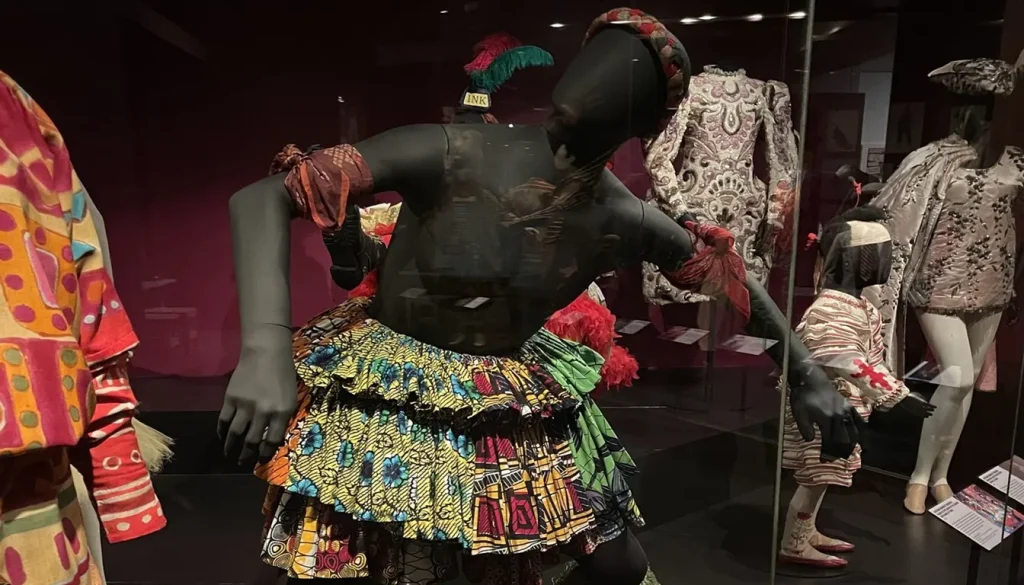
That tailoring is where Ankara fashion has exploded in recent decades. Skilled designers in Nairobi, Johannesburg, Abidjan and Lagos have taken the cloth well beyond the traditional wrapper and blouse. Today you find Ankara in sharp blazers, structured gowns, school bags, trainers, home décor and even office wear. Designers and celebrities on international red carpets have also carried the fabric to audiences far from the continent, and young Africans in the diaspora now wear it as a quiet statement of identity.
ANKARA FABRIC DID NOT ORIGINATE IN AFRICA. Yes, you read right. Ankara fabric, also called African fabric, Dutch wax print, Real English wax, Veritable Java Print – all these names have a meaning, a thread tying to the history of this wildly travelled fabric. https://t.co/iMHXch4fQp
— No.1 African Fabric Vendor (@TextileSpot) May 26, 2022
The Big Questions Behind the Beauty
Pride in the cloth comes with some uncomfortable questions. Dutch wax is a European invention, and for generations the biggest producers have been based outside Africa. Cheaper imitations, many produced in Asia, have flooded markets and squeezed local manufacturers, and several African textile mills have struggled or closed.
At the same time, a new generation is pushing back. Some African brands are reviving local weaving and printing, from Ghanaian and Nigerian factories to small studios that hand-dye adire, batik and other indigenous cloth. Designers argue that loving Ankara should not mean forgetting kente, aso oke, bogolan, kanga or the other textile traditions the continent has carried for centuries. The healthiest view may be that Ankara is part of a bigger family of African textiles, not a replacement for the rest.
Why the Prints Still Matter
Ankara endures because it does something few fabrics manage. It is cheerful, adaptable and personal, yet it also carries history. It records trade routes, colonial economics, women’s business genius and the stubborn habit of Africans turning outside influence into something distinctly their own.
A bolt of cloth that began as a failed copy of Indonesian batik now stands in wardrobes from Dakar to Durban as a symbol of belonging. The next time you tie a wrapper, pick a tailor or choose a print for a wedding, remember that you are wearing a story that took more than a century and several continents to write. And the best part is that the story is still being written, one stitch, one pattern and one proud wearer at a time.
Read More
Where Commerce Meets Culture: Zanzibar International Trade Fair 2026 Takes Center Stage
African Cuisines Gaining International Attention: Dishes and Food Cultures to Know
10 African Football Moments That Went Viral in 2026 and Spilled Into Pop Culture
DR Congo Fashion Week Puts Kinshasa’s Sape Culture in Global Spotlight
5 African Female Artists Changing Global Pop Culture Right Now
