
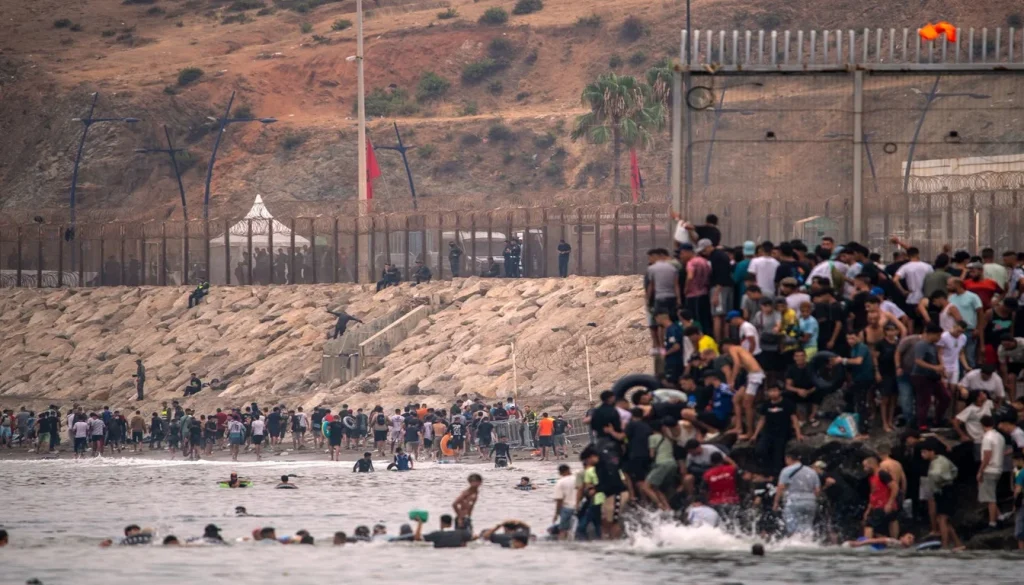
Ceuta has seen migration surges before. This one was different. Within the space of a few days, tens of thousands of people crossed from Morocco into the tiny Spanish enclave, some swimming around the breakwaters, others scaling the border fences, still more slipping through wherever they could find an opening. By the time the dust settled, Spanish authorities put the number at roughly 50,000 arrivals at the peak, in a city of only about 80,000 residents. Many have since gone back to Morocco. But the strain they left behind hasn’t gone anywhere. Juan Jesús Vivas, Ceuta’s regional president, isn’t mincing words about it. He’s calling this a national emergency now, not a local one, and he’s pushing Madrid and Brussels to step in before things get worse.
A City That Simply Ran Out of Room
Ceuta sits on the northern tip of Africa but belongs to Spain, which makes it EU territory and that’s exactly why it’s been a magnet for people trying to reach Europe for years. What made this latest wave different was sheer scale. Reception centers, especially the ones meant to care for unaccompanied migrant children, filled up almost immediately. After that, there was nowhere left to put people. Reports describe migrants sleeping outside because every shelter bed was already taken. Vivas has been asking the central government for more money, more security staff, and more humanitarian aid, the basics a city this size was never built to provide on its own at this volume. In response, Spain installed a floating barrier in the water, aimed less at stopping people entirely and more at discouraging the dangerous open-water swims while giving patrol boats room to intercept crossings safely.
Why Now?
There’s no single explanation, but a few threads keep coming up. Spanish officials point to smuggling networks spreading false promises telling people they’d be allowed to stay once they reached Spanish soil. Others trace it back to shifts in migrant-return policy and the same economic pressures across North Africa that have been building for years. Ceuta has always had its seasonal spikes, researchers note, but nothing on this scale.
Why It’s Bigger Than Ceuta
This isn’t staying confined to one border city. Other European countries have used the moment to renew calls for tighter protection of the EU’s outer borders, and the whole episode has reopened old arguments about asylum policy, border enforcement, and how much Spain, Morocco, and Brussels are actually coordinating with each other. Meanwhile, ordinary life in Ceuta has taken a hit too: shop shortages, temporary closures, city services stretched thin while everyone’s attention goes toward emergency response instead. And beneath the politics is something harder to look away from: dozens of people reportedly died attempting the crossing. It’s a grim reminder of just how dangerous these routes are, and how badly the current system fails to offer safer alternatives.
Where This Leaves Things
Spanish and Moroccan officials are still working together on border security while processing the migrants who remain in Ceuta. Most people who crossed have already returned to Morocco, but no one in Ceuta is treating this as resolved. The underlying pressures that drove people to the border haven’t disappeared, and officials expect more attempts if nothing changes. For now, Ceuta stands as a stark example of how fast a migration surge can turn into something much bigger: a humanitarian strain, a political flashpoint, and a test of how well or how poorly Europe coordinates when a crisis lands on one small city’s doorstep.
Trending Reads You’ll Love
Explore Sudan Civil War Power Struggle?
Discover how Iran’s influence and conflict are shaping Red Sea security risks.
Discover South Yemen Stability Challenges Today?
Check why Africa needs stability across the Red Sea for regional balance.
Check Sudan Brotherhood Ban Impact Now?
Explore how the ban could reshape Sudan’s security and political future.
Explore US Brotherhood Policy Shift Again?
Discover why the US is reconsidering its stance on the Muslim Brotherhood.
Discover America’s Terror Label Push Why?
Check how the US push could redefine global policies on Islamist groups.
