
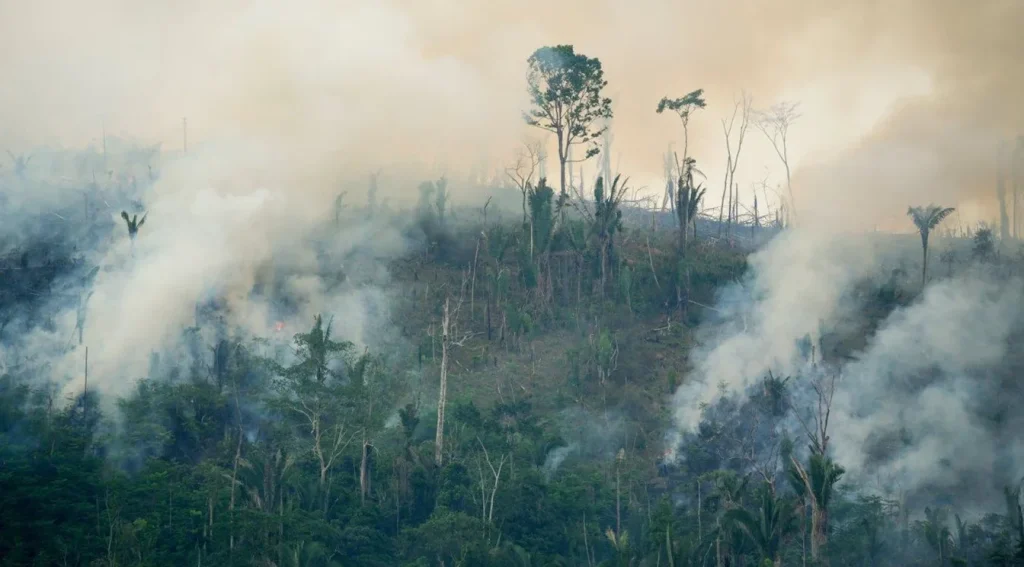
Within the span of one human lifetime, the planet has lost a staggering share of its wild abundance. Yet across continents, scientists, rangers and ordinary villagers are racing to save crisis-hit wildlife, and the results so far suggest the story is far from over. Conservation is often told as a tale of loss, but a growing number of rescue missions point in a different direction.
A Planet Running Short of Wild Places
The numbers are hard to ignore. Monitored wildlife populations have shrunk by roughly 70 percent on average since the 1970s, according to global tracking by conservation groups. Humans have cleared forest on a scale that could blanket a whole continent, and warming seas have wiped out about half of the world’s coral reefs. Some animals and plants are now listed as extinct in the wild, surviving only in zoos, seed banks and breeding centres.
Africa feels this pressure in its own way. Savannas are being carved into farms, wetlands are drained for housing, and forests fall to charcoal and timber. Wildlife here is also a source of income, culture and national pride, so losing it carries a cost beyond the ecological one.
Small Creatures, Big Rescue Missions
Some of the most inventive rescue work is happening far from the African savanna, and it offers lessons worth borrowing. The Zoological Society of London, known as ZSL, has led efforts to save Darwin’s frog, a tiny amphibian from Chile whose numbers have been battered by disease and habitat loss. Keeping a few frogs alive in a lab is the easy part. The real work is protecting the streams and forests so they have somewhere to go home to.
In European waters, researchers are working with fishing communities to protect angel sharks, a bizarre flat-bodied species often caught by accident in nets. In Nepal and India’s Terai Arc, local communities help manage reserves where tigers can live safely. The pattern repeats from place to place: rescue works best when the people living beside the animals are partners rather than bystanders.
Africa’s Comeback Stories
The continent has its own proof that recovery is possible. Mountain gorillas, once feared to be heading for extinction, have grown in number thanks to decades of patrolling, veterinary care and tourism revenue shared with neighbouring villages. In 2018 their status was improved from critically endangered to endangered, a rare piece of good news in a field that rarely gets any.
Rwanda’s Akagera National Park saw lions return in 2015 after the animals had been wiped out there, a reminder that a lost predator can be brought back when habitat and security are restored. In Chad, black rhinos were reintroduced to Zakouma National Park in 2018, years after the species had vanished from the country. And Mozambique’s Gorongosa, ravaged by civil war, has been rebuilt into a living laboratory of restoration, where wildlife numbers have rebounded and local people are employed in the work.
None of these projects is simple or finished. Poachers adapt, budgets shrink, and a single drought can undo years of progress. Still, they show that recovery is not wishful thinking.
Communities at the Heart of the Fight
If there is one lesson that keeps returning, it is that protection fails when people are locked out of the benefits. Namibia’s communal conservancies are among the best-known examples, giving rural communities rights over wildlife and a share of the income it generates. In northern Kenya, community-run conservancies have created jobs for rangers, guides and managers, while giving herders a say in how land is used.
This model isn’t perfect. Conflict between people and animals is real. An elephant raiding a maize field or a lion taking livestock can wipe out a family’s savings overnight. Compensation schemes, better fencing and early warning systems help, but they need steady funding and trust. When communities see wildlife as an asset rather than a threat, conservation has a fighting chance. When they don’t, no fence or law will hold for long.
Climate, Oceans and the Next Test
The next phase of the race will be harder, because the threats are layered. Warming oceans are bleaching reefs that feed coastal communities from Kenya to Mozambique. Mangroves, which shelter young fish and shield shorelines from storms, are being cut down faster than they can regrow in many places. On land, shifting rainfall patterns are squeezing animals into smaller areas, and that pushes them closer to farms and villages.
There is also the quieter crisis of species that rarely make headlines. African vultures, for example, have collapsed in many regions, often because of poisoned carcasses, and their loss leaves a gap in nature’s clean-up crew. Saving a charismatic elephant is easier to fundraise for than saving a scavenger, but ecosystems need both.
What Recovery Really Takes
Experts who study these projects tend to agree on a few ingredients. Protected land has to be big enough and connected enough for animals to move. Laws against poaching and illegal trade must be enforced, not just written. Money has to flow to local people, not only to distant organisations. And science has to guide the work, from tracking populations to deciding where a reintroduced animal has the best odds.
Technology is helping at the edges, from camera traps and satellite monitoring to DNA testing that traces seized ivory back to its source. But gadgets only amplify the basics. Without rangers who are paid on time, communities who benefit, and governments that keep their promises, they achieve little.
Hope Is a Strategy, Not a Slogan
It would be easy to read the figures and give up. The decline is real, and it is fast. But the projects described above point to something equally real: when people commit resources, protect habitat and share the rewards, species do come back. Gorillas have grown in number, lions have returned to a park that lost them, and rhinos have been welcomed back to a country that thought it had lost them for good.
For African readers, the message is not distant or abstract. Wildlife is part of this continent’s identity, its economy and its future. The race to rescue crisis-hit wildlife is being run in forests, oceans and savannas everywhere, and Africa is both one of its toughest battlegrounds and one of its brightest hopes. Nature can recover, but only if the work goes on, and only if the people closest to it are given the tools and the stake to keep going.
Wrapping UP
Wildlife loss is steep, but it is not irreversible. Where land is protected, communities share the gains and enforcement is real, species rebound, as gorillas, lions and rhinos have shown. Africa’s wild places can recover too, if the people closest to them are backed to lead the work.
This adds about 50 words, so the total comes to roughly 1,000. If you need to stay strictly under that, cut the sentence “None of these projects is simple or finished.” from the “Africa’s Comeback Stories” section to offset it.
Read More
Top 8 Nature & Wellness Retreats in Southern Africa for 2026
Where to Stay Near Victoria Falls in Zambia: Best Lodges with River and Nature Views
Wildlife Tourism in Africa: Exploring Nature’s Richest Biodiversity Hotspot
